Get Full Government Meeting Transcripts, Videos, & Alerts Forever!
Get email alerts on the Higher Education Reinvestment topic
No spam. Unsubscribe anytime.
Legislators and university leaders back strategic reinvestment plans, directing most funds to instruction
Summary
The Higher Education Appropriation Subcommittee on Aug. 19 reviewed strategic reinvestment plans required by the legislature and voted unanimously to recommend the institutional submissions to the Executive Appropriations Committee; commissioners and campus presidents said the process moved dollars away from administration and toward instruction, workforce programs and student supports.
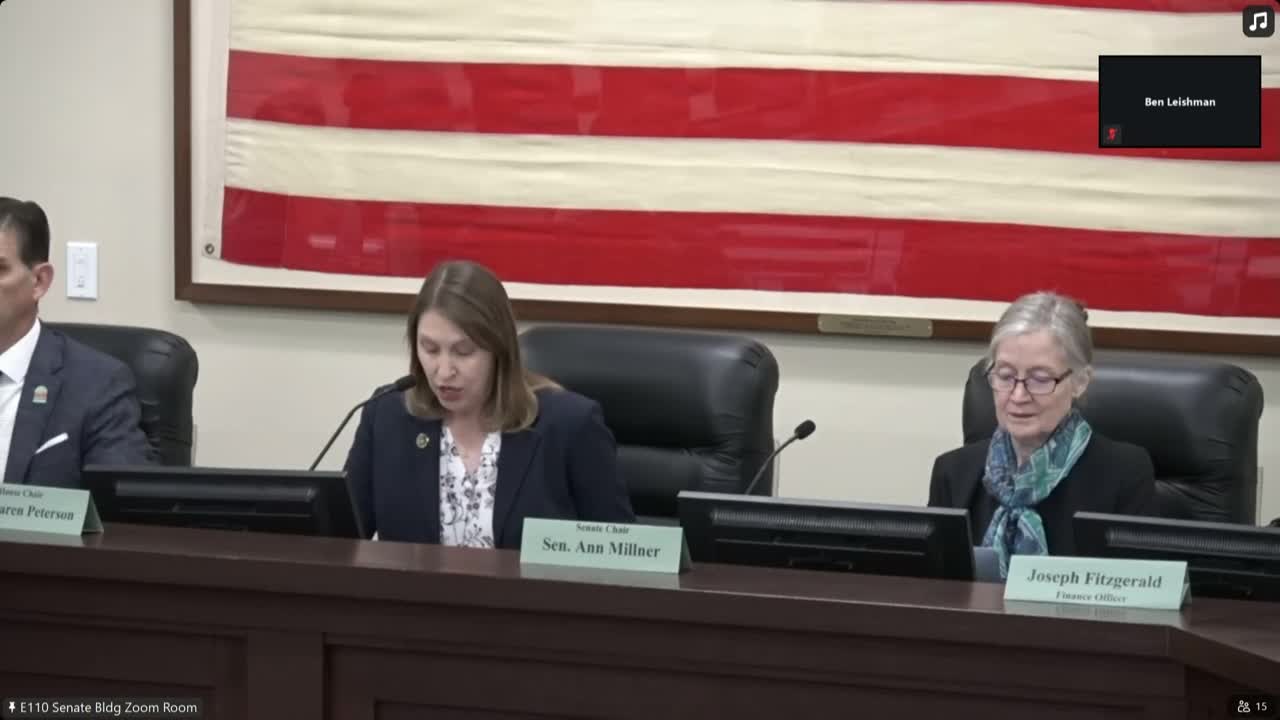
The Higher Education Appropriation Subcommittee on Aug. 19 heard detailed presentations from the Utah Board of Higher Education and presidents and senior leaders from Utah’s public higher education institutions on strategic reinvestment plans enacted under legislative guidance (referred to in testimony as HB 265). After questions from lawmakers and campus leaders, the committee voted unanimously to recommend the institutional plans to the Executive Appropriations Committee for final consideration.
Commissioner of Higher Education Jeff Lambert opened the hearing with an overview of the systemwide process the Board of Higher Education and the commissioner’s office used to review and approve institutional plans required by the law. Lambert said the process applied consistent data, statutory criteria and campus engagement, and that the effort was intended as “what stewardship looks like for higher education,” stressing the goal of aligning state resources, student tuition and institutional spending with workforce and student outcomes.
Nut graf: The committee’s review covered plans from each public degree‑granting institution in Utah. Commission staff told lawmakers the institutional submissions meet the statute’s basic requirements for phased reallocations (30% in year one and later 70% and 100%), and that a large share of the net reinvestment is intended to support instruction, workforce‑aligned programs and student success supports. Lawmakers pressed campus leaders about impacts on faculty and staff; campus leaders repeatedly described difficult tradeoffs and said the plans included mitigations such as hiring freezes, early‑retirement offers and targeted rehires.
What the commission reported and how the institutions responded
Commission staff said the Board and the commissioner’s office provided dashboards, program‑level cost and market data, and other analytical tools to campuses. The commission’s presentation emphasized statutory compliance and three phases of implementation. Staff told the committee systemwide reinvestment is concentrated in instruction and research; the presentation cited a systemwide net investment figure and highlighted a roughly $23 million net reinvestment into instruction called out during the hearing as a notable outcome of the process.
Committee members, led by several senators and representatives, then questioned campus presidents and provosts about program cuts, faculty reductions and community effects. Sen. Riebe and others said they had received constituent emails from professors who described program eliminations and personnel losses as painful, arbitrary or rushed. Campus leaders acknowledged the pain, said decisions were data‑driven, and described the process as iterative and governed by the statute’s metrics.
Institution summaries presented to the committee
- Utah Valley University: UVU leaders said the university had set aside $2.7 million ahead of the legislated process, used program‑level market data and implemented targeted cuts. UVU reported eliminating 47 positions (about 60% staff and 40% faculty of the reductions reported by the university), consolidating duplicate certificates and programs, and directing reinvestments into areas including nursing, behavioral health, applied AI, engineering and accelerated online completion supports. UVU said much of the reinvestment will be phased and that some teach‑outs were required for programs with low enrollment.
- Utah Tech University: Utah Tech told the committee it removed 17 low‑enrollment programs and identified approximately $2.55 million in disinvestments. The university plans to add about 19 full‑time faculty and instructional staff lines to support growth in engineering, polytechnic programs and institutional advising.
- Weber State University: Weber State described an accelerated internal process and said its plan eliminated a combination of administrative positions, staff and faculty (the university’s presentation listed roughly 49 position reductions across those categories) and cut underused courses. Weber said roughly 75% of reallocated funds will support instruction; its plan also eliminates many course fees for students and adds academic advisors and other student supports.
- Southern Utah University: SUU reported cutting 25 positions and creating 40 new positions under its plan; the president told legislators the campus consolidated colleges and prioritized workforce‑aligned reinvestments including nursing, social work, education and augmented/virtual reality workforce training.
- Snow College: Snow described a limited early‑retirement program and no involuntary layoffs. Snow said it eliminated several low‑enrollment electives and course offerings, reduced general education credits (faculty action), and reinvested in programs such as prison education, respiratory therapy and rural entrepreneurship to support regional workforce needs.
- Salt Lake Community College: SLCC said the exercise allowed the college to clean its catalog (removing programs not offered for many years), align technical programs under its Salt Lake Technical College operations and increase investment in health sciences and trades. SLCC reported an overall administrative reduction and additional instructional hires and noted it reallocated more than required by the statute in some categories.
- Utah State University and University of Utah: Both universities described major, multi‑year implementation plans. USU leaders emphasized program portfolio review, mergers of related units and reinvestments in AI, health workforce and student success supports; USU noted the plan will roll out across three fiscal years. The University of Utah outlined a three‑year reinvestment schedule (roughly $8.0M year one, $7.0M year two, $4.4M year three in the presentation), and described investment areas including engineering, AI, simulation for clinical capacity (nursing), translational research that supports commercialization and behavioral health initiatives.
Lawmakers’ concerns and staff responses
Lawmakers on both sides acknowledged the difficulty of the exercise. Several questioned whether some program cuts could weaken local economies that rely on higher education as a major employer; others pressed institutions to preserve humanities and upper‑division faculty credentials even as general education was streamlined. Commission staff and campus leaders repeatedly told the committee the decisions were grounded in enrollment, cost‑of‑instruction and workforce data supplied to institutions and used in program reviews. Campus leaders noted steps taken to reduce employee impacts where possible (e.g., vacant positions, early retirement, voluntary separations) and to phase reinvestments so new hires follow completion of teach‑outs.
Vote and next steps
At the meeting’s conclusion Representative Walter moved that the subcommittee recommend the eight degree‑granting institutions’ strategic reinvestment plans to the Executive Appropriations Committee (EAC) as compliant with the statutory requirements. The motion included the Board of Higher Education’s recommendation that Utah State University’s plan be recommended to EAC conditioned on review by the incoming USU president. The subcommittee approved the motion unanimously on a roll‑call vote and the matter will be considered next by EAC; funds remain in the Board’s account until EAC acts.
Ending: The hearing made clear the legislature’s intent and the system’s response favor redirecting scarce state and tuition dollars into instruction, workforce training and student success supports. Campus leaders said they consider this a first iteration and expect to return with adjustments in future cycles as markets and student demand evolve.