Get Full Government Meeting Transcripts, Videos, & Alerts Forever!
Get email alerts on the County Regional Services topic
No spam. Unsubscribe anytime.
Salt Lake County says it has shifted from municipal services to regional roles as cities fill in
Summary
County officials told the Political Subdivisions Committee that Salt Lake County now focuses on regional services — including the jail, courts, elections and public health — because most municipal services are provided by cities as the county becomes ‘wall‑to‑wall’ with incorporated municipalities.
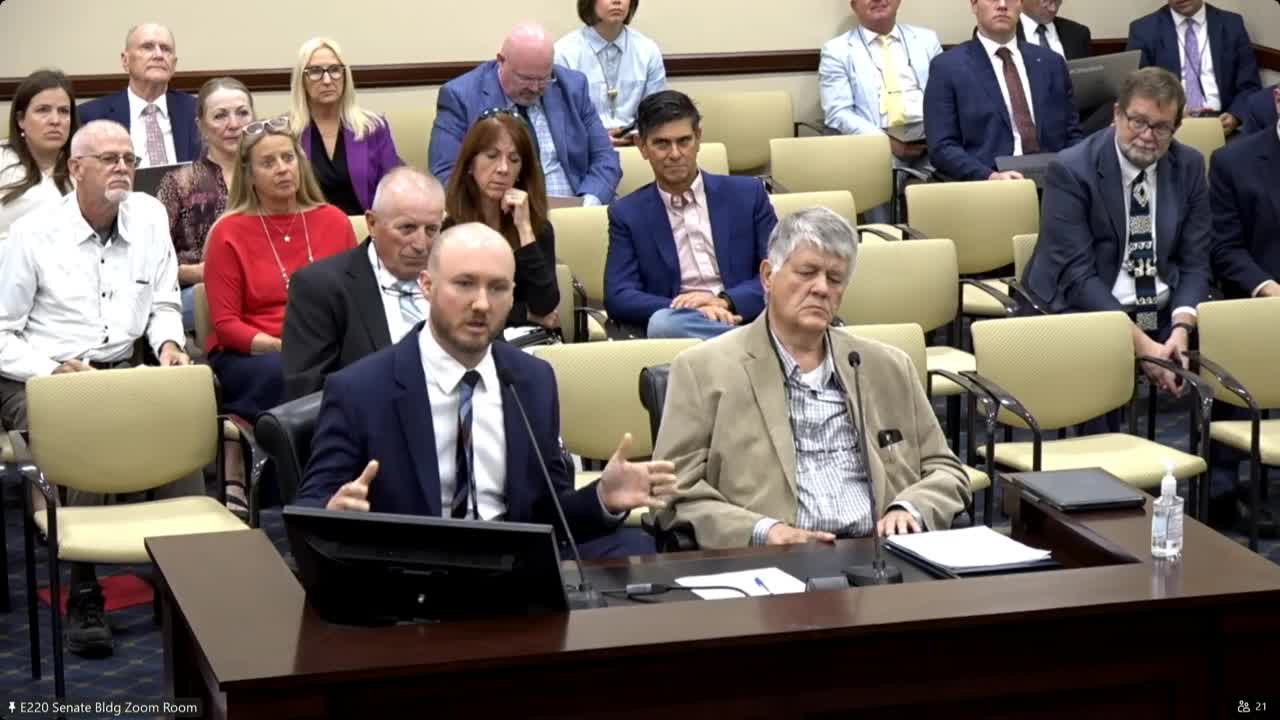
Salt Lake County officials told the Political Subdivisions Interim Committee on Aug. 20 that the county has largely stopped funding municipal‑type services and now focuses on regional functions such as criminal justice, elections, health and large parks. Representative John Tuscher introduced the topic as the committee explores how county and city roles change when counties become filled by contiguous cities.
The presentation opened with research from Nathan Brady of the Office of Legislative Research and General Counsel on county population rankings and density comparisons, and continued with a detailed budget and services briefing by Darren Casper, who was identified in the meeting as the chief financial officer for Salt Lake County. "When you have a county that gets to wall to wall cities, what is the role of the county government versus what is the role of the city government?" Representative John Tuscher asked at the start of the discussion.
Brady told the committee Salt Lake County ranks among the top 100 U.S. counties by population based on 2024 estimates and noted population‑density comparisons to county‑equivalent areas such as New York boroughs. Casper summarized how Salt Lake County stopped providing typical municipal services from its general fund and described how those services are now delivered: "The general fund of Salt Lake County no longer provides any funding for municipal type services," Casper said. He listed entities that provide services to unincorporated areas — the Unified Fire Service Area, Salt Lake Valley Law Enforcement Service Agency, the Municipal Services District (MSD) and Wasatch Front Waste and Recycling — and said these are funded by taxes paid only by unincorporated area residents.
Casper outlined the county's fiscal picture: Salt Lake County's gross budget is about $2,000,000,000 with a net budget of roughly $1,500,000,000 once pass‑through taxes are excluded. He said the county's general fund is about $400,000,000 and that "about 74% of those [general fund] dollars go to public safety type operations," citing jail, the district attorney and indigent legal defense among the major expenditures. Casper also noted the county's triple‑A bond rating, saying Salt Lake County is one of a small number of U.S. counties with that distinction.
Casper framed the county's continuing role as regional: "Salt Lake County doesn't just doesn't serve unincorporated areas any longer. It's a regional government delivering essential services for all residents," he said. Committee members asked clarifying questions about what the county considers "essential" services and where cities might assume responsibilities such as parks, animal services or certain public works functions. Tuscher and members noted the committee expects to hear city perspectives at a subsequent meeting to compare where duplication or gaps may exist.
The presentation included examples of county responsibilities that are typically regional in scope: the jail and court services, elections administration (including contracts with municipalities), the health department, aging and adult services, behavioral health programs, large regional parks, a countywide library system (excepting Salt Lake City and Murray), tourism contracts and property tax administration.
No formal action was taken; the item was a briefing to inform the committee's next steps. Committee members said they plan further study and will hear municipal perspectives at a later meeting to inform any legislative proposals that might arise.
Ending: The committee closed the item after members thanked Casper and Brady and signaled follow‑up: city representatives will be invited to the next meeting so members can compare county and municipal perspectives before deciding whether to pursue statutory changes.