Get Full Government Meeting Transcripts, Videos, & Alerts Forever!
Get email alerts on the Legislative Resolutions topic
No spam. Unsubscribe anytime.
Legislators debate tightening rules for resolutions to preserve impact and save floor time
Summary
Members of the Legislative Process Committee discussed drafting rules to narrow when the legislature should use resolutions versus citations, aiming to reduce routine, nonbinding resolutions that consume committee and floor time and to preserve resolutions for matters that require a legislative voice.
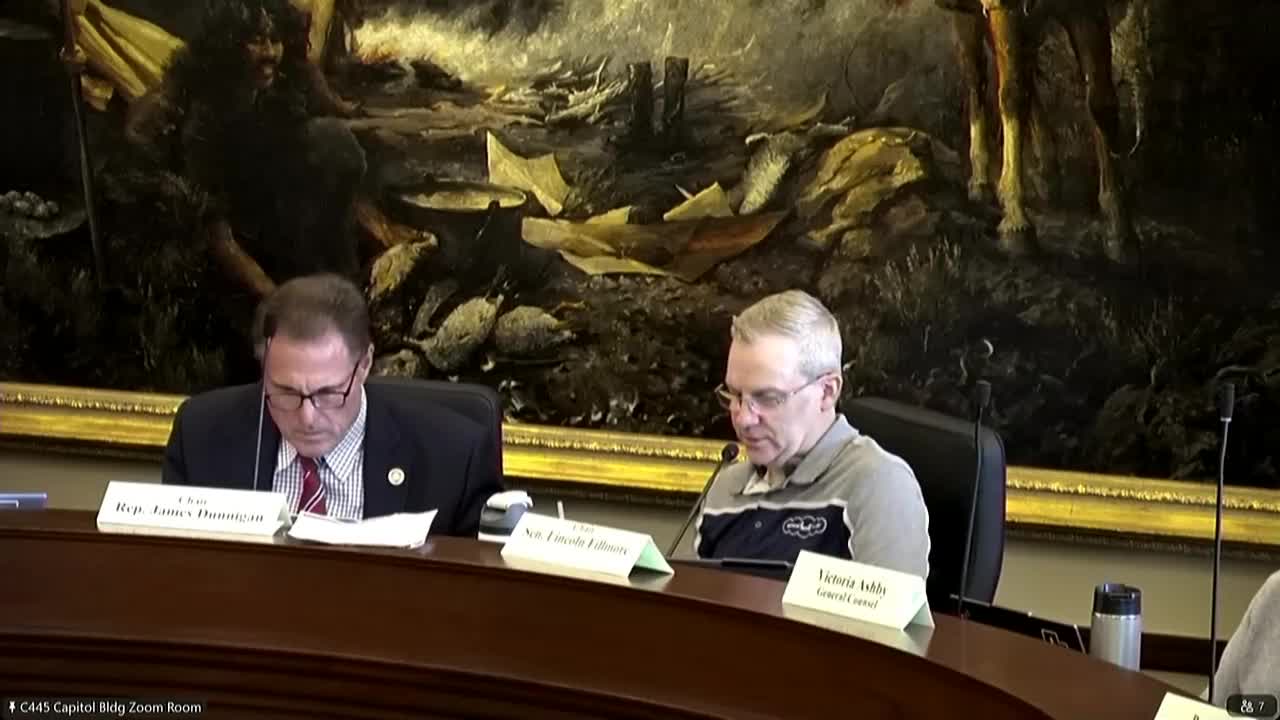
The Legislative Process Committee met Aug. 22 to discuss proposed rule changes meant to narrow when the Utah Legislature should use formal resolutions instead of shorter citations. Representative Roberts opened the discussion by saying, “resolutions exist to communicate, the position of the legislature to other entities on issues or matters, on which things the legislature can't or chooses not to take some kind of legislative action.” He and Senator Filmore said the goal is to keep resolutions for high‑weight matters and use citations for recognitions and short acknowledgements. The committee debated tradeoffs. Representative Moss said recognitional items that mattered to communities — for example, honors for Japanese American survivors — had been meaningful in past years and could be converted into citations. “Those kinds of resolutions probably would just be citations now,” Moss said. Several members raised procedural concerns about citations: Representative Wilcox and Senator Escamilla noted that a citation typically requires approval by a presiding officer to get floor time, which can make citations harder to secure for minority caucus members seeking a public recognition. Representative Perucci said she believed citations went through the chief clerk and were not a partisan gate, and that reducing floor readings would save time in a short session. Committee members also discussed whether some substantive, public‑policy conversation now handled by resolutions should instead be advanced as legislation or other public processes. Representative Roberts and others noted that some resolutions invoke the legislature’s voice to urge federal or executive action where the legislature has no regulatory authority; they questioned whether those uses strengthen or dilute the institution’s messaging. Members generally supported moving toward fewer, more consequential resolutions. Representative Dunson said bluntly, “We should not be taking committee floor time or staff time to draft these and number them. ... Do a citation.” Representative Wilcox said the committee would draft definitional rule language and bring proposals back at the next meeting. The committee did not vote on a rule change at the meeting; chairs were asked to draft language for a future meeting. The discussion closed with agreement to prioritize floor time for binding legislation and reserve the more time‑consuming resolution process for matters that change policy or require formal, durable legislative expression.