Get Full Government Meeting Transcripts, Videos, & Alerts Forever!
Get email alerts on the Public Safety Encampments Drug Markets topic
No spam. Unsubscribe anytime.
Salt Lake City, DPS finalize HB465 interagency agreement to address encampments and open‑air drug markets
Summary
Salt Lake City police described a two‑year interagency agreement with the Utah Department of Public Safety under HB 465 and detailed local enforcement, a 50‑person “connect list” of high utilizers, shifts in hotspots and service gaps for shelter and treatment.
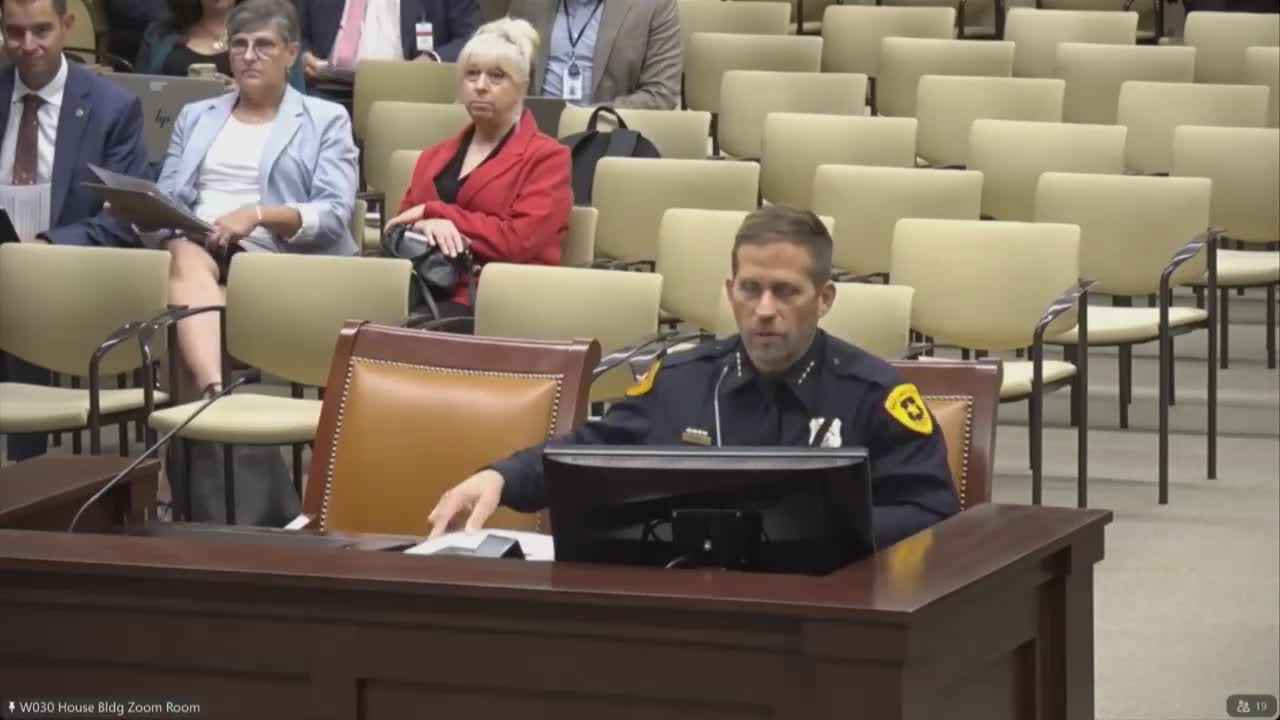
Brian Redd, chief of the Salt Lake City Police Department, told the Law Enforcement and Criminal Justice Interim Committee on Aug. 20 that Salt Lake City and the Utah Department of Public Safety completed an interagency agreement required by House Bill 465 and that it went into effect June 30 for two years. “The objective of the agreement is to, ensure that illegal encampments and open air drug markets are addressed in Salt Lake City,” Redd said. He described coordinated outcome measures tied to the state mitigation grant fund and said the city will monitor the mayor’s public safety plan and general crime trends. Redd outlined an operational effort the city calls the “connect list,” a small group of about 50 individuals the department tracks because they consume a disproportionate share of police, jail and court resources. He said one person on the list had about 30 warrants and had been arrested 16 times over a one‑year period. Redd said the population is predominantly misdemeanor cases with high behavioral health and substance‑use needs and that enforcement without treatment or different post‑release placements risks repeated cycling. Redd presented recent crime metrics: a three‑year average showing total crime down 11.4 percent and violent crime up 4.8 percent; year‑to‑date increases in robberies, aggravated assaults and burglary; a sharp increase in jail bookings since 2021; and camping citations up roughly 300 percent this year. He said enforcement actions and shifts in the local drug market — including changes in fentanyl availability and price — help explain some recent spikes. Redd also described localized hot‑spot work with the University of Texas San Antonio and said the university’s recommendations include focusing on repeat violent places, creating a credible threat of arrest for dealers and making treatment a more consistent condition of probation. Redd said Salt Lake City is revising its camping ordinance to address people “habitating” in parks and other public spaces even when they do not meet the technical definition of camping, and he thanked the Road Home and the state homeless board for help securing reserved shelter beds at St. Vincent’s for people who will accept congregate shelter. He also raised concerns about illicit flavored vape distribution and cartridges being used to market illegal substances to youth. Redd said continued coordination with Commissioner Beau Mason of the Department of Public Safety and with local prosecutors is central to holding sellers accountable and tying enforcement to treatment and shelter outcomes. No committee vote was taken on HB 465 or the Salt Lake City–DPS agreement during the session; Redd’s presentation was for committee briefing and question-and-answer.