Get AI Briefings, Transcripts & Alerts on Local & National Government Meetings — Forever.
Access tells lawmakers it identified widespread fraud in American Indian Health Program, suspended hundreds of providers and changed payment controls
Loading...
Summary
Access, Arizona’s Medicaid agency, told a legislative committee that multi‑year fraudulent billing tied to behavioral‑health providers drove a spike in American Indian Health Program spending and prompted hundreds of provider suspensions and operational reforms.
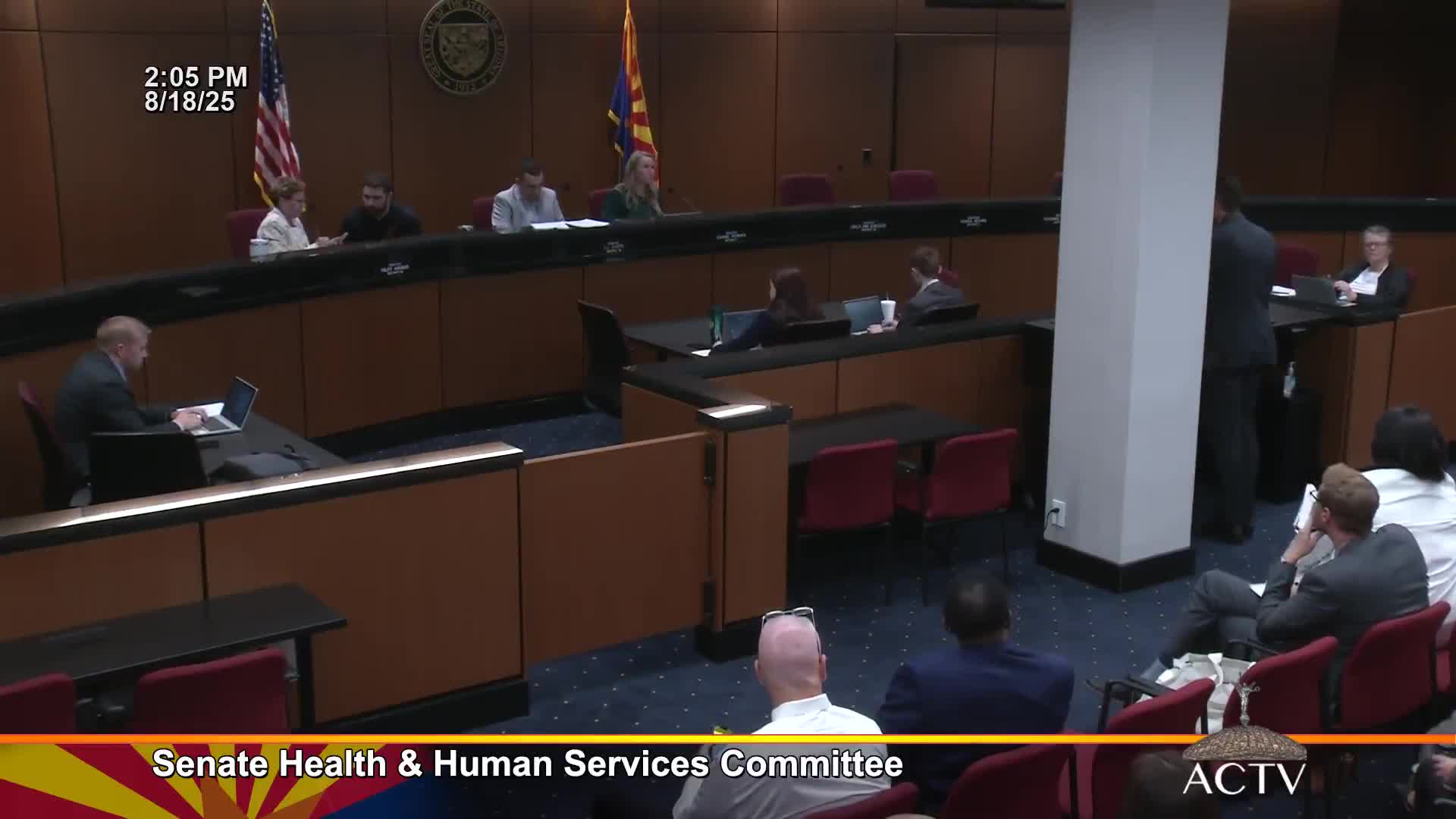
Access, Arizona’s Medicaid agency, told a legislative Health and Human Services Committee on Monday that a multi‑year fraud scheme tied to behavioral‑health providers drove steep increases in spending in the American Indian Health Program and prompted broad agency reforms.
The agency’s deputy director, Marcus Johnson, said the state saw utilization and payments spike in 2020–2023 and that “ghost billing” — use of member ID numbers to bill for services that were never provided — and patient brokering were central features of the schemes. “We observed billing for services that were never provided,” Inspector General Vanessa Templeman said in testimony describing site visits and member interviews.
Why this matters: Lawmakers pressed Access because the fraud diverted taxpayer dollars, harmed members and damaged trust in longstanding providers. Committee members pressed agency officials for data about payments, recoupment, and how their corrective steps affect timely provider payments and access for tribal members.
What Access told the committee
Marcus Johnson, Access’s deputy director for community engagement and regulatory affairs, said the AIHP is a fee‑for‑service track that enrolls about 110,000 members and that program billing rose sharply from April 2020 through March 2023. Johnson described multiple red flags: large numbers of members switching into AIHP from managed‑care plans, per‑member per‑month payments that jumped from single‑digit dollars to thousands, and a spike in paper‑check payments beginning in 2022.
“Some of this was ghost billing where they simply found a Medicaid member’s ID number … and they started billing the state fraudulently without having offered any sorts of service to anybody whatsoever,” Johnson said.
Inspector General’s findings and member impact
Vanessa Templeman, inspector general for Access, told the panel that investigators found members living in squalid conditions, deprived of food and basic hygiene, with restricted access to phones and outside contacts. “We’ve seen people living out of trash bags … their phones and wallets being taken away from them and controlled by providers,” she said, and described locked rooms, barred doors and video cameras in some facilities.
Templeman described billing patterns investigators saw: duplicate billing for the same date of service, billing for hours that could not exist in a 24‑hour day, and missing medical records that left members without documentation of needed care.
Emergency response and victim services
Access said it enacted a humanitarian response to protect members once the schemes were uncovered. Agency figures presented to the committee include: - a dedicated hotline that fielded over 36,000 calls and served more than 11,000 individuals; - temporary lodging provided to more than 4,000 people; and - arranged transport for 129 individuals back to their home states.
Agency actions and process updates
Johnson said Access suspended payments to providers where there was a credible allegation of fraud (CAF) to stop cash outflows and that the agency has used CAF suspensions 327 times since May 15, 2023. He said providers facing suspensions may request informal settlement conferences (the agency reported 117 such conferences) and may pursue state fair hearings (46 providers had hearings that, Access said, resulted in upholding the agency’s actions to date).
To reduce future fraud, Access reported a package of operational changes it implemented or is deploying: - tightened verification for AIHP enrollment (the agency said self‑attestation was replaced with stronger verification methods developed with tribal leaders); - additional documentation requirements and prepayment review for outlier codes; - a temporary enrollment moratorium for certain outpatient and behavioral provider types; - targeted high‑risk screening for provider types implicated in the schemes; and - investment in new claims‑screening technology and a Medicaid enterprise system modernization to speed system edits and enable pre‑ and post‑pay automated review in 2026.
Johnson said those steps coincided with falling AIHP spend and enrollment to more typical levels in charts Access showed the committee. He described estimated “cost avoidance” figures that the Office of Inspector General produced for the committee (agency slides cited roughly $32 million in state fiscal year 2022, about $272 million in a later year, and approximately $945 million in a subsequent fiscal year) and said the numbers represent dollars avoided by suspending payments once fraud was detected.
Provider relations and operational impacts
Johnson and Templeman acknowledged collateral harm: some legitimate providers experienced payment delays, increased administrative burden and strained relations with the agency. Johnson said Access distributes provider guidance, has held hundreds of webinars (144 in 2024 with more than 5,700 participants), and maintains live‑chat and technical assistance tools; Templeman said investigators also meet early and often with providers during inquiries.
Committee questions and outstanding items
Lawmakers repeatedly asked for specific financial line‑items and timing (Who signed checks? When was the accounting office first aware?), and Access repeatedly said portions of the financial timeline and specifics are tied to ongoing litigation and law‑enforcement investigations. Committee members asked for lists of budget leads and for targeted data: weekly cash disbursements compared with 2023, average clean‑claim turnaround time, and the federal share of AIHP funding for specified program administration costs. Access officials agreed to supply requested documents and follow‑up data.
What remains unresolved
Committee members raised concerns about provider solvency, the degree to which timely payment goals are being met, and whether the agency’s anti‑fraud measures had unintentionally deprived legitimate providers of working capital. Access said approvals of screened claims had risen to roughly 84% (from as low as 60% in January 2024) and that the number of claims on prepayment review fell from about 35,000 in July/August 2024 to roughly 5,000 at the most recent reporting month.
Ending note
Access defended its actions as necessary to stop fraud and recover funds while acknowledging provider hardship and promising additional data and follow‑up with the committee. “This is an important priority … we have made multiple referrals to law enforcement,” Templeman said. Committee members pressed for faster answers and pledged additional oversight to balance fraud prevention with access to care.