Get Full Government Meeting Transcripts, Videos, & Alerts Forever!
Get email alerts on the Ems topic
No spam. Unsubscribe anytime.
North Dakota EMS director warns of aging workforce, low reimbursements and training gaps
Summary
State Emergency Medical Systems director Chris Price told lawmakers that North Dakota's EMS workforce is aging, ambulance call volumes are rising, and many rural ambulance services have low call volumes and fail to meet response-time standards, leaving some services at financial risk.
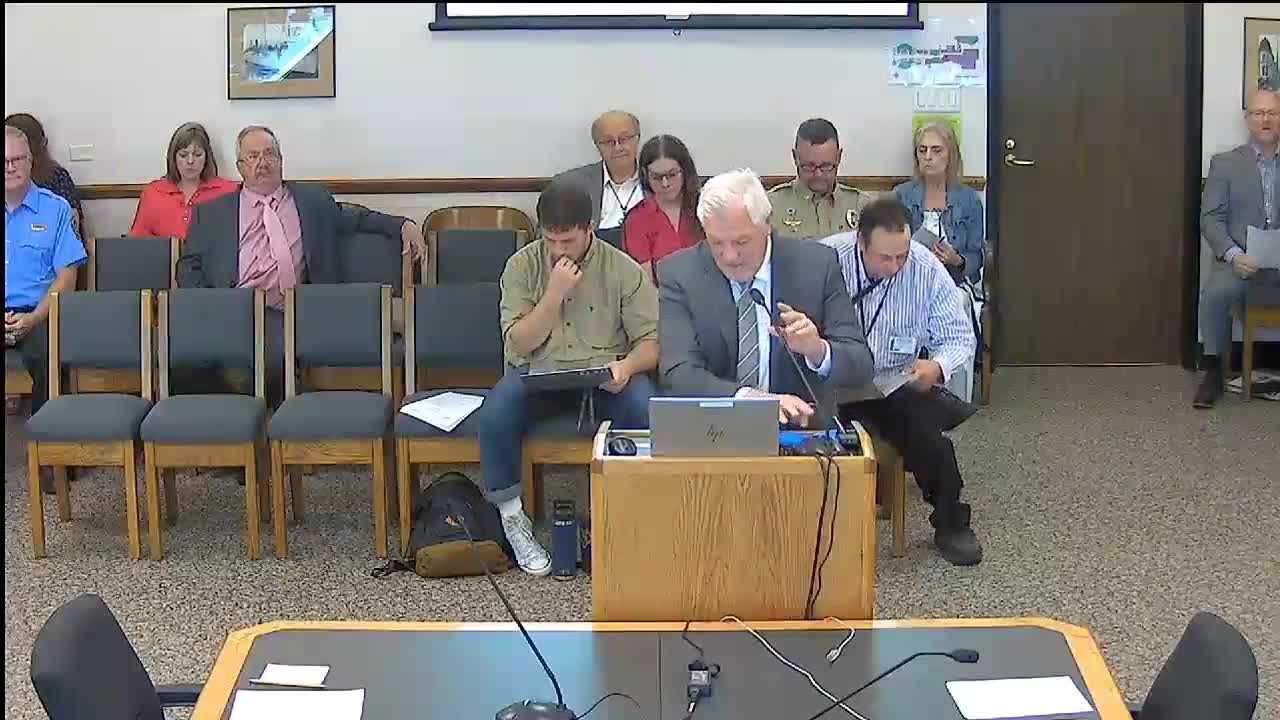
The state's emergency medical services unit told the Emergency Response Services Committee that EMS staffing and finances are under strain and that rural services are particularly vulnerable. Chris Price, director of the Emergency Medical Systems unit at the North Dakota Department of Health and Human Services, said last year ground ambulance services in the state completed roughly 95,617 ambulance runs; only 56 percent of 9-1-1 responses resulted in transport to a hospital, leaving many calls non‑reimbursable under current payment rules.
Price said the workforce is aging: about 20 percent of licensed EMS providers are 55 or older; 12 percent are 60 or older. That demographic profile, combined with lower call volumes for many BLS services (78 percent of BLS services did fewer than 150 calls in 2024), means many rural services struggle to meet performance metrics such as the 10-minute dispatch-to-response standard. While all ALS services met the 10-minute dispatch standard, only about 62.5 percent of BLS services did.
The state helps through targeted grants. The EMS training grant subsidizes initial and continuing education and required field commitments; the rural EMS assistance grant paid about $10.7 million of $13.8 million in biennial EMS unit spending and is mostly used for personnel costs. Price said 33 paramedics and 143 new EMTs benefited from training grants in the last biennium, while the $10,000 stipend for paramedic initial training lags the actual cost of education (program costs cited in testimony were approximately $18,000). Price recommended regionalized training and more flexible delivery of paramedic and EMT training as possible responses.
Why it matters: Committee members heard that many rural ambulance services carry high fixed costs and low volume, and that fee-for-service reimbursement does not cover total cost in many areas. Lawmakers and witnesses repeatedly urged the committee to examine whether Medicaid and private-insurance reimbursement rates are adequate and to consider state policy moves that would either subsidize volunteers or reduce delivery costs.
Quotes from testimony: "The state's EMS system has incurred 10 ground ambulance service closures over the past six biennia," Price said. "There has not been an ambulance service closure in over 2-1/2 years, but staffing and sustainability remain a concern."
Next steps: Price told the committee the department will continue to provide data to legislative staff and to work with the committee on possible regional training and recruitment efforts. The committee voted to pursue a consultant-led survey of ambulance service providers that will give lawmakers more detailed, service-level data for policy options.