Get Full Government Meeting Transcripts, Videos, & Alerts Forever!
Get email alerts on the Tribal State Relations topic
No spam. Unsubscribe anytime.
Legislative staff outlines committee charge, tribal-state study topics
Summary
Legislative Council staff reviewed interim rules and background memos directing the Tribal and State Relations Committee to study tribal–state relations and the taxation of land owned by tribal members.
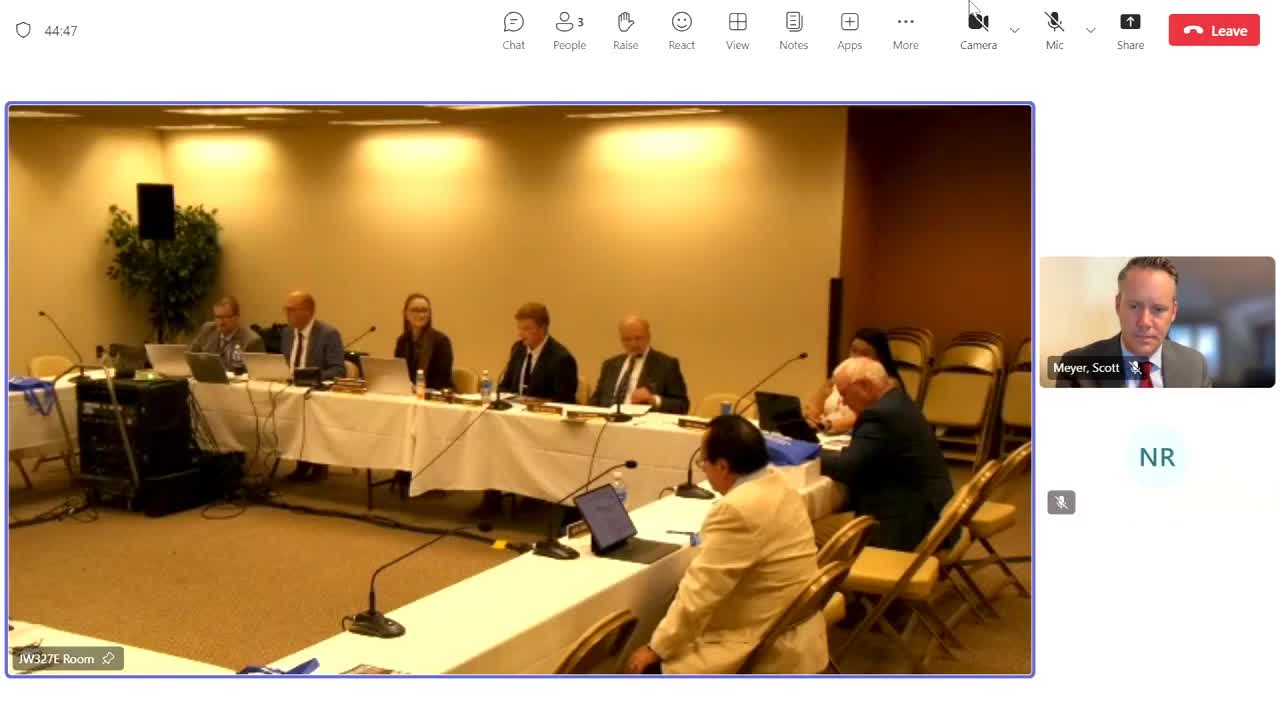
Legislative Council staff opened the Tribal and State Relations Committee meeting with a summary of interim rules and the committee’s study assignments.
“The meetings and the meeting dates and times are selected by the chairman. The meetings are governed by the rules of the assembly. If there's an area that is unclear or is not addressed by our normal rules, Mason's manual of legislative procedure applies,” a Legislative Council staff member said while outlining committee procedure and reporting requirements.
The committee was given three memoranda for its work this interim: a tribal background memo (LC number 279066010.00) setting out the committee’s statutory charge under North Dakota Century Code §54‑35‑23; a listing of existing intergovernmental tax agreements (cigarette/tobacco, motor‑fuel, oil and gas, and sales and use tax agreements); and a study directive on taxation of land owned by tribal members (LC number 2709067010.00), which the staff said derives from Section 1 of House Bill 1563.
The background material reviewed federal case law and statutory frameworks that limit state taxing authority over tribal trust lands and summarized differences between trust land and fee land. The staff presentation noted federal principles discussed in the materials, including the Indian Reorganization Act of 1934 and court precedent that states generally lack authority to tax reservation lands absent express Congressional authorization. The staff also cited a North Dakota Century Code provision (transcribed in the meeting as 57‑02‑08.4) that staff said codifies some related state interpretations.
Committee members were told the study may"include an analysis of federal law, judicial decisions, state property tax exemptions related to property of native Americans, and the interaction between tribal sovereignty and state law," and that testimony could be taken from tribal tax departments, the state tax commission, and tribal schools and other stakeholders.
Chairman Renville said he intends for the committee to meet across the state and to hear directly from every federally recognized tribe in North Dakota during the interim. The meeting concluded without substantive committee votes on policy; the committee adjourned by voice vote.
Why it matters: The memos set the legal and factual scope for the committee’s interim work on tribal–state relations and on whether and how state taxation applies to land owned by enrolled tribal members within reservation boundaries. The outcomes of the study could inform future legislation, intergovernmental agreements or administrative guidance.