
Oregon City schools say $1 million summer grant expanded programs, served hundreds of students
Get AI-powered insights, summaries, and transcripts
Subscribe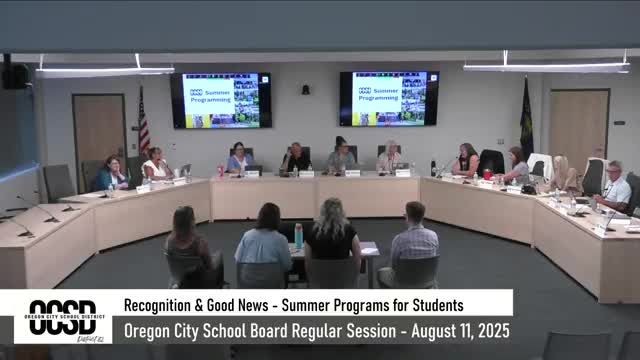
Summary
District leaders and program staff told the school board that a state summer-school grant awarded April 23 funded six weeks of elementary programming, 14-day secondary ‘summer pathways,’ extended‑school‑year services and family events that together reached several hundred students and earned recovery credits for high schoolers.
Oregon City School District staff told the school board on Aug. 11 that a state grant of about $1 million awarded April 23 funded expanded summer programming that served hundreds of students across elementary, middle and high school programs. The presentations summarized enrollment, staffing and outcomes and described family engagement events funded through the grant and Title I. The district said the money allowed it to run a 14‑day “Summer Pathways” program for grades 5–10 at Tom Wada (June 23–July 11), a six‑week elementary “Summer Explorations” program out of Gardner, kindergarten readiness camps, and an Extended School Year (ESY) program for students with individualized education plans. Administrators also described family field trips and books‑in‑the‑park events intended to extend learning beyond classrooms. District officials emphasized why the grant mattered: it expanded offerings and paid for staff and enrichment that the presenters said would not have been possible at the same scale without the extra funds. “April 23, we were notified that we had a million dollars to spend on summer school for our kids and we did it,” a presenter said, describing rapid planning and district‑wide coordination. Program details and outcomes presented to the board included: Tom Wada’s secondary summer session ran 14 days with about 32 staff and roughly 170 students, and combined morning academics (reading, writing, math blocks) with elective and college‑and‑career readiness pathways in the afternoons. Staff reported 34 half credits earned in face‑to‑face recovery courses at Tom Wada and 135 half credits earned through OCHS recovery programming. The Gardner elementary program ran six weeks with just over 235 students and about 49 full‑ and part‑time staff. Kindergarten camp enrolled 40 students in two multi‑week sessions in partnership with preschool providers. The district said ESY identified about 40 eligible students and saw approximately 30 attend; ESY staff included licensed teachers and instructional assistants who delivered IEP‑driven, highly individualized supports. Presenters described tutoring and small‑group literacy interventions: five reading tutors served about 130 students in short, targeted sessions. Family engagement efforts included park reading events with roughly 25 families consistently attending and Family Field Trip Fridays (funded through Title I) that the district said provided free admission and bus transportation; staff reported 346 bus riders to field trips over the summer. Presenters said staff and students also benefited from enrichment brought into buildings when field trips were not feasible (examples included a reptile program and a Tualatin River ecosystems presentation), and the district ran staff learning labs so teachers could share promising practices. Administrators told the board that grant reporting requirements included literacy assessments and surveys to document student growth and program effectiveness; they said district teams will compare fall MAP results to summer gains to inform future planning. Board members asked whether the district had spent all grant funds; staff said final receipts were still arriving but the district submitted a plan to use the full amount and expected to expend the grant. Board members also asked about volunteer use (limited this year because programs built new communities quickly) and about whether data would be tracked; staff said the grant required pre/post literacy and well‑being surveys and that staff will follow students into the fall MAP testing window to assess longer‑term effects. District leaders thanked staff, community partners and families and said they hoped to learn what worked and what should change if similar funds are available next year. They told the board they expect to hear whether similar funding will be available in October and that program leaders will use the intervening months to refine staffing and enrichment plans.