
Committee explores enforcement: bonds, liens, grant assurances and business-licensing limitations
Get AI-powered insights, summaries, and transcripts
Subscribe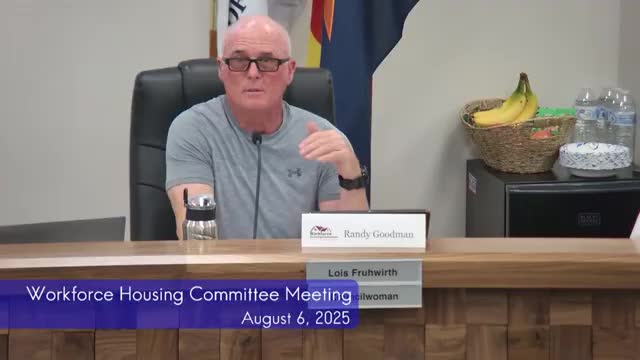
Summary
Members debated enforcement tools to keep units affordable after incentives: performance bonds, liens, grant-assurance repayment, and business licensing were discussed; staff and legal will review options and potential conflicts with lenders and property rights.
The committee spent significant time on how the city should ensure developers meet workforce-housing commitments and what remedies the city could use if projects stop providing affordable housing. Committee members proposed performance bonds, liens, grant-assurance contracts, and business-license conditions as possible enforcement tools. One committee member said performance bonds are standard in public-right-of-way work and would provide a recourse if a developer failed to complete commitments; another suggested liens or grant-assurance clauses requiring repayment of taxpayer funds with interest if a project stopped providing workforce units. Members also cautioned about interfering with lenders’ security interests. A developer attendee warned that subordinating lender claims to city reimbursement could jeopardize project financing. Amber acknowledged those constraints and recommended legal involvement to craft mechanisms that protect taxpayers while remaining financeable for developers. The committee discussed business licensing but noted limits: a business license or conditional use could be used as consumer protection, but participants said an owner could form a new entity to avoid sanctions, and business-license tools may lack sufficient enforcement power. Several members recommended bringing the city attorney (Joe Young) or other legal staff to the next meeting to analyze enforceability, lien positions, and options that balance taxpayer protection and financing feasibility.