
Board tables decision on Bridal Creek roundabout funding after neighbors raise landscaping and utility concerns
Get AI-powered insights, summaries, and transcripts
Subscribe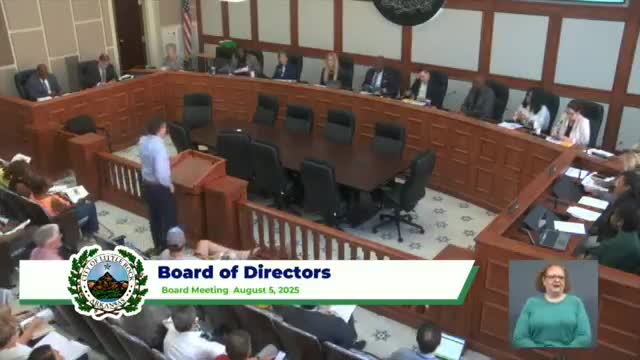
Summary
The board delayed final action for two weeks on accepting federal funds to purchase right-of-way for two proposed roundabouts on South Bowman/Bridal Creek Road after residents warned the design could damage landscaping, underground pond systems and utilities.
On Aug. 5, 2025 the Little Rock City Board of Directors heard neighborhood objections to a planned roundabout near the Bridal Creek subdivision and voted to table the item for two weeks to allow further outreach and review.
Homeowners raised concerns about potential impacts to landscaping, underground pond equipment and utilities at the subdivision entrance. “We think that by straightening it out, by moving the roundabout a little further away from our neighborhood, that would really help,” said Jake Bleed, speaking for the Bridal Creek Neighborhood Association. Bleed asked the city to consider moving the roundabout east to reduce a blind curve and to avoid cutting into the neighborhood entrance.
City staff said the current agenda item is to accept federal funds for acquiring right‑of‑way and for utility accommodation, not to approve final construction design. A staff engineer told the board that the revised plans had already been moved to minimize impacts and that the plans were preliminary. “Where it is is most likely where it is going to be. We've already moved it as much as we can,” the staff member said, describing required design criteria for roundabouts and noting federal design requirements tied to the grant.
Why it matters: The item would accept roughly $700,000 in federal funds for right‑of‑way purchase and utility relocation. Neighbors said the roundabout could damage irrigation and pond infrastructure and require moving electronics and pumps in the subdivision entrance; staff said those features could be restored but that right‑of‑way and utility planning were necessary next steps.
Board action and next steps: Director Capiras moved to table the item for two weeks; the motion passed. During debate Board members emphasized staff outreach with the Bridal Creek property owners and other affected property owners (including a large adjoining property owner identified in discussion as WestRock). Staff said they will meet again with the property owners association, review revised plans, and bring further information back to the board. Staff also said if roundabouts are not feasible the project could revert to a signal or other intersection control, and that the board’s vote to accept the funds is a formality required to secure the federal grant if the board chooses to proceed.
Board members also flagged the risk of costly right‑of‑way acquisitions if the city instead relied on condemnation; Director Hoss said he worried that condemning property without alignment adjustments could be expensive and that the board should preserve options.
Ending: The board tabled the item to allow staff to hold additional neighborhood meetings, validate underground utility locations and provide updated design options at the board's meeting in two weeks.