
Little Rock approves microhome village construction contracts as city warns costs have risen
Get AI-powered insights, summaries, and transcripts
Subscribe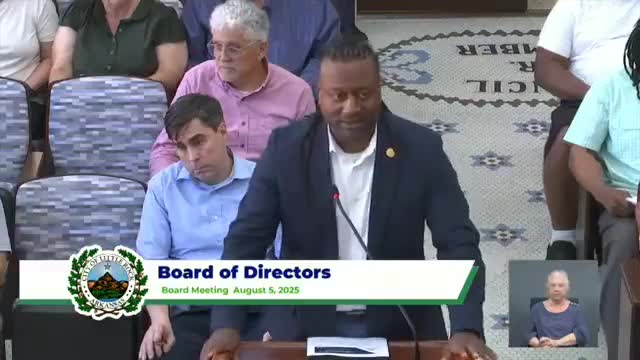
Summary
The Little Rock City Board approved contracts and change orders for the Microhome Village community center and related site work on Aug. 5, 2025, while staff reported required sewer and accessibility changes and higher construction bids that increased the project’s estimated total cost.
On Aug. 5, 2025, the Little Rock City Board of Directors approved consent items that authorize construction contracts and change orders for the Little Rock Microhome Village, the city’s project to create non‑congregate microhomes and an on‑site services hub for people experiencing homelessness. City staff and the board described required design changes, new utility work and higher bids that have raised overall project estimates.
City staff described site changes and a grading change order needed to meet requirements from the Little Rock Water Reclamation Authority and transportation reviewers. “Reason 1 is safety and accessibility improvements, additional sidewalk and accessibility ramp for the Roosevelt Road to the community center,” staff member Kevin Howard said during a presentation to the board. Howard also said additional sewer connections were required after final review by the reclamation authority and that fire access requirements had been adjusted in coordination with the fire marshal.
Howard told the board the originally bid configuration did not match the sewer layout required by the reclamation authority; staff said the authority requested additional sewer capacity because the existing lines “wouldn’t hold the number of houses” planned. Howard said the city anticipated “minimal to no delay” to schedule but noted recent rain had caused some hold ups.
Why it matters: The project combines housing and an on‑site services center designed to provide case management, a day resource center and short‑term emergency shelter beds. City staff told the board the Microhome Village is intended to reduce unsheltered encampments by offering on‑site wraparound services and short‑term shelter.
Most important actions taken: the board approved a consent‑agenda resolution authorizing a construction contract for the Microhome Village community center and authorized a construction change order. The consent agenda included a contract with Carson and Associates for the community center in an amount “not to exceed $4,381,300” and a separate change order for Redstone Construction Group “in an amount not to exceed $222,678.52” for additional construction services tied to the Microhome Village. Both items appeared on and passed as part of the consent agenda.
Project budget and schedule details cited in the meeting: staff said an earlier construction bid was about $3.5 million and a later bid came in at $4.1 million; Director Webb told the board the full project now was being tracked at roughly $7,147,576.91. Howard said the city used a mix of locally‑allocated funds and federal American Rescue Plan Act (ARPA) money for the project and that the non‑congregate units were being funded in part with ARPA monies. Howard also gave operational figures: the city provided emergency shelter to more than 600 people during a recent 21‑day sheltering period; the planned emergency shelter at the site will include 32 beds (16 for men, 16 for women). He said the city’s point‑in‑time counts for Central Arkansas were 859 in 2022, about 773 in 2023, 552 in 2024 and had increased to 973 in the most recent count discussed at the meeting.
Operational partners and services: city staff said the Microhome Village will be run day‑to‑day by contracted service providers and that the day resource center at Jericho Way will coordinate case management and referrals into the village. Staff referenced DePaul USA as a partner they are coordinating with on operations. Howard said the site will include showers, laundry, a medical clinic, training rooms, a commercial kitchen and 24‑hour security.
Board questions and concerns: board members pressed staff about why the sewer issue was not identified earlier, cost increases, and whether the community center would be open to the general public (staff said the community center is intended to serve village residents and provide on‑site services, not function as a general public community center). Director Miller said he found it “a little incredulous” that a design professional had not caught the sewer capacity issues earlier; Howard responded that the final reclamation authority review required additional mains. Director Peck and others asked about coordination with DePaul USA and how the facility would interact with Jericho Way services.
Next steps and timeline: Howard said site grading and site utilities work were under way and expected to be completed in August, community center construction could begin in September depending on contract negotiations, microhome construction would follow in September–October, and the city expects completion of the community center and microhomes in the first quarter of 2026.
Ending: The item passed as part of the consent agenda, and staff said they would continue contract negotiations and construction oversight while coordinating with partners for operations.