
Albany board reviews governor's executive order on student personal devices; policy due Oct. 31
Get AI-powered insights, summaries, and transcripts
Subscribe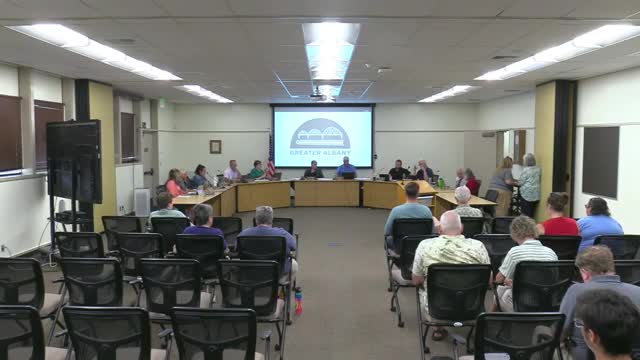
Summary
Board members heard a detailed briefing on a governor's executive order that requires districts to adopt a personal electronic device policy by Oct. 31 and implement it by Jan. 1; the superintendent outlined key points and board members raised enforcement and equity questions.
The Albany School District Board on Tuesday heard a presentation about a governor's executive order that requires districts to adopt a personal electronic device policy by Oct. 31 and implement it no later than Jan. 1.
The superintendent told the board the order aims "to improve academic outcomes by ensuring students are fully engaged in learning within a distraction-free environment that supports their well-being, focus, and ability to thrive academically and personally." The superintendent said the district expects to present a recommended policy to the board before the school year starts and would post the final policy on the district website.
Why it matters: The order would change common local practices, including use of phones during parts of the school day such as hallways and lunch. The superintendent said the directive covers use "from the start of regular instructional hours until the end of regular instructional hours" and that districts must "provide clarity on how devices will be stored during the school day." That storage requirement and limits on disciplinary responses are among the most consequential provisions for building leaders.
Board members and staff described specific features that must be addressed in any local policy. The superintendent said the order defines personal electronic devices to include any portable device capable of calls, texts or independent internet access and explicitly mentioned smartwatches. The policy must identify how devices will be stored and may not authorize disciplinary responses that "result in students losing instructional time," the superintendent said, adding, "Suspension or expulsion is not permitted when noncompliance is solely related to device use." The superintendent said districts are encouraged to use educational and restorative strategies for violations and to limit lost instructional time.
Board members pressed staff on enforcement and exceptions. Several members said the policy will play out differently at elementary, middle and high schools. One board member said elementary enforcement is widely supported, middle school is "fifty-fifty" and high school will be harder to enforce. Another warned that a top-down rule without local buy-in could be difficult to implement.
The superintendent outlined built-in exceptions the order allows: medical-provider orders, a student's individualized education program (IEP) or Section 504 plan, and written exemptions based on locally adopted guidelines to accommodate individual circumstances or specific educational outcomes. The superintendent said the district will seek clarification from the state about how those exemptions should be documented and applied.
Staff noted operational challenges. The superintendent described storage solutions schools have used, from pouches to charging "packs" that take phones offline, and said some of those solutions are expensive. The superintendent also raised concerns about repeated noncompliance and how administrators should respond while complying with the requirement that students not lose instructional time.
Next steps: The superintendent said the district will share the recommended policy with board members once OSBA (the Oregon School Boards Association) and state partners finish their guidance. The superintendent said staff'recommended the board adopt a local policy before the first day of school if feasible so classrooms do not begin the term with changing rules.
The board did not take a vote on a local policy at the meeting; the presentation was informational and staff will return with a proposed policy for action.