
Cities report early wins and persistent staff and code capacity gaps as they speed permitting and adopt middle‑housing rules
Get AI-powered insights, summaries, and transcripts
Subscribe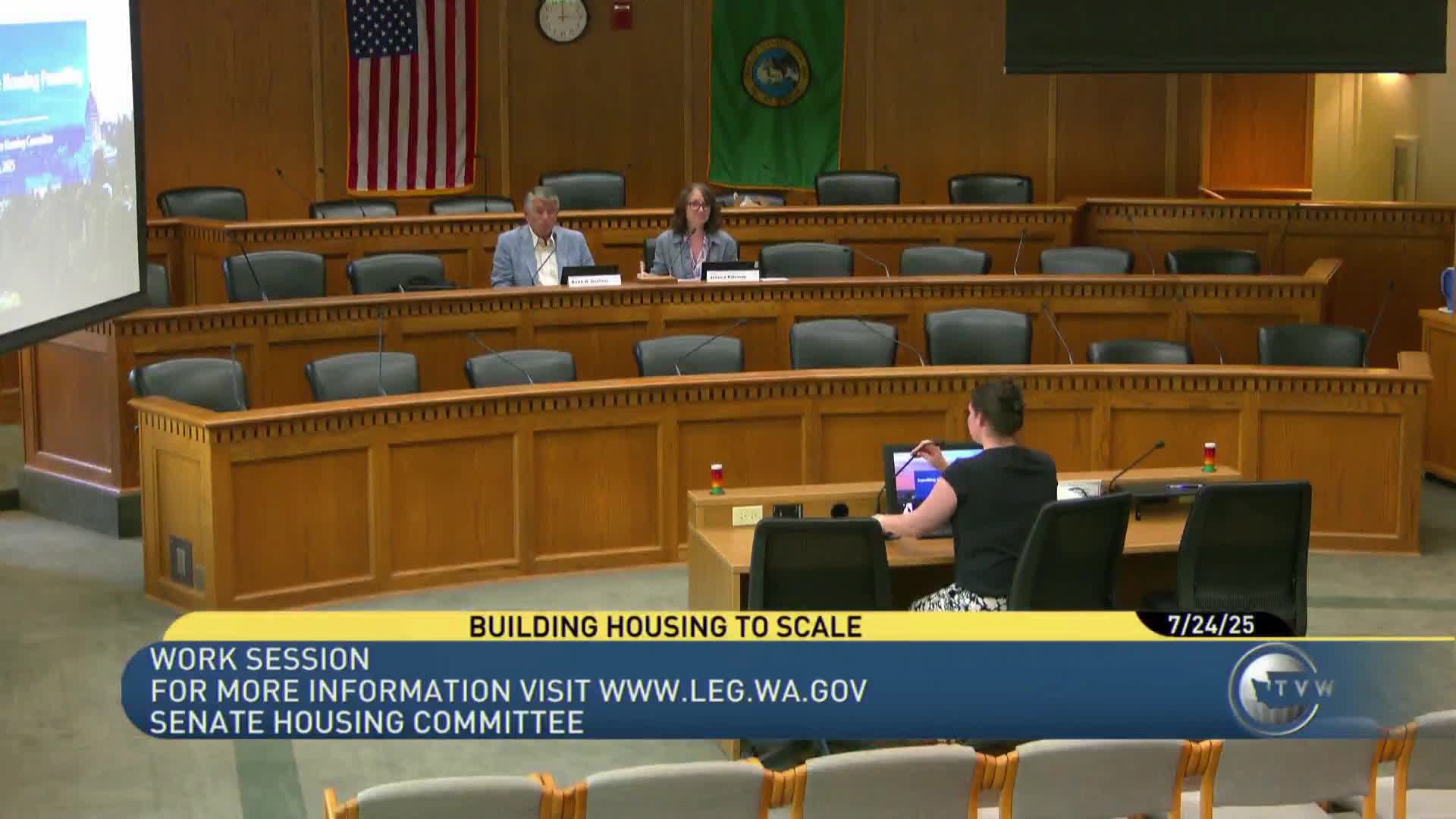
Summary
Four Washington cities told the Senate Housing Committee July 24 that expedited permitting, preapproved ADU plans and middle‑housing code changes are producing early results but require more staff capacity and interdepartmental coordination to scale.
City officials from Olympia, Walla Walla, Des Moines and Poulsbo briefed the Senate Housing Committee July 24 on local efforts to speed approvals, expand middle housing and deploy preapproved accessory dwelling unit (ADU) plans.
Olympia: Jacinda Stelchos, Olympia’s housing division manager, described an affordable‑housing emergency ordinance that moves projects targeting households at 80% AMI and below to the top of the permitting queue. Stelchos said the ordinance also relies on pre‑submission conferences to align developers, planners and engineers early in design. She cautioned that expedited permitting requires close coordination across housing, planning, engineering and developers because financing pauses or plan resubmissions can interrupt a fast‑track timeline.
Walla Walla: City Manager Elizabeth Chamberlain said Walla Walla eliminated single‑family zoning in a 2018 code change that created a single “neighborhood residential” zone with a minimum density of four dwelling units per net acre and removed minimum lot sizes. Chamberlain presented a multi‑year picture showing an increase in ADUs, duplexes and small‑lot single‑family homes and cited projects that repurposed a former Kmart site for a 96‑unit apartment series. She said the city continues to deploy a range of tools — tax exemptions, CHIP grants and partnerships with nonprofit developers and the housing authority — and that middle housing is not a single solution but one of many tools needed.
Des Moines: Laura Tachiko (planning and development services manager) summarized a fast adoption timeline: the city engaged consultants, did public outreach and on June 12 adopted middle‑housing and ADU ordinances to meet state deadlines. Des Moines increased maximum units to four per lot (or 24 units per acre) with up to three ADUs allowed; the city opted to adopt recent parking reductions early to provide predictability for builders. Tachiko said staff time and consultant costs for the work were substantial and grant funds did not entirely cover the staff workload for the compressed schedule.
Poulsbo: Nicole Coleman and Heather Wright said Poulsbo proactively adopted multiple code changes to expand housing choice. Poulsbo increased allowable ADU size and number pre‑emptively, created preapproved ADU plans shared across several Kitsap County cities (four plans launched in June, two more expected in October), and used donated city land, CHIP grants and donated parking from a church to build “Nordic cottages” — a small‑scale senior rental project that will offer eight one‑bedroom units and two fourplex buildings. Coleman said Poulsbo also adopted a unit‑lot subdivision ordinance and has a 62‑unit townhouse project under construction.
Common lessons and requests: Cities said expedited permitting and shared preapproved plans speed production but require staff capacity, interdepartmental coordination and clear developer communication. Olympia, Des Moines and other presenters said planners are often stretched by competing priorities — middle‑housing code updates, periodic comprehensive plan work, and constrained local budgets — and asked for state support to help local governments scale permitting capacity and adopt shared resources such as preapproved ADU plans.
Why it matters: Cities are implementing the state’s recent middle‑housing laws and trying local innovations (top‑of‑queue permitting, preapproved plans, unit‑lot subdivisions, elimination of single‑family zoning) to increase housing supply; those local experiments show effects but also reveal staffing and process bottlenecks that can slow projects despite code changes.
What’s next: Cities will continue implementation, report early results, and asked the Legislature to consider funding or technical assistance to help understaffed planning departments deliver predictable, expedited permitting and shared ADU design resources.