Get Full Government Meeting Transcripts, Videos, & Alerts Forever!
Get email alerts on the Budget Education topic
No spam. Unsubscribe anytime.
Senate passes groups of House bills including continuation budgets after debate over K-12 funding
Summary
The State Senate voted to pass multiple House measures, including two packages described as continuation budgets, after floor debate in which several senators said the measures would reduce funding for K-12 schools and reverse a previously agreed "opportunity weight."
The State Senate voted to pass multiple House measures, including two package votes described by senators on the floor as continuation budgets, and instructed the secretary to return the bills to the House.
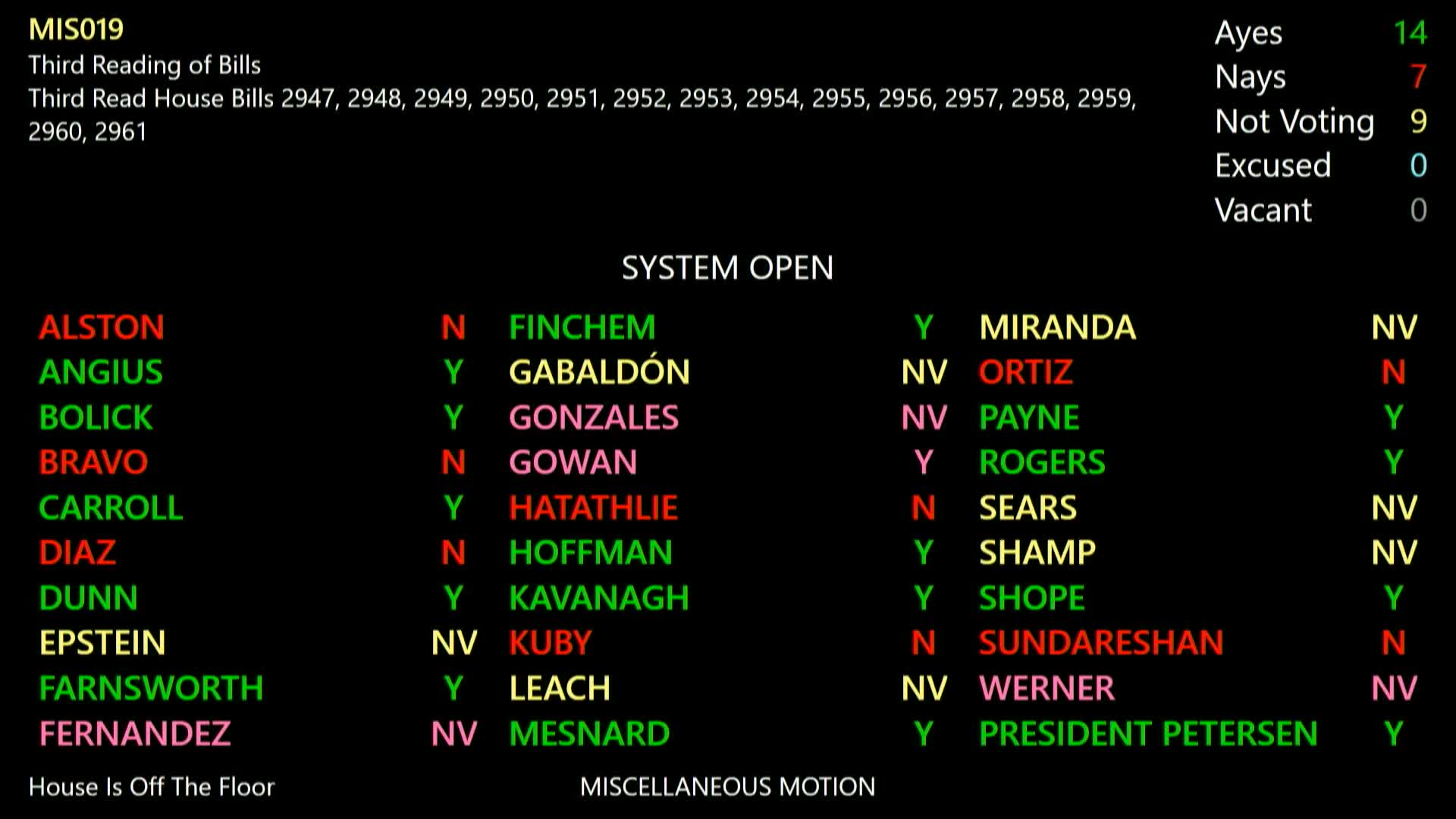
Senator Epstein, explaining her vote, said the measures “contain some very damaging cuts to programs” and urged a no vote because the package would eliminate funding known in prior years as the poverty weight and would reduce support for K-12 schools. "District additional assistance is fundamental," Epstein said, adding that it covers “books and buses” and other basic materials for students. She said she would "not stand for it" and recorded a vote of no.
The nut graf: Senators divided along fiscal and policy lines as the chamber approved grouped procedural motions to suspend rules and take up multiple bills for second and third reading on the same day, then voted on final passage for groups of House bills. Supporters framed the measures as fiscally prudent responses to uncertainty; opponents said reductions would underfund public education.
Most important facts: The Senate adopted floor motions to suspend rules so a set of House bills could be read second and third on the same day, then used a group motion to assign a single final-passage vote to each measure. The transcript records the passage of two large groups of House bills (listed in the actions array) and shows votes certified on the floor. One roll-call outcome is recorded in the transcript as "By your votes of 16 ayes, 11 nays, 3 not voting, you have passed" a listed set of House bills; later a similar tally is recorded for a second group of bills.
Debate highlights: Senator Leach said the budget "is moving in the right direction" but warned about fiscal risks ahead, including uncertainty in federal funding programs and what he characterized as a very large national debt; he said the package "doesn't go far enough" but defended it as a step toward balance. Senator Hoffman described a personal circumstance and then cast a yes vote, while other senators gave brief explanations of their votes reflecting either fiscal caution or concern about education cuts.
Background and details: Senators on the floor referenced a 2022 agreement that added an "opportunity weight" and adjustments to "district additional assistance" tied to an education voucher policy enacted in that year; opponents said the current measures would remove or reduce those targeted funds. The transcript records senators saying the district additional assistance was intended for basic school materials and that removal would be a direct funding cut to K-12.
What happens next: The secretary was instructed to record the actions and transmit the passed House bills back to the House. The bills are identified in the actions section below by the numbers given on the Senate floor; the transcript does not include bill text or line-item budget amounts in this session.
Ending: The floor debate included several brief explanations of vote choices and floor procedure; the journal will record the formal actions and the bills will be returned to the House for further processing.