Get Full Government Meeting Transcripts, Videos, & Alerts Forever!
Get email alerts on the Immigration Border Cartels topic
No spam. Unsubscribe anytime.
Senate deadlocks then later approves HCR2055 after reconsideration; debate centers on labeling cartels as terrorists
Summary
After extended debate and a motion to reconsider, the Arizona Senate approved HCR2055 on June 27; the resolution directs state attention to drug-cartel threats but drew warnings that its wording could have sweeping consequences.
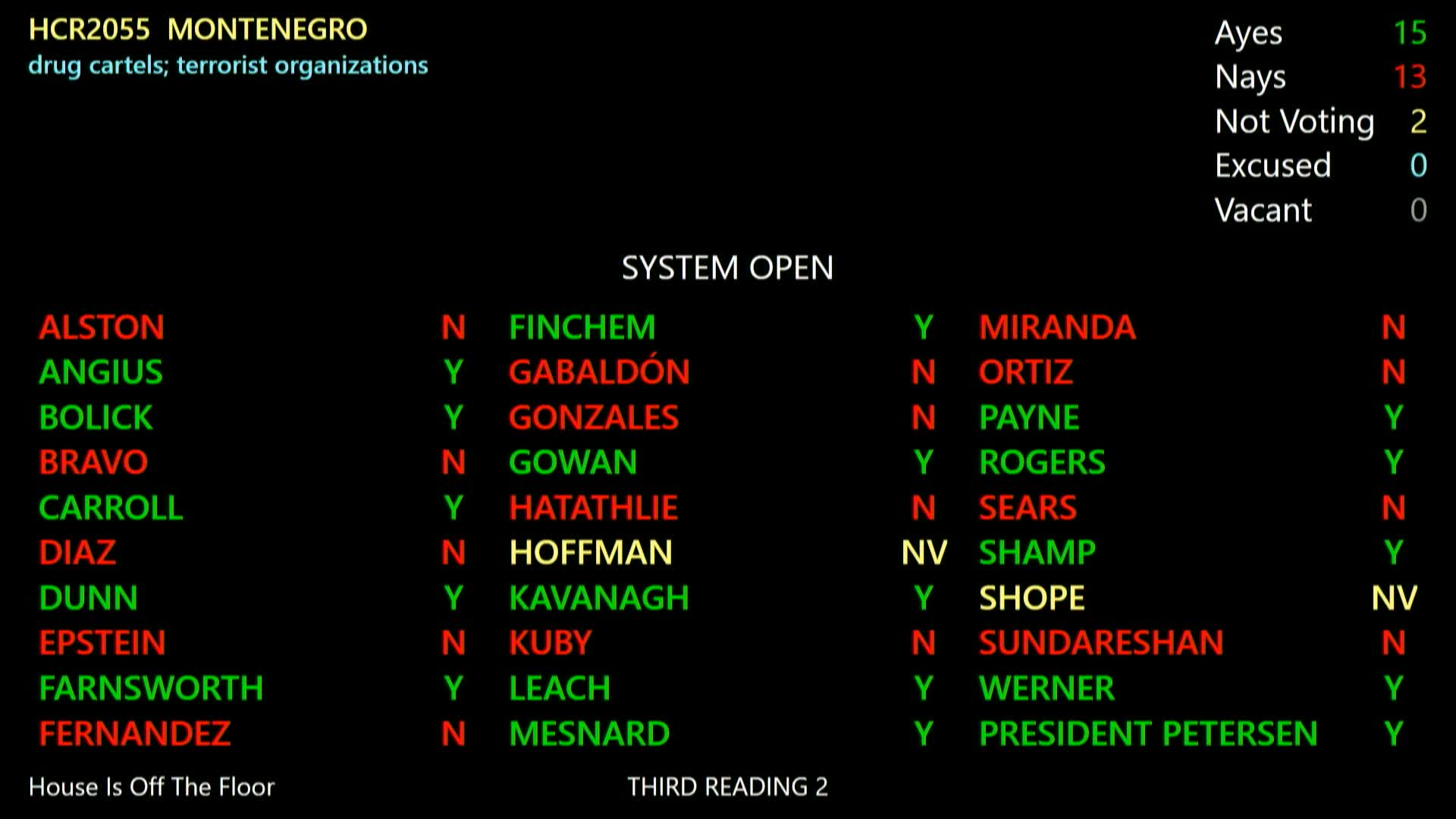
The Arizona Senate debated and ultimately approved, on reconsideration, concurrent resolution HCR2055 on June 27 after extended floor exchanges and a recorded division vote. The resolution’s language would direct state attention toward drug-cartel threats and call for agency actions; opponents argued the wording risked treating migrants and trafficking victims as terrorists and could encourage increased militarization of border responses.
Initial procedural action and votes: The resolution received a due-pass recommendation in committee and advanced to the floor. During third-reading consideration, the Senate initially failed to pass HCR2055 (a tie vote), and a subsequent motion to reconsider was made. After reconsideration and additional debate, the chamber recorded a roll-call favoring passage and instructed the secretary to transmit the measure back to the House.
Debate themes: Opponents, including Senator Miranda, said HCR2055 “goes against previous Supreme Court precedent” and cautioned that using the label “terrorism” for cartel activity could broaden enforcement in harmful ways, potentially criminalizing asylum-seekers and other migrants who are victims. Supporters framed the measure as responding to serious organized-crime threats and public safety concerns. One senator changed their vote and urged reconsideration so the matter could reach voters or be reexamined.
Outcome: After a division, votes recorded in the transcript show a sequence of calls, explanations, and an ultimate passage on reconsideration; the secretary was instructed to transmit the action to the House. Sponsors and opponents signaled the debate may continue in subsequent legislative action or judicial review depending on how the measure is used.