Get Full Government Meeting Transcripts, Videos, & Alerts Forever!
Get email alerts on the Education Funding topic
No spam. Unsubscribe anytime.
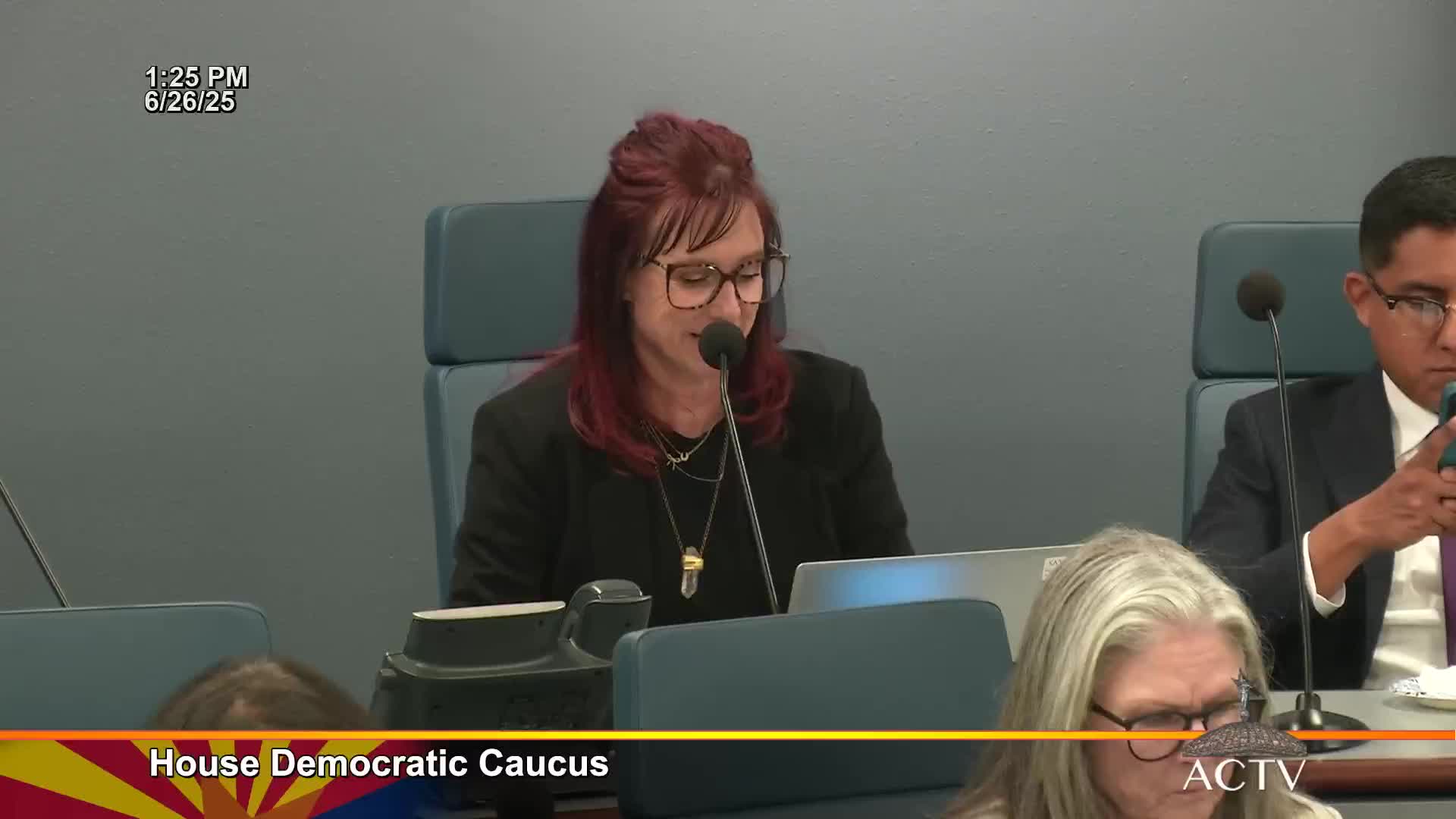
Caucus briefed on resolutions to temporarily override Arizona school expenditure limit; teacher urges clarity on funding access
Summary
Staff explained SCR 1041 and SCR 1042, two resolutions that would lift the aggregate expenditure limit for school districts for one‑year periods; a speaker identifying as a public school teacher urged members that the measures allow districts to spend money already received but previously constrained by the AEL.
The caucus received a briefing on two negotiated budget resolutions that would temporarily override Arizona's aggregate expenditure limit (AEL) for school districts.
Michael, staff member, explained that the AEL — a voter‑passed limit on total spending by all Arizona school districts combined — restricts spending, not how much districts may receive, and that statute lists 12 exemptions such as federal grants and debt service. He said SCR 1041 would authorize school districts to spend local revenues in excess of the expenditure limitation for fiscal year 2025–26, and SCR 1042 would do the same for fiscal year 2026–27. Both resolutions require a two‑thirds legislative vote.
A speaker who identified themself as a public school teacher emphasized to members that the resolutions "are not allowing schools to send any money that they haven't already been budgeted. It's like saying you have the money in your checking account but because you ran out of checks you can't expend it." The caucus did not take a formal vote during the briefing.
Why it matters: temporarily overriding the AEL would let districts expend local revenues currently restrained by the limit, affecting school budgets and classroom resources in the near term. The resolutions still require legislative supermajorities to pass.