Get Full Government Meeting Transcripts, Videos, & Alerts Forever!
Get email alerts on the Rural Fire Districts And Insurance topic
No spam. Unsubscribe anytime.
Rural chiefs urge sustained funding, warn districts are tapped out; residents report insurance and grant barriers
Summary
Rural fire chiefs, firefighters and mitigation groups told a July 1 field hearing that staffing, aging apparatus and grant rules are straining districts in northern Arizona while homeowners face insurance nonrenewals tied to FEMA risk mapping.
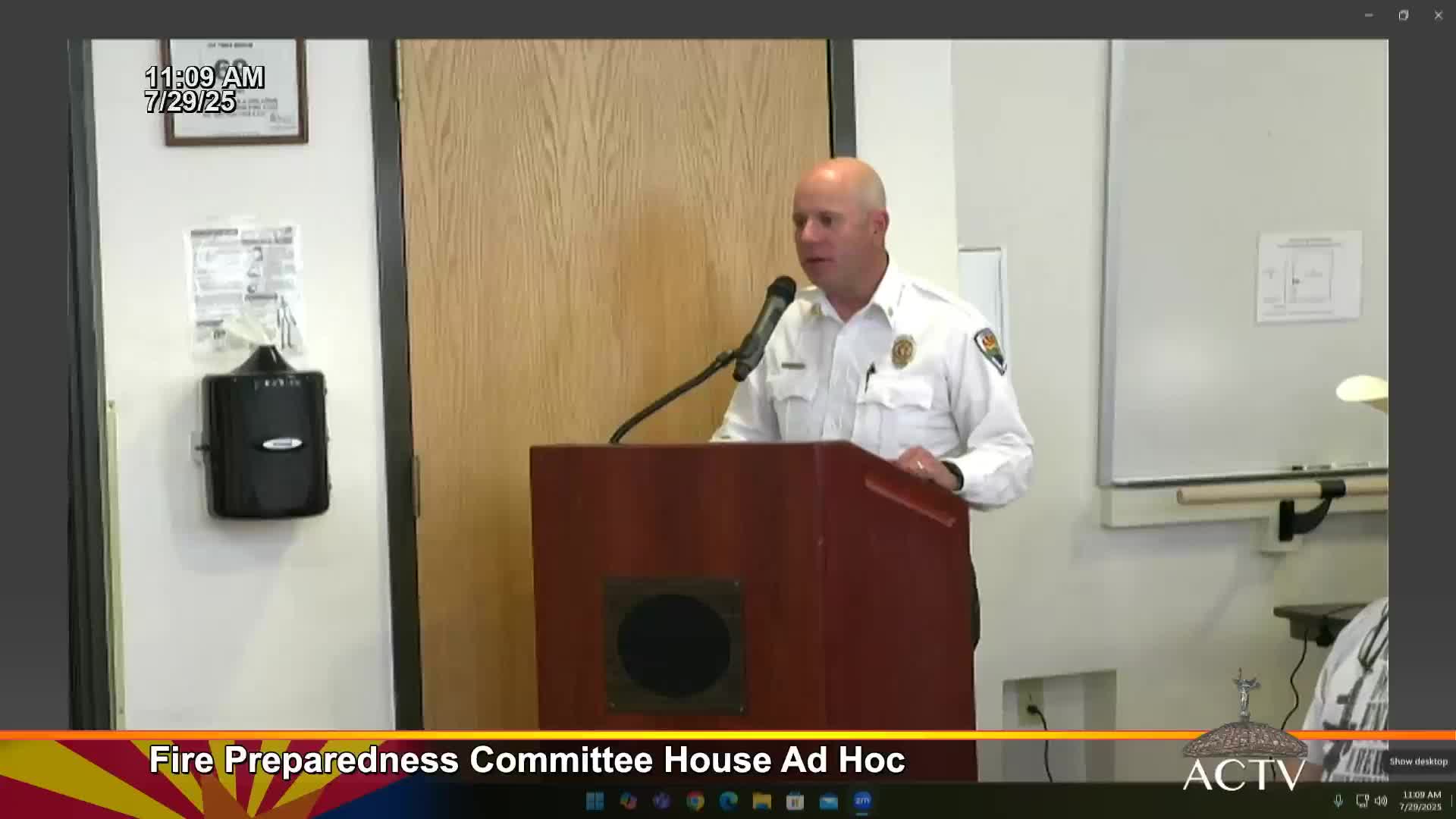
Rural fire chiefs and community groups told the House Ad Hoc Committee on Fire Preparedness on July 1 that persistent funding limits and grant rules are leaving districts strained during a prolonged wildfire season and that insurance market actions are compounding household vulnerability. Fire officials including Randy Chevalier (Timber Mesa Fire Medical District), Dan Freiberg (Professional Firefighters of Arizona), David Staub (Payson Fire), and others described personnel shortfalls and aging equipment. Staub said the Town of Payson contributes roughly $8 million of municipal money to fire operations and that Payson has effectively subsidized service to surrounding districts that can no longer staff engines. “There are 18 firefighters on duty to answer all the emergency calls from Pine Strawberry to Christopher Creek,” he said; “10 of them are in the town of Payson. There’s eight folks outside the town of Payson.” Speakers described how property‑tax caps and small local tax bases limit districts’ capacity and how many departments rely on EMS transport revenue authorized through certificates of necessity. Dan Freiberg, representing about 9,000 professional firefighters statewide, said funding shortfalls drive mandatory overtime, degradation of recruitment and retention and increased injury, illness and mental‑health risks among firefighters. Mitigation groups urged easier access to grant maintenance funds. The Pine Strawberry Fuel Reduction executive director said property owners were penalized when a successful outreach campaign converted many homeowners to the program’s incentives; because participation exceeded thresholds, grant cost‑share shifted from 90/10 to 70/30 in some cases, making work unaffordable for older second‑home owners. She also said some grant rules block repeated grants on same parcels even when ownership has changed, creating a maintenance gap. A local business owner, James Garner, described an insurance nonrenewal experience he traced to FEMA‑derived risk mapping. He said some properties inside municipal boundaries are flagged by FEMA maps as higher‑risk because the agency’s mapping grid places addresses into adjacent high‑risk zones; Garner urged state officials to press FEMA for map corrections so residents can obtain coverage at reasonable rates. Committee members praised local mitigation efforts and said they will pursue rural‑focused appropriation proposals in the next legislative session, noting existing bills that would target Payson and the White Mountain area. No committee votes were taken; members asked departments to provide procurement numbers, station conditions and local grant rule clarifications.