Get Full Government Meeting Transcripts, Videos, & Alerts Forever!
Get email alerts on the Land Ownership Military Security topic
No spam. Unsubscribe anytime.
Senate approves ban on foreign purchases near military bases; critics warn of constitutional risk
Summary
Senators passed SB1082, a measure prohibiting land acquisitions by foreign principals from designated countries near Arizona military installations. Supporters cited national security and Luke Air Force Base; opponents raised equal-protection and federal preemption concerns.
The Arizona Senate approved SB1082 on final reading June 27, a bill that prohibits ‘‘foreign principals’’ from purchasing, owning or acquiring a substantial interest in real property in the state if they are from specified designated countries and the property is near military installations.
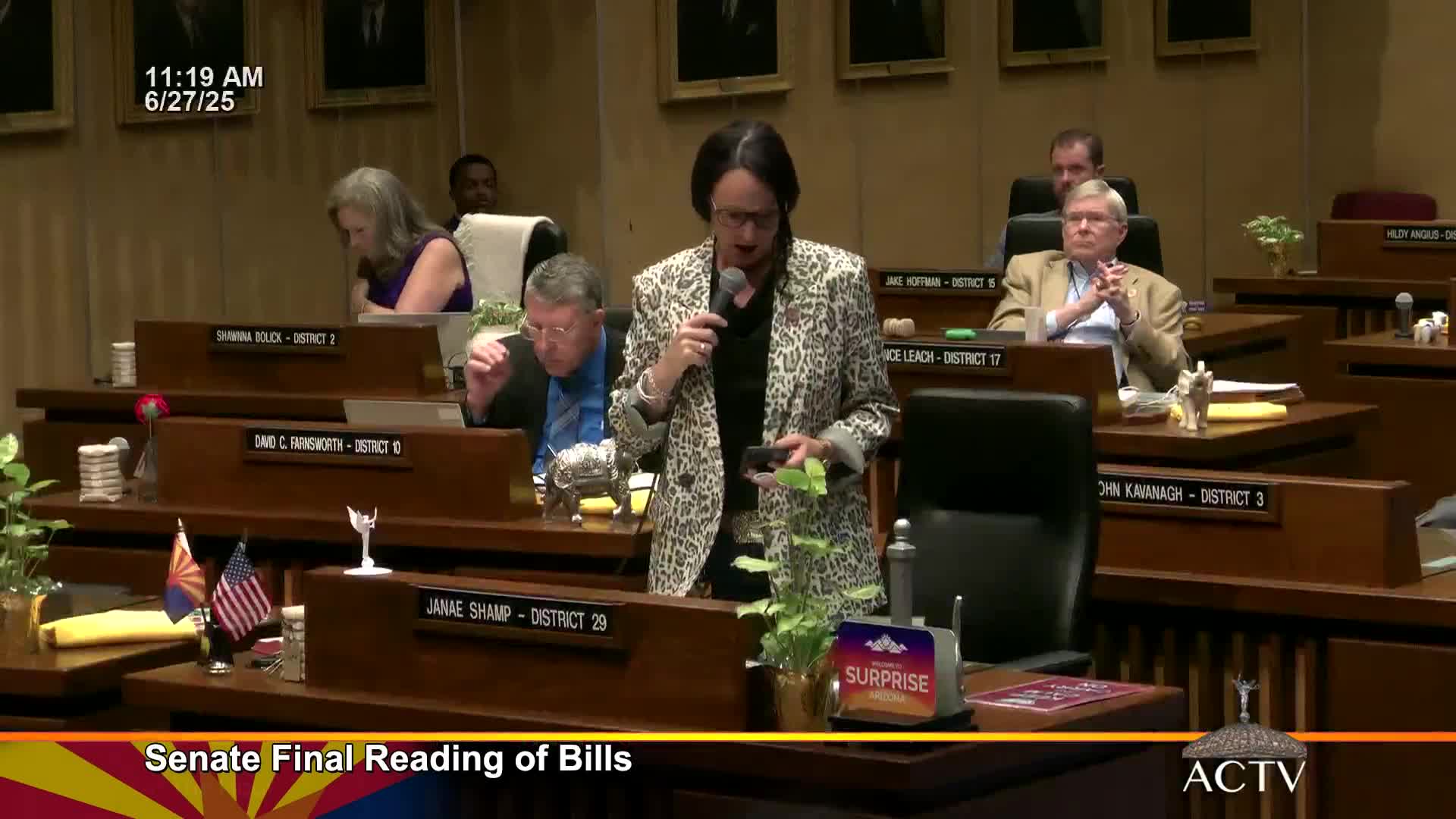
Supporters argued the measure protects state and national security, citing Luke Air Force Base and other installations. One senator told the chamber the bill was amended after stakeholder consultation and framed it as balancing security and property rights.
Opponents warned the statute risks constitutional challenges and could be rooted in discriminatory precedents. Several senators referenced potential equal-protection and federal preemption problems and drew historical parallels to alien land laws. One opponent said the measure “takes away the right of a person simply because of their nationality” and voted no.
Vote and next steps: The Senate recorded passage by roll call; the secretary was instructed to transmit SB1082 to the governor for signature. Proponents noted consultations with military stakeholders; opponents signaled likely legal challenges if the law is enacted.
Context: Supporters emphasized proximity to military installations and national security. Opponents emphasized existing federal mechanisms for addressing foreign ownership and cautioned about sweeping language that could affect lawful purchasers and asylum-seekers who may be wrongly categorized under the bill’s definitions.