
Oregon Heritage adviser urges Dallas commission to pair design review with outreach and incentives
Get AI-powered insights, summaries, and transcripts
Subscribe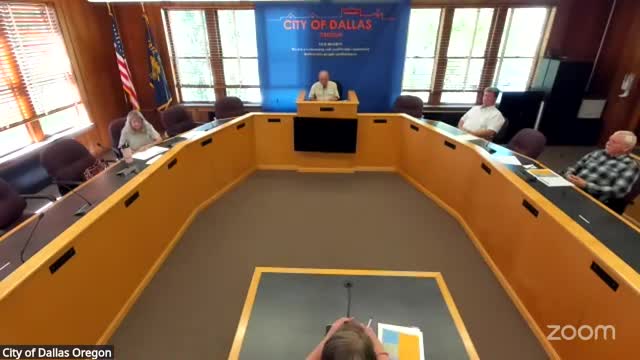
Summary
At a meeting of the Dallas Historic Preservation Commission, Curry Gill of Oregon Heritage outlined how CLG grants, tax incentives and outreach tools can support the city’s downtown preservation and urged the commission to plan for design-review practice and public education as it pursues local designation of the national-register district.
Curry Gill, grants and outreach coordinator for Oregon Heritage, told the Dallas Historic Preservation Commission that the panel should pair any new design-review authority with sustained public engagement and incentives to make preservation easier for property owners.
Gill said the certified local government (CLG) program, which is administered by the National Park Service and coordinated at the state level by the State Historic Preservation Office, is intended to help local communities “document, designate, and care for their historic properties.” She added, “We are required to award about 10%. We award around 25% of the funding that we get.”
The commission focused on several practical tools Gill recommended: targeting CLG grant dollars toward façade designs and preservation plans, creating a contractors/consultant list, promoting available tax programs and using outreach to build community support. Gill said a recently passed state special-assessment program for commercial properties and federal historic rehabilitation tax credits are two incentives owners should be told about: the state program is a 10-year assessment option (renewable with a preservation plan) and the federal tax-credit program can cover “up to 20% of the project.”
Commission members described local capacity and examples. Dan Andrews, identified in the meeting as a downtown property owner, noted an earlier award for a building: “We got the $264,000 grant.” Commissioners also praised past rehabilitation work downtown — including restoration of the Blue Garden and the Carnegie Building — as evidence of the district’s potential to attract visitors and businesses.
Gill advised the commission to make design review predictable and to create expedited pathways for projects that meet clear standards. She pointed to Salem’s practice of desk approvals for work that follows an approved approach and suggested the commission develop written design guidelines, mock hearings for training, and brief public workshops. “If you bring people along and make it very easy to meet the historic standards … then they wanna do it,” Gill said.
On public engagement, Gill suggested activities that highlight character-defining features — walking tours, scavenger hunts, hard-hat tours, award programs and coordination with Main Street, urban renewal and tourism partners. She also recommended practical supports for owners: a procedures checklist for design-review requests, a curated list of preservation-friendly contractors, and the use of small pre-construction grants (the commission discussed existing $3,000 architectural/consultant grant amounts from local programs).
The commission raised process concerns. Members said permitting timelines can feel slow for routine interior work; Gill replied that most local design review focuses on exteriors and that some interior requirements in past projects were grant conditions rather than local code. The commission identified the need to review pending code changes: members expect a revised set of ordinances separating the commission’s formation/duties from design-review rules and said the local designation of the national-register downtown district is still in process.
Gill also reminded members that public-meetings law training is required and warned about ex parte contacts and the limits on subcommittees offering formal recommendations outside public meetings. She suggested the commission request training from the city and use the state Department of Justice materials if local training is not provided.
Commissioners agreed to continue work on priorities including design-review practice, a procedures checklist for common actions (local landmark nominations, grant administration), and public-engagement programming. Gill offered follow-up support and a CLG workshop in November, and encouraged commissioners to send questions after the meeting.
The meeting included no formal motions or votes on code changes or designation during this session.