Council holds first reading on code change aligning accessory-structure setbacks with state building code
June 16, 2025 | Dallas, Polk County, Oregon
This article was created by AI summarizing key points discussed. AI makes mistakes, so for full details and context, please refer to the video of the full meeting. Please report any errors so we can fix them. Report an error »
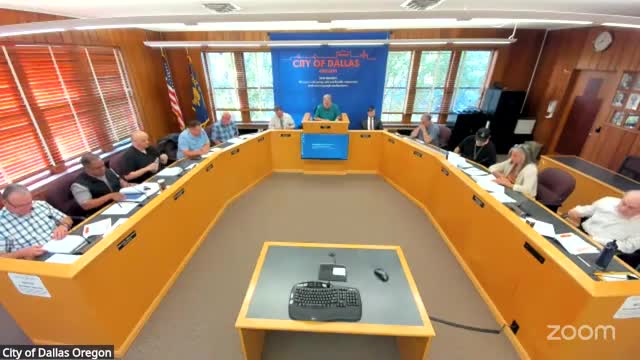
A city staff presenter explained the proposed change is intended to align zoning setbacks for accessory, non-habitable structures with the building code, which allows lesser setbacks where fire-rating and other building-code protections are provided. "The reason that we were looking at the setbacks is to align the zoning code with the building code," staff said. The staff presentation said the building code requires permits only for structures over 200 square feet and requires fire-protection measures when buildings are placed at or near property lines.
Councilors asked several practical questions. One asked whether sheds or non-habitable structures could be placed right up to a fence line; staff responded that building-code requirements govern fire-rating and permitting for structures that otherwise require a permit. Another councilor asked whether eaves and overhangs were being fully reconciled; staff said this ordinance handles accessory structures but that other consistency issues between zoning and the building code remained to be addressed.
Councilors also asked about chicken coops; staff said chicken coops are governed by a different code provision requiring greater setbacks. The council declared the ordinance to pass first reading that evening; subsequent readings and final adoption would follow the normal ordinance timetable.
The change affects development code provisions on accessory structures, not accessory dwelling units (which retain their existing setbacks), and is procedural: it aligns municipal zoning standards with building-code technical requirements rather than altering use permissions.
View the Full Meeting & All Its Details
This article offers just a summary. Unlock complete video, transcripts, and insights as a Founder Member.
30-day money-back guarantee
Sponsors
Proudly supported by sponsors who keep Oregon articles free in 2025

