
Lee's Summit committee discusses hiring a federal lobbyist to pursue I‑470 and other federal funding
Get AI-powered insights, summaries, and transcripts
Subscribe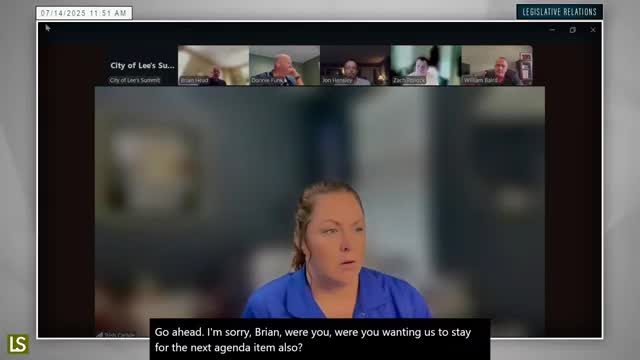
Summary
The Legislative and Intergovernmental Relations Committee on July 14 discussed pros and cons of hiring a federal lobbyist to pursue earmarks and grants, focusing on a potential I‑470 funding effort, cost uncertainties, partnership options and required reporting safeguards.
Members of the Legislative and Intergovernmental Relations Committee debated whether Lee's Summit should hire a Washington, D.C., federal lobbying firm to pursue federal funding and earmarks, notably for the I‑470 transportation bottleneck.
Brian Head, staff member, opened the committee discussion and outlined options: retain a general federal lobbyist; hire a lobbyist with transportation and appropriations expertise; or pursue a joint effort with neighboring jurisdictions. “A lobbyist is going to be very effective for us if we were seeking funding for some large‑scale project, specifically… earmarks,” Head said. He cautioned that federal lobbyists are typically substantially more expensive than state contract lobbyists and that federal lobbying triggers additional reporting requirements—especially to ensure no federal funds are used to pay for lobbying.
John Hensley and Zach Pollock of First Governmental Strategies told the committee that state contract lobbyists frequently collaborate with federal shops but are not federal specialists. “In DC you have the hyper‑specialized firms that might only lobby health care or only lobby a committee,” Hensley said, describing why a targeted transportation lobbying team might be preferable for an I‑470 effort. Pollock added that the market rates in Washington are in a different cost universe than Missouri contracts and suggested considering a bipartisan pair of firms if the city seeks broad access to appropriations committees.
Committee members expressed support for pursuing more information before making a commitment. Mayor Baird said sustained relationships are important for long‑term projects like I‑470 and preferred focusing on transportation and budgeting committees. Council members recommended staff collect comparative data on neighboring municipalities’ federal lobbying arrangements and costs and to identify potential partners for a shared engagement or memorandum of understanding. Chairperson Carlisle and others requested a cost estimate and examples of services provided by comparable cities.
No formal contract or motion to hire a federal lobbyist was made at the July 14 meeting. The committee directed staff to research which nearby cities (including Kansas City and others in eastern Jackson County) currently retain federal lobbyists, to report back on costs and satisfaction, and to return with procurement options (RFP/RFQ structure) and potential partnership models.
Ending: The item remained a discussion and direction assignment; committee members indicated support for pursuing the research and possible next steps but did not authorize staff to execute a federal lobbying contract at the meeting.