
Ouray County, Ridgeway and CDPHE discuss response to mosquito surge; officials advise targeted larvicide and coordination with Dallas Meadows HOA
Get AI-powered insights, summaries, and transcripts
Sign Up Free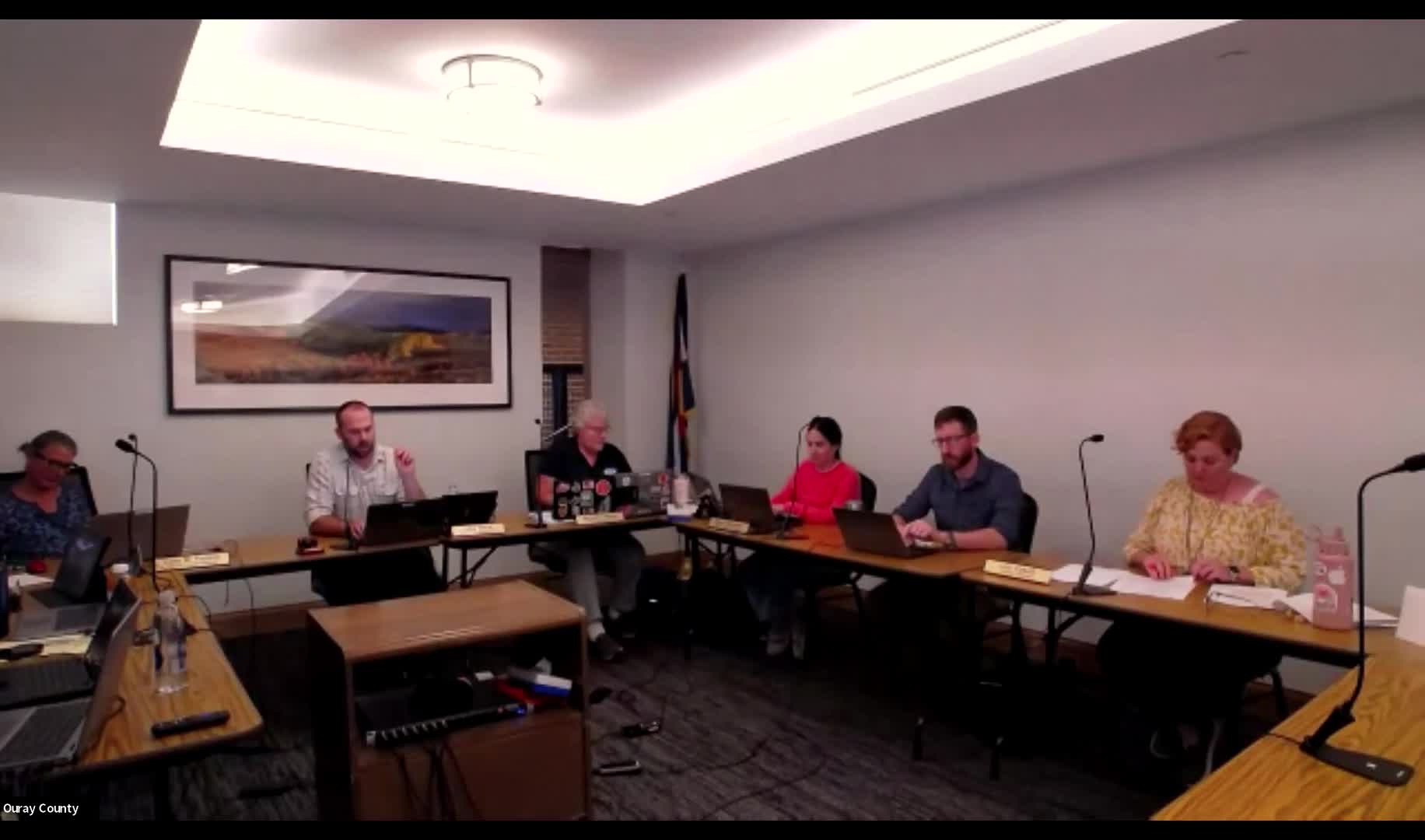
Summary
At an Aug. 6, 2025 work session, Ouray County commissioners heard from state and local public-health experts about an unusually large mosquito emergence near Ridgeway and directed staff to work with the Town of Ridgeway, the Dallas Meadows HOA and CDPHE on surveillance and limited, targeted mitigation options.
On Aug. 6, 2025, the Ouray County Board of Commissioners held a work session to review a surge in mosquitoes reported by residents in the Dallas Meadows area near Ridgeway and to hear state public-health guidance for response and future prevention.
Kristin Kelly, Erie County Public Health Director, told commissioners she had received multiple reports from neighbors of a dramatic increase in mosquitoes and that the issue raised public-health concerns even though no human illnesses had been reported. Kelly said the county’s review showed larvicide that historically had been applied in spring had not been placed in some normal locations this year, and she invited state experts to advise possible measures.
Chris Roundy, state public-health entomologist at the Colorado Department of Public Health and Environment (CDPHE), told the board that Vectobac (a commonly used larvicide) is effective at treating breeding sites but that once adult mosquito populations are large, larvicide alone will not immediately reduce biting adults. He said adult-targeted control (ultra-low-volume adulticiding, commonly called fogging) can quickly reduce adult mosquito numbers when performed by licensed applicators at dusk with controlled droplet sizes. Roundy noted adulticides are applied at low, regulated doses and that modern application methods are designed to minimize off-target impacts; he also advised that many practitioners and jurisdictions publicize spraying routes so sensitive users (beekeepers, residents) can take precautions.
Board members and town officials discussed options. Preston Veil of the Town of Ridgeway and other local speakers said significant larvicide had been placed in some areas this season but acknowledged some normal sites had not been treated and that the program requires cooperation among the town, state park, Tri-County Water and private landowners to be effective. Residents including Holly Bennett described heavy biting and reported personal health concerns; Bennett said she was awaiting West Nile test results and asked how residents could be trained to support surveillance or volunteer for mitigation activities.
CDPHE advised several parallel steps: increase targeted larval surveillance and treatment in known breeding areas; where adult populations are already high and residents are experiencing severe nuisance or safety impacts, consider targeted adulticiding performed by licensed contractors for defined zones; and expand surveillance capacity in the county (for example, CO2 traps, training for specimen identification and limited free mosquito testing through the state public-health lab). Chris Roundy offered to assist with training and to discuss surveillance equipment options; he and the regional CDPHE field epidemiologist said the state can help with surveillance and training but does not provide mitigation funding for adulticiding.
County staff, the town and residents discussed practical next steps for 2025. The town and county noted the existing MOU that funds a town-run mosquito-control program (the county contributes cash toward the program) and said this year’s experience highlighted the need to review roles and funding levels for future seasons. Commissioners asked staff to support the Dallas Meadows Homeowners Association (HOA) in exploring an immediate targeted adulticiding option if the HOA obtains landowner permissions and secures a licensed applicator; commissioners signaled willingness to consider a county cost-share for a time-limited, targeted treatment if residents and the HOA present a plan and contractor scope for board consideration.
Officials stressed that surveillance should guide repeat adulticiding rather than repeated routine sprays. CDPHE recommended surveillance-driven decisions, offered limited free mosquito testing of traps sent to the state lab, and offered training and help identifying mosquitoes to genus/species to inform control choices. Several speakers noted that certain chemical controls degrade quickly in sunlight and dry conditions and that adulticiding applications are designed to minimize long-term environmental impacts, though some short-term effects on invertebrates (including pollinators) cannot be fully eliminated.
No emergency appropriation was approved at the work session. The board’s immediate direction was procedural: staff should coordinate with CDPHE, the town of Ridgeway and the Dallas Meadows HOA to collect surveillance data, identify licensed contractors and, if the HOA requests a localized treatment, return to the board with a contractor scope and cost-share request for consideration. The board also requested staff to revisit the town/county MOU and consider a more centralized mosquito-district model for future seasons.
Residents and officials asked county staff to keep communication channels open and to pursue a community-based plan that would balance nuisance reduction and public-safety goals with environmental precautions.