Get Full Government Meeting Transcripts, Videos, & Alerts Forever!
Get email alerts on the Education School Board topic
No spam. Unsubscribe anytime.
Council interviews multiple school-board candidates as Rochester prepares to pick superintendent candidate
Summary
City council interviewed candidates to fill two school-board seats and heard repeated calls for greater transparency in public comment, improved follow-up on citizen concerns, and a focused superintendent search with selection scheduled for Sept. 2; candidates emphasized special education, budgeting and career-technical training.
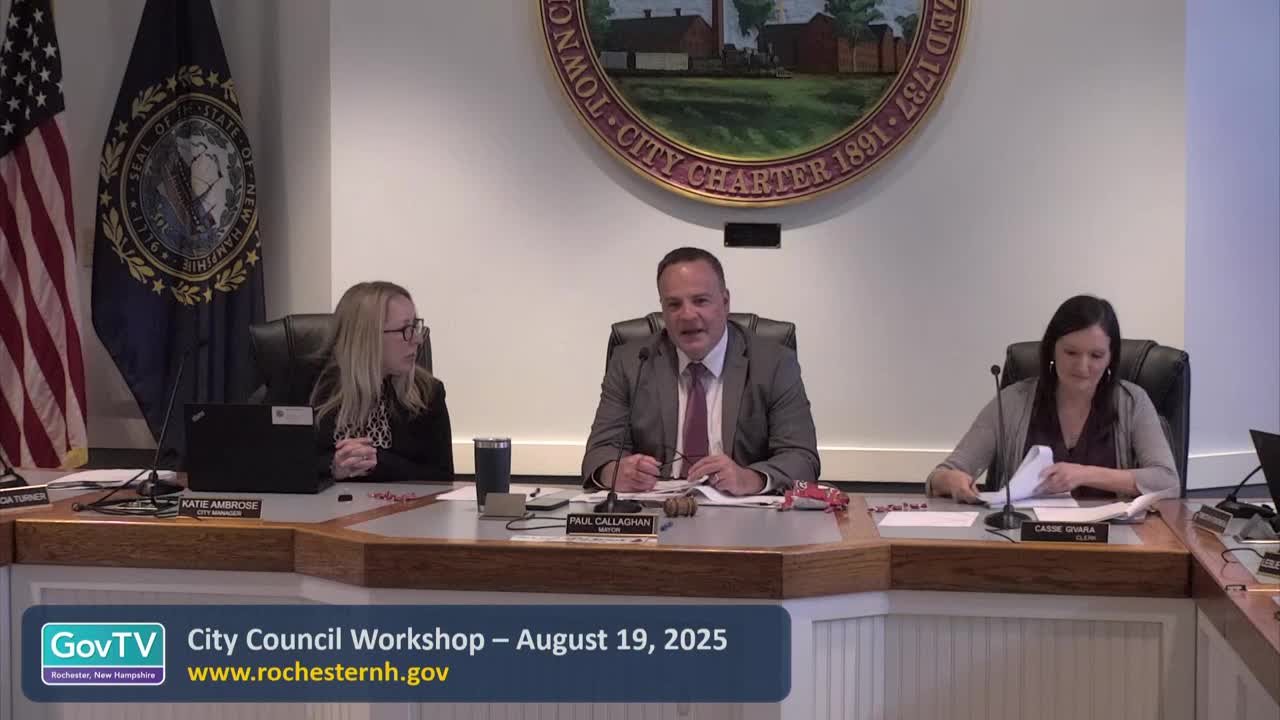
The Rochester City Council interviewed more than a dozen applicants on Aug. 19, 2025, to fill two vacancies on the School Board and heard recurring themes from candidates and councilors: a need for improved transparency and follow-up on public comments, concern about school budgets amid state funding shifts, and the importance of selecting a superintendent capable of delivering a clear vision.
Mayor Callahan opened the candidate interviews. Several applicants described personal and professional experience they said would inform their service.
Alisa Kahlberg, a Ward 4 resident and city IT employee, said she wants to support teachers and advance process improvements. "I have a background in business and in lean processes...I think it really gives me the skill to help centralize some of the needs that our school might have," she said.
Anne Grassi, a former school-board member, said she would prioritize improved responses to public comment. "I would like to have a portion of the school board meeting at the end of the meeting, take what was said in public comment and decide on action for it," she said, arguing that people who take time to speak should get follow-up.
Jerry Gregoire, principal at Milford Middle School, cited 25 years in education and leadership experience, including budgeting and personnel work, as qualifications.
Candidates raised other priorities: Tabitha Davis, a district substitute and volunteer, emphasized parent and student involvement and policy changes to ensure citizen questions receive answers; Joelle Bovell, attending remotely, highlighted her experience supporting students and special education; Richard Krause, retired police chief and current town administrator in Milton, said his background working with schools on safety and juvenile matters would be an asset; Sean Lampron, a former English teacher and assistant county attorney, said he would focus energy on strengthening middle-school culture and student support; and Matt Mayberry, CEO of New Hampshire Home Builders and a community-college trustee, emphasized career-technical education and breaking the stigma around trades.
Several candidates said they planned to run for the seats after appointment. Samuel Oliver said he would run if appointed.
Timeline and superintendent search: Candidates and councilors discussed the ongoing superintendent search. During the meeting a council member stated, "We'll be picking a candidate on September 2," a date the council later used in scheduling; candidates said they wanted to help ensure the appointment and subsequent search produce a strong, collaborative leader. Matt Mayberry told the council he would focus on helping the district secure a superintendent with "a strong crystal clear vision" and a collaborative approach.
Budget and state funding: Several candidates warned of budget pressures. Anne Grassi and others pointed to state funding reductions and the need for advocacy at the state level; Grassi said Rochester may not be able to solve school budget shortfalls through local tax increases alone and offered to engage state representatives.
Why this matters: The council's temporary appointees will sit for the remainder of current terms and, if they run successfully in the fall, could shape district policy and help select the next superintendent. Candidates repeatedly asked for better mechanisms to respond to public concerns and prioritized special education, middle-school culture, and career-technical pathways.
No formal board appointments or votes on candidates were recorded in the meeting transcript; interviews were part of the council—s appointment process and were informational for council action to follow.