
Residents, public health officials say missed larvicide applications sparked summer mosquito surge near Dallas Meadows
Get AI-powered insights, summaries, and transcripts
Subscribe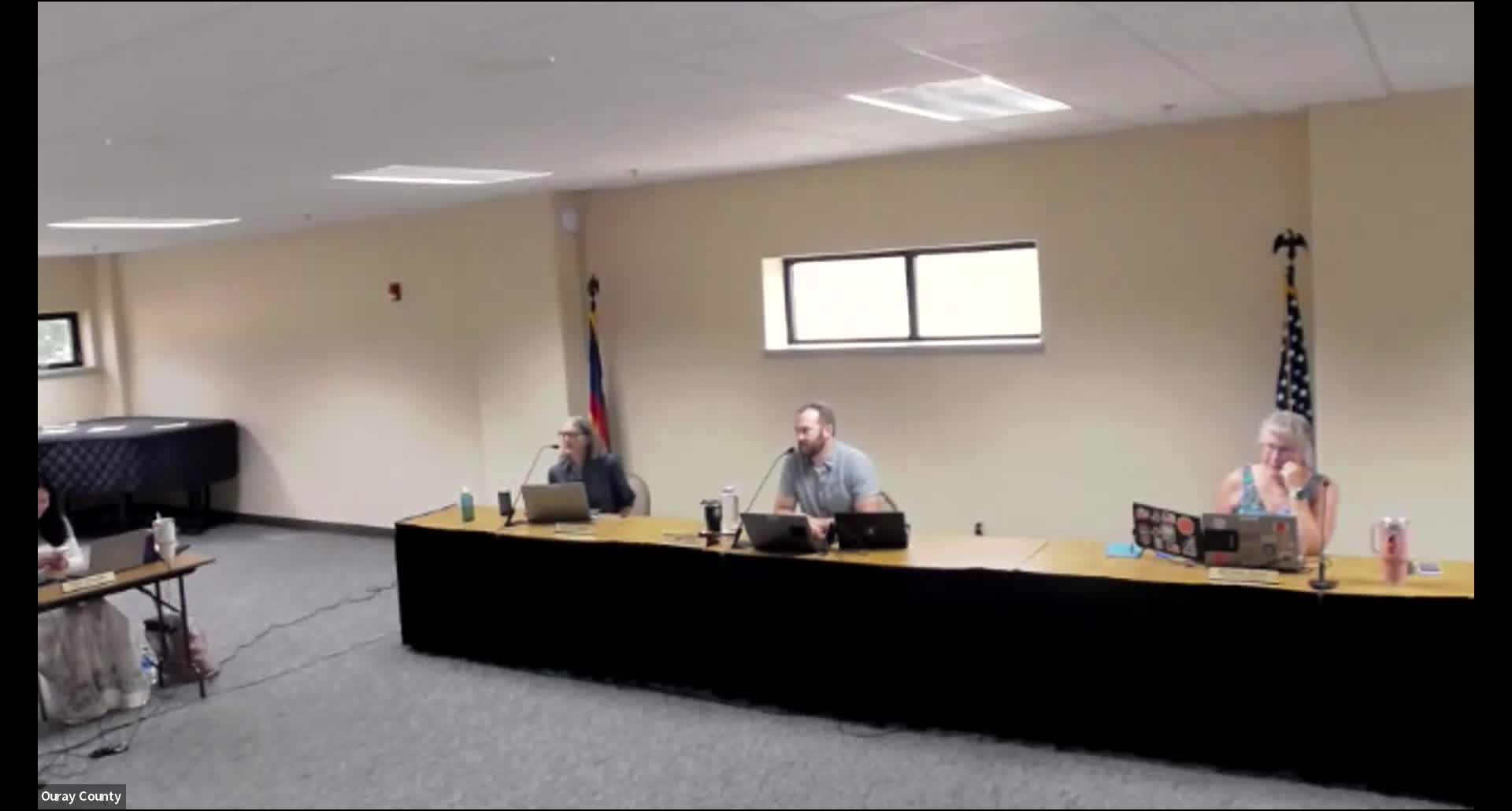
Summary
Residents of the Dallas Meadows neighborhood told the Ouray County Board of County Commissioners on July 29 that mosquitoes have been “absolutely horrendous” this summer near the south end of Ridgeway State Park and the nearby reservoir.
Residents of the Dallas Meadows neighborhood told the Ouray County Board of County Commissioners on July 29 that mosquitoes have been “absolutely horrendous” this summer near the south end of Ridgeway State Park and the adjacent reservoir. Holly Bennett, a Dallas Meadows resident, said the problem began after riparian areas flooded in June and early July and that weekly larvicide applications, which previously kept larvae under control, did not occur at the key time.
County public health director Kristen Kelly told the board she had spoken with town of Ridgeway staff and state parks personnel and described this year’s situation as “a perfect storm of miscommunication, missed opportunities,” that produced “swarms of mosquitoes” far beyond a nuisance.
Why it matters: Commissioners said the outbreak poses a public health and quality‑of‑life problem for nearby residents and tasked county public health to investigate immediate mitigation and produce a written memo on what failed this year and recommendations to prevent recurrence.
What residents described: Bennett, who said she has lived near the reservoir since 2009, told the board she remembered local mosquito control workers identifying breeding sites at the reservoir’s south bridge and riparian zones and that two species — Aedes (daytime biters) and Culex (dusk/nighttime biters) — breed there. She said the biological larvicide Bacillus thuringiensis israelensis (BTI), marketed as products such as VectoBac, requires weekly applications when riparian areas are flooded and that, by her account, applications did not occur in late June and early July. She reported that a larvicide product was applied only last week.
County response and next steps: Commissioners asked Kristen Kelly to work with the town of Ridgeway and Colorado Parks and Wildlife (the state park manager) to (1) confirm which entity ordered and applied larvicide this summer, (2) identify whether product storage or expiration issues occurred, and (3) determine any immediate mitigation that can be deployed this season. The board directed staff to prepare a short written record of communications (a memo or “record of conversations”) and to organize a work session next week with Ridgeway and state park leadership and other relevant agencies, including Colorado Department of Public Health and Environment (CDPHE) if needed. Commissioners indicated they want both short‑term remedies (including exploring traps such as Biogent BG‑Mosquitaire CO2 units for residential protection) and a documented agreement so the program does not “slip through the cracks” when staff change.
Constraints and authority: Commissioners and staff noted that the reservoir landowner is the Bureau of Reclamation while Colorado Parks and Wildlife manages the state park; treatments on park land therefore require park permission. Kristen Kelly reported an existing intergovernmental agreement or MOU for mosquito mitigation between the county and the town of Ridgeway, and commissioners asked staff to clarify responsibilities and funding under that agreement.
What the board did: The board did not adopt a formal ordinance or vote on funding at the meeting. Instead it directed public health to (a) investigate the causes of the missed mitigation; (b) recommend immediate late‑season measures that minimize non‑target impacts; and (c) convene a work session with Ridgeway and state park leadership next week. Commissioners expressed openness to staff using judgment to act quickly if an effective, permitted mitigation is identified before the work session.
Ending: Residents were told how to sign up for county agenda alerts and encouraged to watch next week’s work session, where public health will report back and commissioners expect a plan for immediate and long‑term mitigation.