Get Full Government Meeting Transcripts, Videos, & Alerts Forever!
Get email alerts on the County Budget topic
No spam. Unsubscribe anytime.
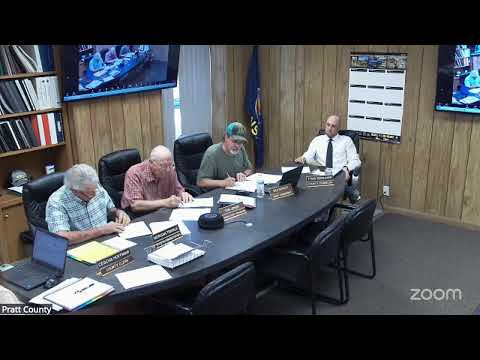
Pratt County officials discuss sharp assessed‑value shifts, dispatch costs and a unified capital improvement plan
Summary
Commissioners reviewed preliminary budget items, questioned large assessed‑value drops in pipeline/facility property, discussed dispatch funding and staffing, and directed staff to use a centralized capital improvement spreadsheet for tracking future projects.
Pratt County commissioners spent substantial time on budget work, pressing department staff for details on sharp changes in assessed values for pipeline and gas facilities, proposed dispatch funding, and how capital outlay and special equipment requests should be tracked in the county’s budget process.
County staff said recent certified assessed values for pipeline and gas facilities show large fluctuations that reduce the county’s total assessed value and shift tax burden onto other taxpayers. One staff member cited that "there's 21,000,000 last year lost in assessed value, and it's 14 this year," and said the combined multi‑year changes have moved tens of millions of dollars in assessed value between cycles. Staff also said Northern Natural (the company referenced in the discussion) had a submitting official retire; a new reviewer is attempting to locate the prior submission and the data behind the change. Staff said any corrections from the state would likely be applied during the state’s September recertification cycle and would affect future levy calculations.
On budget line items, commissioners and staff discussed consolidating disparate departmental "capital outlay" lines into a single capital improvement fund. The board supported using an active, centralized spreadsheet (built by staff member Scott) that departments would populate with planned capital projects; that spreadsheet would be linked to the capital improvement fund and to the special equipment fund to improve transparency and to track multi‑year projects. Commissioners directed staff to implement the spreadsheet and to require departments to enter planned projects so the board can see and prioritize requests.
The commission reviewed preliminary figures for dispatch: staff said dispatch hiring and wage increases have raised costs and that the dispatch program is proposing additional staff and a director role; one number discussed was a total dispatch cost in the several‑hundred‑thousand‑dollar range, with speakers mentioning figures such as about $375,000 and an increase in wages to attract hires. The board also discussed insurance increases (one reference cited an insurance increase of about $140,000) and a proposed 50/50 split of a new communications position between communications and emergency preparedness budgets; commissioners asked staff to confirm exact cost allocations.
Staff also raised that some departments have historically used capital outlay lines as a general buffer rather than for discrete capital projects; the proposed centralized system would require departments to plan, budget and track capital projects and would make fund balances and planned uses visible to the board.
No formal budget adoption occurred at the meeting; commissioners scheduled follow‑up work and asked staff to bring refined numbers and the populated capital improvement spreadsheet to the next meeting.