
Community corrections reports 60% successful closures, identifies technical violations and mental‑health gaps
Get AI-powered insights, summaries, and transcripts
Subscribe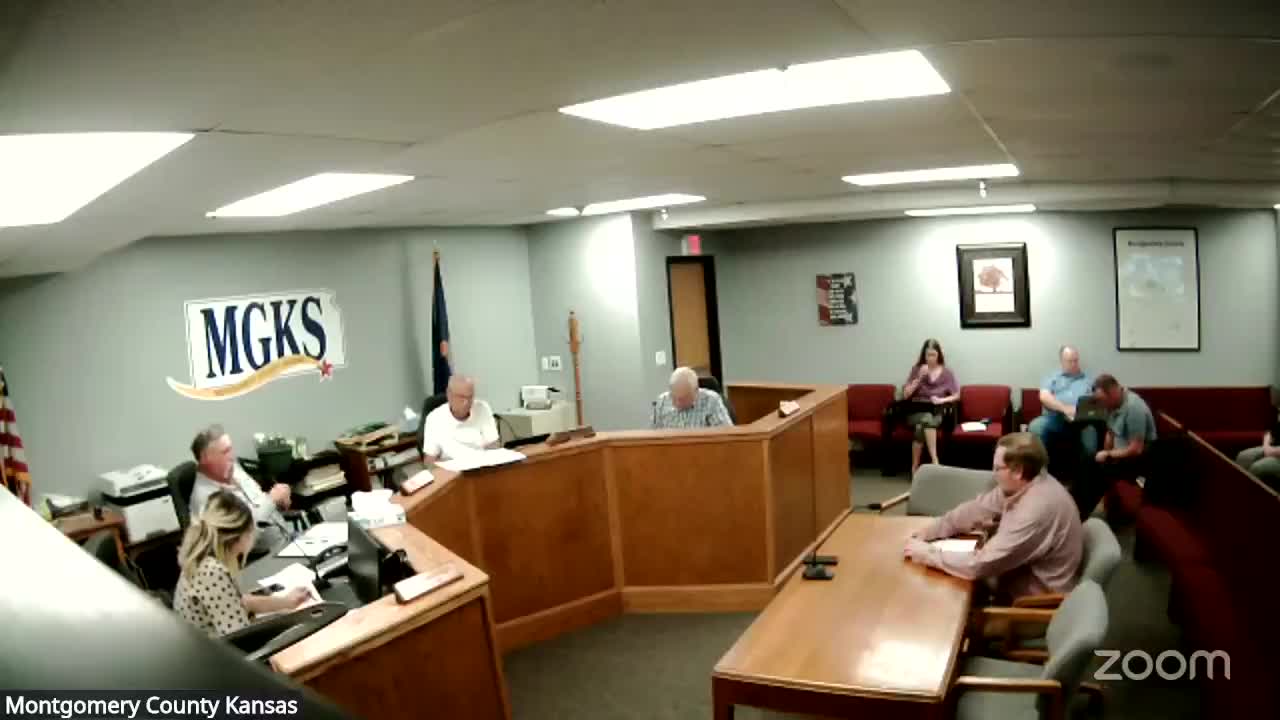
Summary
Montgomery County community corrections reported that 60% of case closures were successful in the past fiscal year, identified common technical violations (missed reporting, missed treatment, continued drug use), paid for limited mental‑health assessments for uninsured clients and plans audits and case‑plan improvements.
Dennis Webb, director of Montgomery County Community Corrections, presented a fiscal‑year summary July 28 showing program outcomes, common reasons for revocation, and steps the office will take to improve supervision and treatment engagement.
Webb said 60% of the agency’s closed cases were successful and 40% resulted in revocation and transfer to the Kansas Department of Corrections (KDOC). The most common technical violations leading to revocations were failing to report, missing treatment appointments and continued drug use. Webb said jail sanctions (typically 48–72 hours) have limited long‑term effectiveness and that the agency will focus on case‑plan quality and targeted supervision to reduce recidivism.
The office paid for 13 mental‑health intake and medication assessments and six individual therapy sessions for uninsured clients this year to help people begin treatment. Webb said he authorized an appointment‑reminder system last year, found it effective, and included that recurring cost in the next year’s budget. He also described a new, more flexible cognitive group that accepts referrals at any time to avoid attrition caused by dropouts from the longer 28‑week groups; current overall completion among groups is about 25 percent but will improve as ongoing enrollments complete.
Webb said his office audits at least 10% of caseloads to check documentation and that training on evidence‑based practices has increased. He reported fiscal numbers for the program: about $150,000 remaining in one comprehensive plan grant and $8,500 remaining in the behavioral health grant at year end; the agency also collected $12,982 in diversion and probation supervision fees to carry forward. Webb said his fiscal summary was included in the meeting packet and that he will continue to seek cost‑effective training and community partnerships to improve outcomes.
Commissioners asked about costs when clients do not follow up on evaluations; Webb said enforcement and affidavits for motions to revoke remain a tool — the office filed 49 affidavits for not attending drug treatment and conducted 85 jail sanctions last fiscal year — but emphasized prevention and engagement as higher‑value strategies going forward.