Get Full Government Meeting Transcripts, Videos, & Alerts Forever!
Get email alerts on the Council City Manager Feedback topic
No spam. Unsubscribe anytime.
City council to formalize feedback loop with city manager; staff survey, 1-on-1 cadence and executive sessions proposed
Summary
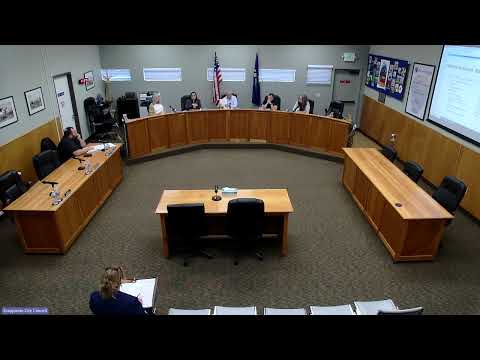
The council advanced a plan on July 21 to formalize how it communicates with and evaluates the city manager, focusing on standing one-on-one meetings, quarterly executive sessions and an anonymized staff feedback mechanism to feed into the manager's performance review.
The council advanced a plan on July 21 to formalize how it communicates with and evaluates the city manager, focusing on standing one-on-one meetings, quarterly executive sessions and an anonymized staff feedback mechanism to feed into the manager's performance review.
Councilor Marissa Jacobs said the initiative grew from an effort to "reground us in our ways of working and really regrounding in our roles and responsibilities as council and how that relates to the city manager role." She told colleagues the packet materials summarize city charter language, municipal code guidance and best-practice resources.
The proposal aims to do three things: create regular, productive council'city manager communication; give council a structured way to learn staff perspectives on management and workplace issues; and build a meaningful, multi-source assessment tool for the city manager's upcoming performance review. Councilor Kim Holmes described the stakes in practical terms: "The worst case scenario for a city manager is you get to that evaluation moment. And Joe says, well, these are my priorities. And Jeanette says, well, these are my priorities. And the city manager says, I didn't know these priorities."
Key elements discussed - One-on-one cadence: Councilors discussed committing to a standing check-in with City Manager Ben (city manager), with frequency set by each councilor (examples ranged from monthly to quarterly). The group framed this as a voluntary, council-initiated cadence rather than a mandate the manager must enforce. - Executive sessions: Councilors proposed carving out periodic executive sessions to exchange information about priorities and performance; participants discussed quarterly or semiannual timing with flexibility to scale up if issues arise. Participants noted executive sessions would be used for performance-related discussion that is appropriate for closed session. - Staff feedback: The council discussed an anonymized staff survey or assessment that would be consolidated (by HR or a third party) and folded into the manager evaluation. The presenters recommended combining responses from department heads and staff into a single, anonymized dataset to protect respondents and produce both quantitative and qualitative summaries. Examples from Redmond and other cities were cited as models. - Guardrails on council-staff contact: Presenters emphasized routing requests for staff time and factual information through the city manager and mayor to avoid creating unintentional deliberations or quorum issues. They also noted the city's Office of General Counsel (OGC) has recently emphasized caution on serial communications that could be construed as evading open-meeting rules.
Council and staff concerns Several councilors pressed for balance: they said they want timely responsiveness to constituents and an ability to consult staff when brief factual checks are necessary, but they also agreed those contacts should include the city manager or be copied to the manager so staff workload and legal risks can be managed. City Manager Ben described his preferred practice: "As long as you're including me, and I can always stop the same thing," and said he can coordinate responses, pull in multiple departments and help manage staff workload.
On staff feedback design, presenters noted practical considerations: the pool of staff respondents will determine how robust the results are; participation must be voluntary; and anonymity is easier to protect by consolidating department-head and staff responses as a single level. They said CIS and other municipal partners had supplied sample instruments and recommended an independent consolidator or HR handling to summarize results without identifying individuals.
Next steps and timeline Councilors set homework and a short timeline: between July 22 and Aug. 4, council members will review sample manager-evaluation tools circulated by staff and propose the functional areas they want the assessment to cover (examples suggested: budgeting process, leadership and communication, responsiveness to citizen inquiries). The presenters said the goal is to finalize an assessment instrument and public-comment process by early September, with the formal performance review scheduled in roughly six months. Staff will circulate the current job description and sample tools and place a discussion item on the Aug. 4 agenda for council review.
The presenters also reminded councilors that changes to a manager-assessment tool may require an opportunity for public comment under municipal practice and that legal or HR processes may shape the final format. No formal motion or vote was taken at the work session; the group left with direction items and a schedule for drafting and review.
Why it matters Councilors framed the effort as an attempt to limit future operational disruptions, reduce miscommunication and align priorities so the city manager can implement council policy effectively. The conversation also sought to reduce liability and past mismanagement risks by giving staff safe, documented avenues to raise workplace issues.
The council will follow up at its regular meeting cycle and staff will circulate materials ahead of the Aug. 4 agenda item so councilors can recommend priority areas for the evaluation tool.