
Rec Centers board approves $100,000 design phase for North Course after hours of debate
Get AI-powered insights, summaries, and transcripts
Subscribe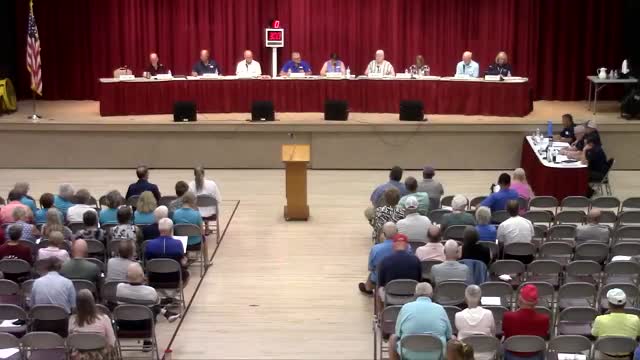
Summary
The Rec Centers of Sun City Board of Directors approved a motion on June 26 to fund up to $100,000 for design work on the North Course, advancing plans for turf conversion, water-reduction measures and possible bunker work.
The Rec Centers of Sun City Board of Directors approved a motion on June 26 to fund up to $100,000 for design work on the North Course, advancing plans for turf conversion, water-reduction measures and possible bunker work.
Board members voted unanimously in the first-reading roll call to approve the design funding; the board later voted to waive the usual second reading so design work can start this summer. The board recorded the first-reading result as 9-0 in favor; the separate motion to waive a second reading passed by an 8-4-1 tally.
The vote followed more than two hours of public comment and debate during which golfers and other residents urged the board to move the project forward, while other committee members and residents pressed for clearer scope, budget sources and compliance with Arizona Department of Water Resources (ADWR) requirements. Long Range Planning Committee (LRP) Chair Director Jim Ruff introduced the motion on behalf of LRP, saying the committee recommended the design funding to develop plans and cost estimates.
Members of the public and several club leaders told the board that playability, revenue and ADWR compliance were at stake. Barry Broomham, president of the Sun City Men’s Golf Association, said the front-9 conversion had reduced water use and improved play and urged the board to continue with the North Course work. “We have done the turf at back 9, we want to do the turf again at the front 9,” he said. Several speakers described older golfers’ need for safer bunkers and said piecemeal delays would raise costs and reduce revenue.
Opponents on LRP and a few residents questioned whether bunker replacement qualified for the Preservation and Improvement Fund (PIF), which covers projects with at least a 15-year useful life and cost thresholds. Dennis Christ, an LRP member, argued parts of the proposed work — he cited a $780,000 estimate for bunker renovation in earlier project descriptions — may not meet the PIF life‑expectancy standard and urged the board to split design packages into distinct bids for bunkers, turf conversion and larger irrigation/ADWR work.
Director of Finance Kevin McCurdy clarified the difference between routine sand replacement and structural bunker work: sand and routine maintenance are operating expenditures, while rebuilding or regrading bunkers and any earth‑moving work that yields a >15‑year useful life would typically qualify as a PIF/capital project if cost thresholds are met. “If you’re only talking about sand replacement, that is not a PIF project. If you’re talking about rebuilding bunkers, yes,” McCurdy said during board discussion.
Newly hired Director of Golf Eddie Reneo, who introduced himself earlier in the meeting, addressed bunker lifespan and maintenance practice questions. He said liner and drainage systems typically last about eight years in similar climates and that a full rebuild with proper drainage and liners could extend useful life but still depends on maintenance and weather. “Those liners are just breaking up, … they will probably last another 7 to 10 years,” Reneo said.
Several board members and staff emphasized timing: architects and contractors book work months in advance, and delaying the design until the fall could push physical construction out a full year or more. Kevin McCurdy warned that missing the summer design-and-bid window could delay any 2026 construction into 2027 because crews are scheduled early.
The board’s immediate next step is to hire an architect and produce design documents and cost estimates. Board members and staff said the design would return to the board and to LRP with cost estimates and a business-case package before any construction contract or PIF commitment is approved. Director Ruff said the architect selection and the final business case will allow LRP and the board to decide funding sources and project scope.
Votes at a glance: The first reading to approve North Course design funding, “not to exceed $100,000,” passed in the roll call as 9 in favor, 0 opposed. The board later voted to waive the second reading (to allow the project to proceed sooner); that motion passed with an 8-4-1 tally.
By approving the design phase, the board did not commit to specific construction or funding sources for bunker replacement or other elements; those decisions will return to the board after design and cost estimates are produced.