Get Full Government Meeting Transcripts, Videos, & Alerts Forever!
Get email alerts on the Liquor Licensing topic
No spam. Unsubscribe anytime.
Garfield County staff recommend updates to liquor license rules, fees and festival notifications
Summary
County liquor license staff reviewed aging resolutions and state law changes, recommending updates to references, fees, optional-premises rules and how festival and special-event permits are handled.
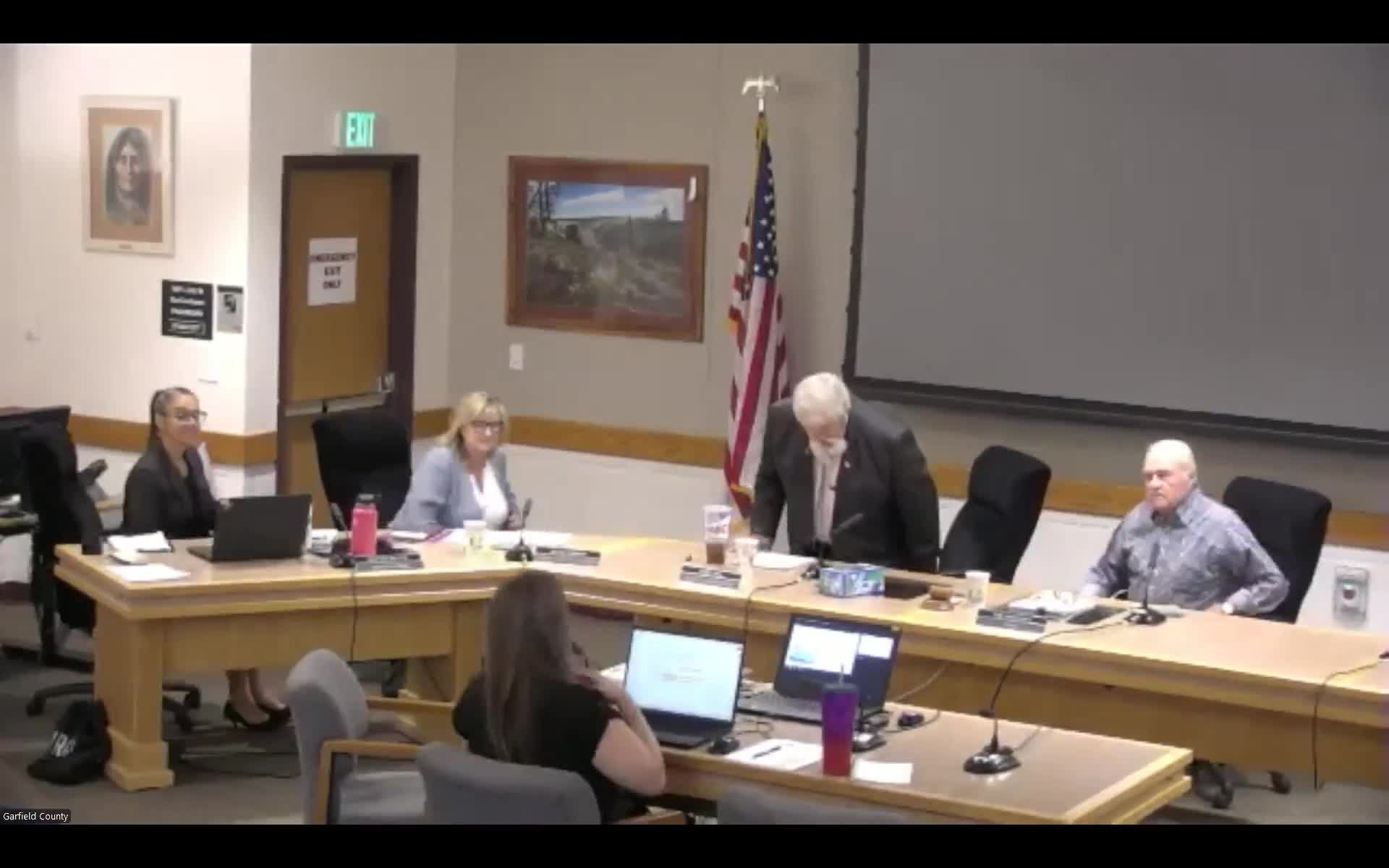
Shelley, the county’s liquor-licensing lead, told the Garfield County Board of Commissioners on July 16 that staff had reviewed four county liquor license resolutions — the most recent dated 2014 — and proposed updates to reflect changes in state law, to consolidate fee schedules and to clarify how optional-premises and festival permits are handled.
The packet of proposed changes is intended to: correct statutory citations that moved into Colorado Revised Statutes (now in the 44-3 series), move fee language into a single fee resolution to match the state Liquor Enforcement Division (LED) schedule, and update who and how the county receives notice for festivals and special-event permits.
County staff asked commissioners whether the board wanted to add a local requirement that optional-premises licenses used for wedding or event venues include some provision for food service and adequate restroom facilities. "I don't understand why this is the only on premise license that isn't required to have some sort of food," Shelley said, during the presentation. She suggested a modest requirement such as on-site catering, snacks or approved food vendors and said public health staff could provide an approved vendor list.
The discussion highlighted the county’s only stand-alone optional-premises license holder, Spring Creek Ranch, and other venues such as Red Barn Guest Ranch and Vista View. Shelley said Spring Creek currently notifies the county of event dates at renewal and is required to notify the county 48 hours in advance of additional event dates added after renewal. The board also heard that some venues operate under tavern or hotel-and-restaurant licenses rather than optional-premises.
On fees, staff recommended aligning the county fee schedule with the LED fee schedule to simplify administration and appear consistent with neighboring liquor licensing authorities. Shelley told commissioners the county’s spreadsheet compared the resolution fees, current practice and the LED fee schedule; she said staff would return with an updated resolution if the board agreed.
On tastings and retail permits, staff noted two active tasting permits in unincorporated Garfield County. Legislation under consideration and recent rule changes remove some license categories (for example, liquor-licensed drugstores will be prohibited as new licensees) and add new license types; Shelley said county application forms and the tasting-permit application should be updated and ADA-compliant.
Staff also asked whether the board wanted festival permits to come before the county for notification or action. Under changes from 2024 rulemaking and Senate Bill 24-231, festival permits are issued to existing licensees (manufacturers, wineries, wholesalers, breweries, taverns and similar), and the state’s new catering license and larger festivals are handled primarily at state level. Commissioners indicated they preferred notification on festival permits (consent agenda) rather than a required formal public hearing, but left the option to staff to bring specific large or novel events back for board review.
Shelley said staff would work with county legal counsel to draft updated resolutions and bring them back for approval. No formal motions or votes were taken during the presentation; commissioners signalled general agreement and asked staff to proceed with revised draft resolutions and stakeholder notification plans.
Why this matters: liquor licensing changes affect where and how alcohol may be sold in unincorporated Garfield County, who regulates larger festivals and catering, and the county’s ability to inspect and enforce public-health-related conditions at special events. The recommended shift to LED fee parity would increase some local fees up to state-allowed maxima but also simplify the legal footing for enforcement and public notice.
The county requested direction on: 1) whether to add a food/restroom requirement for optional-premises/event licenses, 2) whether to move fees into a separate fee resolution aligned to LED, and 3) whether festival permits should be placed on the consent agenda for notification rather than left entirely to state review. Commissioners encouraged staff to return with proposed language and a draft fee resolution and to include public-health review of any food/vendor requirement.
Ending: Staff said they would draft the updated resolutions, update the tasting- and festival-permit applications, and bring the material back for a future meeting or work session including proposed fee language and guidance on festival notifications.