Get Full Government Meeting Transcripts, Videos, & Alerts Forever!
Get email alerts on the Ev Infrastructure Code topic
No spam. Unsubscribe anytime.
Commissioners direct staff to adopt state model EV‑charging code; county to draft amendments and public review
Summary
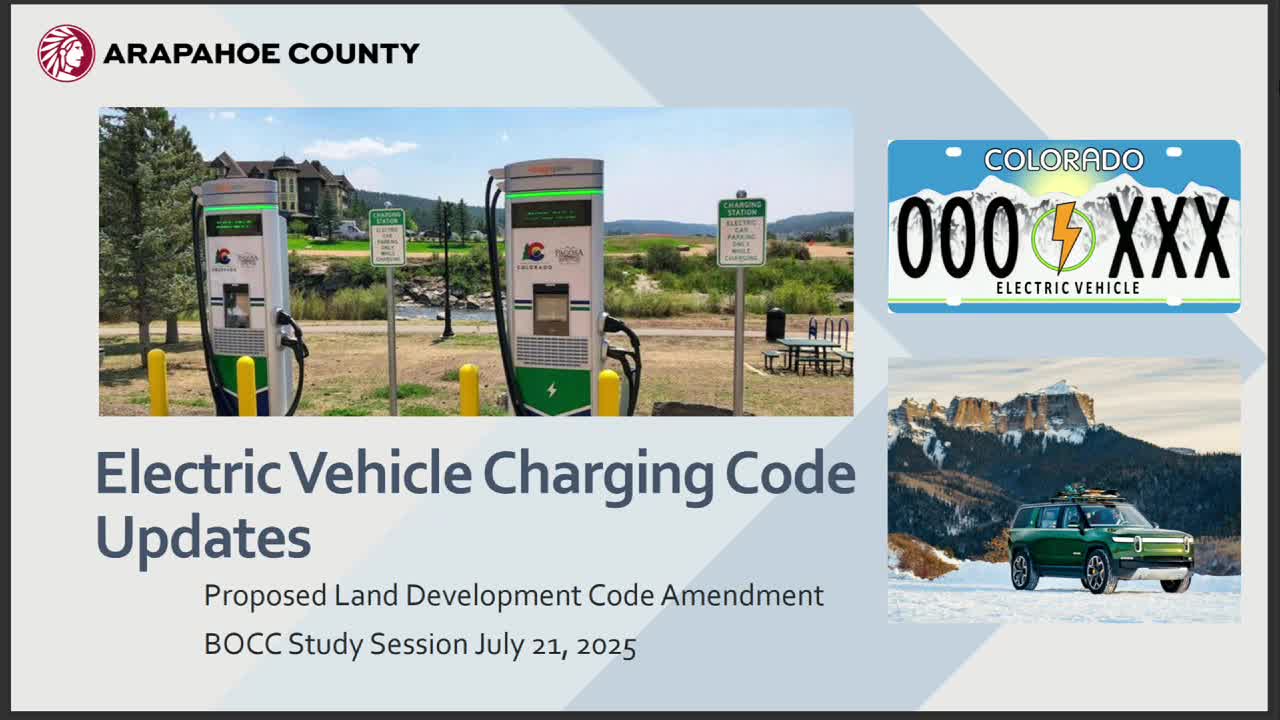
Staff recommended adopting the Colorado Energy Office model code to comply with House Bill 24 11 73 on electric vehicle charging stations; commissioners gave consensus to direct staff to adopt the model code and to develop implementing language and permitting timelines for public review.
Arapahoe County staff recommended the board adopt the state model code for electric vehicle (EV) charging stations so the county can meet obligations under the state law referenced in the presentation. Commissioners signaled support to proceed with code adoption and asked staff to return with draft amendments and outreach materials.
Director Brian Weimer and planning staff described three compliance options the state model code allows: 1) adopt the state model code (recommended), 2) write a county‑specific code (not recommended due to staff time and the state deadline), or 3) retain existing permitting procedures (not applicable; county lacks specific standards). Staff recommended adoption of the state model code and explained it would require limited updates to the land development code (several definitions and standards for setbacks, parking, equipment, screening, landscaping and optional elements such as lighting and weather canopies). Staff noted many permitting and process elements already in use by county departments and said the state will offer technical assistance.
Planning staff proposed a timeline: a draft code in the next two weeks, a planning commission study session in August, return to the BOCC for feedback in September, a planning commission hearing in November and a BOCC hearing in December to meet the state deadline. Commissioners discussed practical questions including remote notarization, whether optional design requirements might increase costs for private developers and the county’s ability to add optional standards later. Director Weimer and staff confirmed that some related measures (electric‑ready requirements tied to the 2023 NEC adoption) are already in place and that optional permitting elements could be added iteratively.
Commissioners voted by consensus (thumbs‑up) to direct staff to proceed with the recommended option of adopting the state model code, and staff said they will draft the implementing language, post materials for public comment and follow the proposed review timeline.
Ending: Staff will prepare a draft ordinance and administrative process, coordinate outreach and return for planning commission and BOCC hearings on the schedule presented; staff also flagged coordination opportunities with the county’s previously adopted EV plan goals.