Get Full Government Meeting Transcripts, Videos, & Alerts Forever!
Get email alerts on the Downtown Grants topic
No spam. Unsubscribe anytime.
Dallas staff propose competitive downtown building grants; committee debates timing, historic priorities
Summary
City staff presented proposed revisions to the downtown minor-improvement and building-improvement grant programs, including moving the building grant to a competitive, seasonal application process, increasing the maximum award and adding a new $5,000 professional-services award; advisory committee members and downtown stakeholders raised concerns about timing, scoring priorities and incentives for historic-preservation work.
City staff presented proposed changes to two Urban Renewal Agency grant programs for downtown Dallas, asking the Urban Renewal Advisory Committee for feedback on converting the building improvement grant into a competitive, seasonal program and adding a new small-project/professional-services award.
The proposed revisions would make the building improvement grant competitive instead of rolling, set an application window (draft: April 1–Aug. 1), raise the maximum building grant award to $25,000, require additional documentation (completed online application, funding form, property-owner authorization if the applicant is a tenant, and a minimum of three contractor bids) and create a new $5,000 professional-services grant within the small-project program. Staff said the two programs together would initially total $85,000 ($75,000 for building improvement grants and $10,000 for small-project grants) but that amounts could change depending on city revenues.
The Downtown Development Association, represented at the meeting by Brian (executive committee, Downtown Association), urged caution. “Downtown has never looked better in modern times. The vacancy rates in the shops are very low,” Brian said, adding that the DDA credits urban renewal grants for much of that success. He warned the proposed changes could lengthen wait times, reduce the number of large grants available (from about five to three if the $25,000 cap is used against the current budget) and dilute the small-project fund if the $5,000 professional-services award is taken from the existing $10,000 pool.
Committee members focused discussion on three central questions: timing, criteria and historic-preservation priorities. Several members and property owners said the April–Aug. application window could create timing problems for exterior work if approvals and funding are not confirmed before construction season, forcing contractors and owners to re-bid months later. “If you delay it and they can't start construction until the following construction season, they're gonna have to have new evaluations of the project by the contractors to give you current pricing,” said one committee member during the discussion. Staff responded that the April–Aug. window was intended to let staff gauge likely funding for the coming fiscal year, and that the first year would be a transition year; staff also said they could reopen an application window if too few applications were received.
Members also debated scoring priorities on the draft rubric provided in the attachments. The draft scoring sheet (staff said it was modeled on La Grande’s program and reviewed Redmond’s approach) assigns higher points to projects expected to generate evening/nighttime activity—restaurants and eateries receive strong scoring weight in the draft—while preservation-focused appeals sought more explicit points for historic facade restoration (for example, iron façades). Marlene (committee member and downtown building owner) argued that grants should explicitly reward restoration of historic facades and structural preservation and reduce the large point award for restaurants. “I would like to take some of the points away from a restaurant, the 40 points, and I would like to move some of those points up to the building improvement one to where we actually have some points for the restoration of iron facade,” she said.
Staff told the committee the draft removes certain previously eligible uses from the small-project/minor-improvement program—painting unless part of a larger eligible project, exterior cleaning, murals/public art, parking-lot improvements and landscaping—because staff judged some past awards to be maintenance rather than capital improvements and therefore not consistent with the district’s goals or, staff said, with Oregon law restricting use of tax-increment funds for maintenance. Staff also proposed a small-match requirement for the small-project award to ensure applicants contribute capital to projects.
Committee members asked staff to clarify procedural and budget questions before finalizing the rules: where in the annual budget process the program funding will be set; whether the agency or committee should set the application window each year; how leftover funds would be handled; whether awarding partial funding would be permitted; and how the historic-preservation review (building permits and the local historic-preservation commission) would interact with grant approvals.
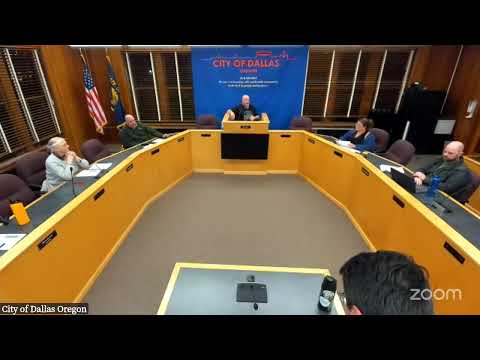
After two hours of discussion, staff closed by saying they would revise the draft guidelines to reflect committee feedback and return with a final draft at a future meeting. No formal action or vote to adopt the changes was taken at the meeting.
Votes at the meeting included routine procedural items: committee officers were nominated and elected by acclamation and the consent agenda (minutes and budget) was approved by voice vote. Staff said it will circulate the final draft of the grant guidelines for further review before any agency-level decision by the Urban Renewal Agency.