Get Full Government Meeting Transcripts, Videos, & Alerts Forever!
Get email alerts on the Transportation Lobbying topic
No spam. Unsubscribe anytime.
Dallas council designates city manager as lead lobbyist, flags Highway 22/51 safety as priority
Summary
The Dallas City Council agreed to have the city manager serve as the city's lead legislative lobbyist and discussed pushing for state transportation funding for the Highway 22/51 interchange after residents and staff flagged rising crashes and safety concerns.
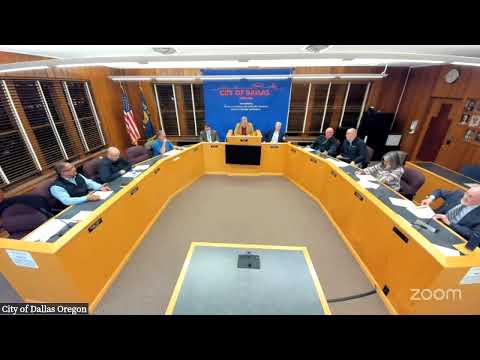
The Dallas City Council on Jan. 26 agreed by consensus to designate the city manager as the city’s lead lobbyist for the 2025 Oregon legislative session and discussed pushing state transportation funding and attention to the troubled intersection of Highway 22 and Highway 51.
The action is meant to allow the city to respond quickly to fast-moving bills and committee deadlines by authorizing staff to draft and submit testimony and to coordinate with city leaders, the League of Oregon Cities and neighboring jurisdictions. City Manager Brian recommended the approach and asked the council to serve as advisors on legislative issues.
Why it matters: Councilors and residents said the city needs to be able to act quickly when the state legislature moves on bills that affect local infrastructure and public safety. Several speakers during public comment urged the council to join Polk County and other cities in pressing the Oregon Department of Transportation for near-term safety fixes at the Highway 22/51 intersection, where residents describe frequent crashes.
Resident Michael Holzapel called the intersection “an untenable situation that needs to be addressed,” saying development and increased traffic have outpaced planned safety improvements. Mayor Slack and several councilors said the city will combine lobbying efforts, the League of Oregon Cities priorities and direct outreach to ODOT to press for funding and operational changes.
City staff explained how the process will work: the manager will monitor bills, send summaries and draft testimony to councilors by email when quick responses are needed, and act on council guidance. The council president and other members may appear at hearings when appropriate. Staff noted the difficulty that legislative committees sometimes request input on a 24- to 48-hour timetable.
Councilors also discussed coordination with Polk County and law enforcement. Councilor Briggs said he has asked the Polk County sheriff to brief the council in a future work session about stepped-up patrols and enforcement; staff said the sheriff had agreed to attend. ODOT’s local supervisor was also noted as engaged, and councilors said multi-jurisdictional pressure can help secure funding or short-term operational changes such as limiting left turns at key conflict points.
The council also noted an upcoming City Day at the Capitol when local officials will meet legislators in person to discuss priorities including transportation projects.
The council recorded consensus to proceed; there was no roll-call vote on designating the city manager as lead lobbyist. Councilors asked staff to solicit council input rapidly via email and to present legislative recommendations to the full council for guidance.