
Family Assistance Center director outlines shelter expansion, outreach and funding concerns
Get AI-powered insights, summaries, and transcripts
Subscribe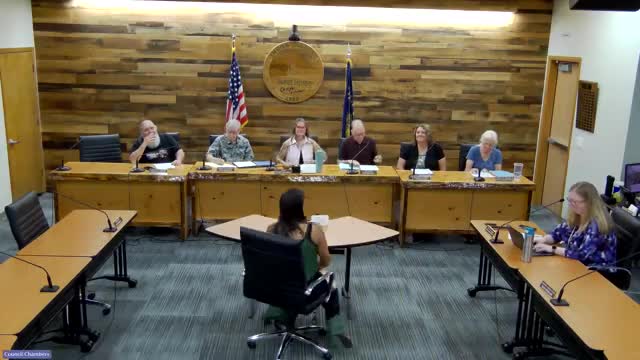
Summary
Candace Sturman, executive director of the Family Assistance and Resource Center, told the Sweet Home Community Health Committee the shelter added 13 dual-occupancy pods and two four-person pods, is expanding outreach, and is watching state-level changes to Medicaid and SNAP that could affect clients.
Candace Sturman, executive director of the Family Assistance and Resource Center, told the Sweet Home Community Health Committee that her organization has added new sleeping pods at its shelter, expanded outreach and is preparing for funding pressures tied to statewide Medicaid and SNAP changes. "We recently ... added the 13 dual occupancy pods as well as 2 pods that hold 4 people," Sturman said.
Sturman gave a roughly 20-minute presentation describing how residents progress through the shelter’s site, from what she called the huts to heated pods with windows and electricity, and how case management and rental-assistance planning are part of longer-term goals. "My goal is to start setting small groups ... to protect the privacy of our folks there, but allow small groups to come in, kinda see what we're doing and how we're moving forward," she said.
Why it matters: Committee members asked how the shelter’s services are accessed and whether outreach covers people who are not currently residents. Sturman said anyone can call or email the shelter and that staff will provide case management or outreach as capacity allows. "Anybody can call our shelter, or send an email ... we will help anybody that wants our help," she said.
Details and context: Sturman described recent cases her staff worked on, including rehousing a couple who had been homeless for more than a decade and assisting a young woman who had been in foster care. She emphasized that many residents have significant disabilities and rely on Medicaid and SNAP. "The majority of our residents are disabled ... they use, you know, the Medicaid and the SNAP benefits," she said. She told the committee the shelter lacks a full kitchen, so much donated food must be shelf-stable; she said the organization is already seeing reduced food-share orders through Oregon Food Bank.
Funding and operations: Sturman said the shelter received a shelter-operations grant from Oregon Housing and Community Services (OHCS) and a recent recertification extended that support for two years. She also described staffing: "We are at 7 right now ... we will officially be at 9 as of next Friday," and said the shelter contracts with a security company at night.
What the committee asked and directed: Committee members asked whether case management is provided only to on-site residents; Sturman said outreach teams go into town (currently primarily on Wednesdays) and anyone may request help. Members also invited the shelter to the community health fair and offered connections to local service providers. No formal votes or policy changes were taken at the meeting on shelter operations.
Taper: Committee members thanked Sturman for the presentation and for the staff’s work on rehousing cases; she left the meeting after answering questions and exchanging contact details for follow-up and event coordination.