
Consultants present two rate paths to cover $25 million sewer capital plan; option that fully funds CIP raises typical bill about $5.50 in 2026
Get AI-powered insights, summaries, and transcripts
Subscribe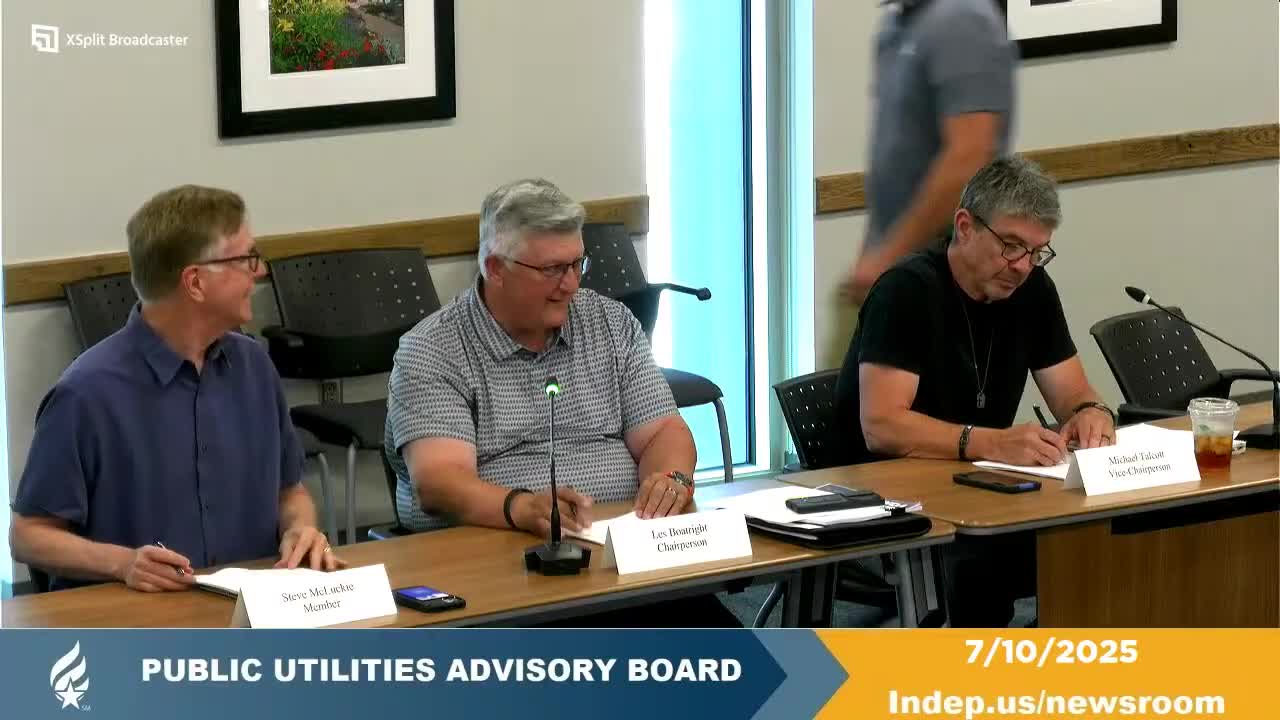
Summary
Consultants from Burns & McDonnell told the Public Utility Advisory Board on July 10 that the city’s sewer system will need roughly $25 million in capital from 2026–2030, including a large nutrient‑removal project, and offered two rate options: one that fully funds the CIP and raises a typical customer bill about $5.50 in 2026, and a lower‑increase option that would defer roughly $5 million of capital.
Consultants from Burns & McDonnell told the Public Utility Advisory Board on July 10 that the city’s sewer utility needs roughly $25 million in capital investment between 2026 and 2030, including a nutrient‑removal project at the Rock Creek treatment plant estimated in the presentation for 2028. The consultant team presented two financial plans and corresponding rate designs to generate the revenue needed to pay operations, meet a PFM‑recommended minimum cash reserve and fund capital.
The first option would fund about 100% of the planned capital and reach the target cash balance a year sooner than the second option; the consultants said that option would increase a typical household sewer bill (a 3/4‑inch meter using about 600 cubic feet per month) by about $5.50 in 2026 compared with 2025. The second option would produce a lower year‑one bill increase — about $4.11 for the same representative customer — but would only fund roughly 80% of the CIP as presented and would require roughly $5 million of the planned capital be deferred or reduced.
Alex Craven, the consultant who led the study, said the work followed a two‑step approach: build a multiyear cash‑flow model to determine how much incremental revenue is needed, and then design rates that recover that revenue. Craven said a guiding principle was to “mitigate the felt impact of rate shock through doing really large single increases,” favoring steadier annual changes. He also said, “We do not propose any increase to that regulatory compliance fee,” which the consultants left at $12 per bill per month in their models; that fee currently funds the utility’s existing debt service.
The presentation included regional benchmarking; the consultants showed Independence’s existing average wastewater bill for a customer using 600 cubic feet near a sample average of about $57.50. They also briefed the board on industry trends the team said are putting upward pressure on sewer costs: lower use per account that reduces variable revenue, inflationary pressure on operating and capital inputs (including ductile iron pipe), aging buried infrastructure, and more stringent water‑quality requirements. On regulations, board member Michael Talcott asked whether new rules were imminent. Lisa (staff) and a consultant replied they expect nitrogen and phosphorus removal requirements but said timing and numeric limits remain unclear; the study includes a placeholder amount in the CIP pending state guidance and pilot testing.
Consultants recommended option 1 as the more resilient path because it fully funds the CIP and meets the reserve policy earlier; they said some utilities also adopt an annual CPI‑based revenue adjustment as a policy matter to help keep pace with rising costs. The consultants noted there have been no sewer rate increases since 2020.
No formal vote or rate adoption occurred at the July 10 advisory board meeting. The consultants asked the board for a recommendation if it was ready; board members requested time to review and asked to consider the topic again at a future meeting. The same study will be presented to the City Council at a July 14 study session, according to the consultants.