Get Full Government Meeting Transcripts, Videos, & Alerts Forever!
Get email alerts on the Utilities Electric topic
No spam. Unsubscribe anytime.
Council hears debate over proposed electric-rate increase; advocates urge consumption-based approach
Summary
Staff proposed a 2% electric-rate increase for FY2026 to cover rising operating costs and preserve cash reserves; the Water & Light Advisory Board recommended up to a 2.4% increase. Renewable-energy advocates urged the council not to raise the fixed base charge and to raise consumption rates instead.
City staff and the Water & Light Advisory Board presented a proposal on Aug. 18 to increase electric rates for FY2026; staff recommended a 2% increase (effective Oct. 1) while the Water & Light Advisory Board recommended an increase "up to 2.4%." The council did not vote on the electric-rate ordinance (Council Bill 184-25) at the Aug. 18 meeting and scheduled further consideration.
Why it matters: Electric-rate changes affect household utility costs and the utility's ability to cover operating expenses, maintain cash reserves and finance capital projects. Staff said gradual, small increases reduce the risk of a larger, shock increase later.
Staff case and financial outlook Staff said three criteria guided the rate discussion: (1) cover routine operations and maintenance; (2) maintain cash-reserve levels; and (3) ensure adequate debt coverage. Staff presented multi-year cash forecasts showing that without any increase the electric utility's cash reserves would decline and fall below the target by 2030. A 2% increase in FY2026 would generate about $2.8 million in revenue; a 2.4% increase would generate approximately $3.4 million, per the advisory board matrix.
Customer impacts and choices Staff gave sample monthly impacts across customer types (gas-heat, electric-heat and heat-pump households) and usage levels; increases ranged from roughly $1.50 to about $7 per month for most residential profiles in the board's analysis. The advisory board recommended an increase "up to 2.4%" to preserve reserves over the five-year forecast; staff proposed a more conservative 2% increase now with the option to revisit in future years.
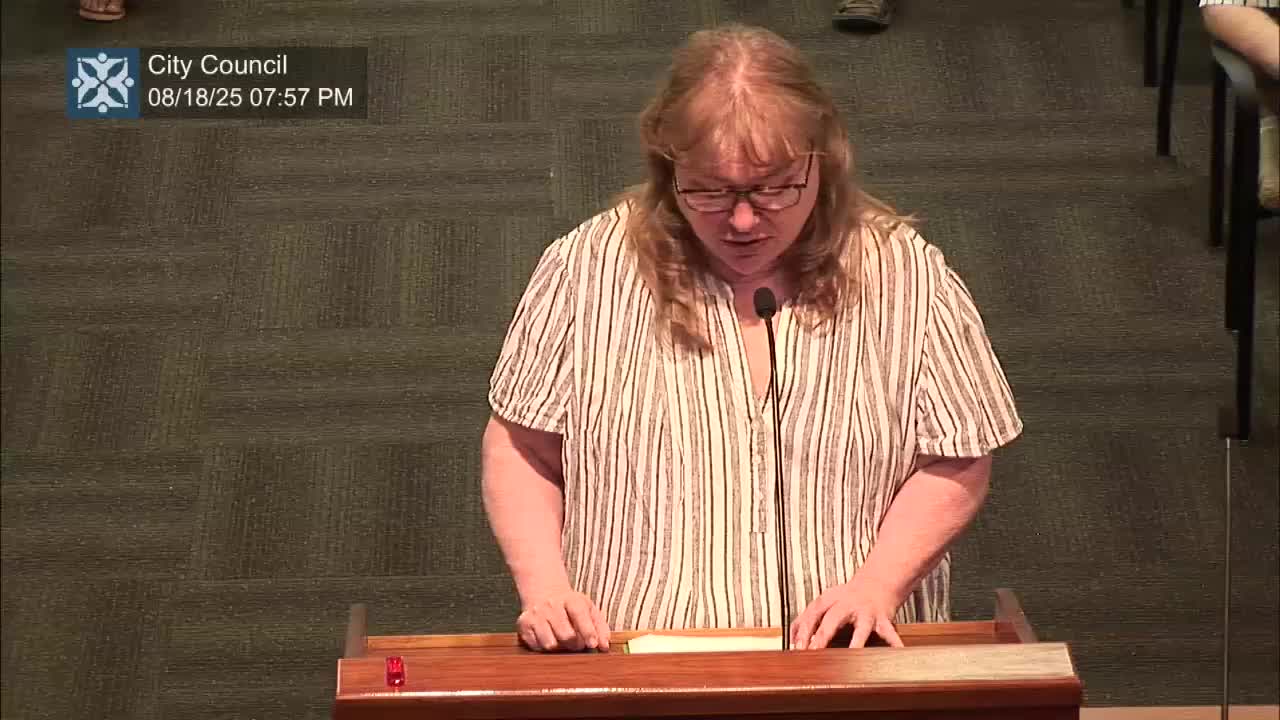
Public testimony Peter Schneeberger, representing the Renewable Energy Coalition, urged the council not to raise the monthly base charge and instead apply any increase solely to consumption rates, saying higher base charges disproportionately burden lower-usage and low-income customers and dampen conservation incentives. "We recommend you apply the 2% increase solely to consumption rates," Schneeberger said. Advocates also noted the electric utility produced a cash operating surplus in FY2024 and that the base-rate increase yields a relatively small revenue gain compared with the utility's overall finances.
Next steps Council postponed a vote; staff said the ordinance will return for future council action after additional review and modeling of rate structures and equity impacts.
Ending note: Council members asked staff for additional comparisons of base-charge versus consumption-rate impacts and for clearer illustrations of the five-year reserve trajectory under different rate scenarios before final action.