Get Full Government Meeting Transcripts, Videos, & Alerts Forever!
Get email alerts on the Zoning Amendments topic
No spam. Unsubscribe anytime.
Tupelo planners advance zoning changes for liquor stores, brewpubs and Park Hill overlay
Summary
The Tupelo Planning Committee on Aug. 4 forwarded amendments to the city's development code covering liquor stores, brewpubs, microbreweries and convenience stores with fuel, and confirmed changes to the Park Hill Overlay District; the City Council will hold a public hearing in August.
The Tupelo Planning Committee voted Aug. 4 to forward proposed amendments to the Tupelo development code that would allow the city to regulate liquor-store locations, add definitions for brewpubs and microbreweries, and restrict convenience stores with fuel sales to major thoroughfares. The committee also approved changes to the Park Hill Overlay District, including a lowered elevation requirement, a minimum carport provision and a prohibition on metal roofs.
The changes matter because they translate a recent state change into local zoning rules and will affect where businesses that sell alcohol and fuel may locate. Pat Faulkner, speaking to the committee, said the state recently changed how such uses are treated and the city must now assign zoning classifications for liquor stores rather than leaving location entirely to state licensing.
Faulkner said the draft amendments mirror language used for beer retailers and include separation standards: 400 feet from residences, churches, schools or day-care centers and 100 feet from other uses, with the 100-foot standard applying when the protected building is in a commercial district. "We don't think this changes anything about where local stores are likely to be," Faulkner said, adding that establishments would remain in commercial areas.
On brewpubs and microbreweries, Faulkner told the committee that a brewpub is treated similarly to a restaurant where beer produced on the premises can be served and sold, while a microbrewery is treated more like a manufacturing operation with accessory on-site consumption such as a taproom. The draft places brewpubs in commercial and some mixed-use districts and microbreweries in mixed-use, employment and industrial locations.
The proposed amendment for convenience stores that sell fuel would limit that use to major thoroughfares because of the traffic such sites generate; Faulkner cited Main, Gloucester, Coley and McCullough as examples of streets where fuel sales would be allowed.
Separately, the committee confirmed three changes to the Park Hill Overlay District that resulted from work by the design review committee and the Neighborhood Development Corporation. Those clarifications reduce the previously proposed elevation above grade to 18 inches, add a requirement that each dwelling have at least a carport (not necessarily a garage), and prohibit metal roofing within the overlay, Faulkner said.
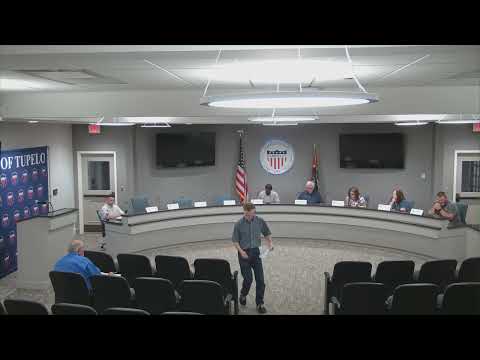
No members of the public came forward during the committee's public-comment portion. Committee member Lindsay Leek moved to accept the draft as presented; Scott Davis seconded. The motion passed on a voice vote, and the items were set for a public hearing before the City Council at the council's second August meeting.
The committee's action forwards the text to the City Council for formal consideration; the committee did not adopt the ordinance language into city code at this meeting. Staff said they will deliver the final draft to committee members and post it for the council hearing.