Get Full Government Meeting Transcripts, Videos, & Alerts Forever!
Get email alerts on the Municipal Finance topic
No spam. Unsubscribe anytime.
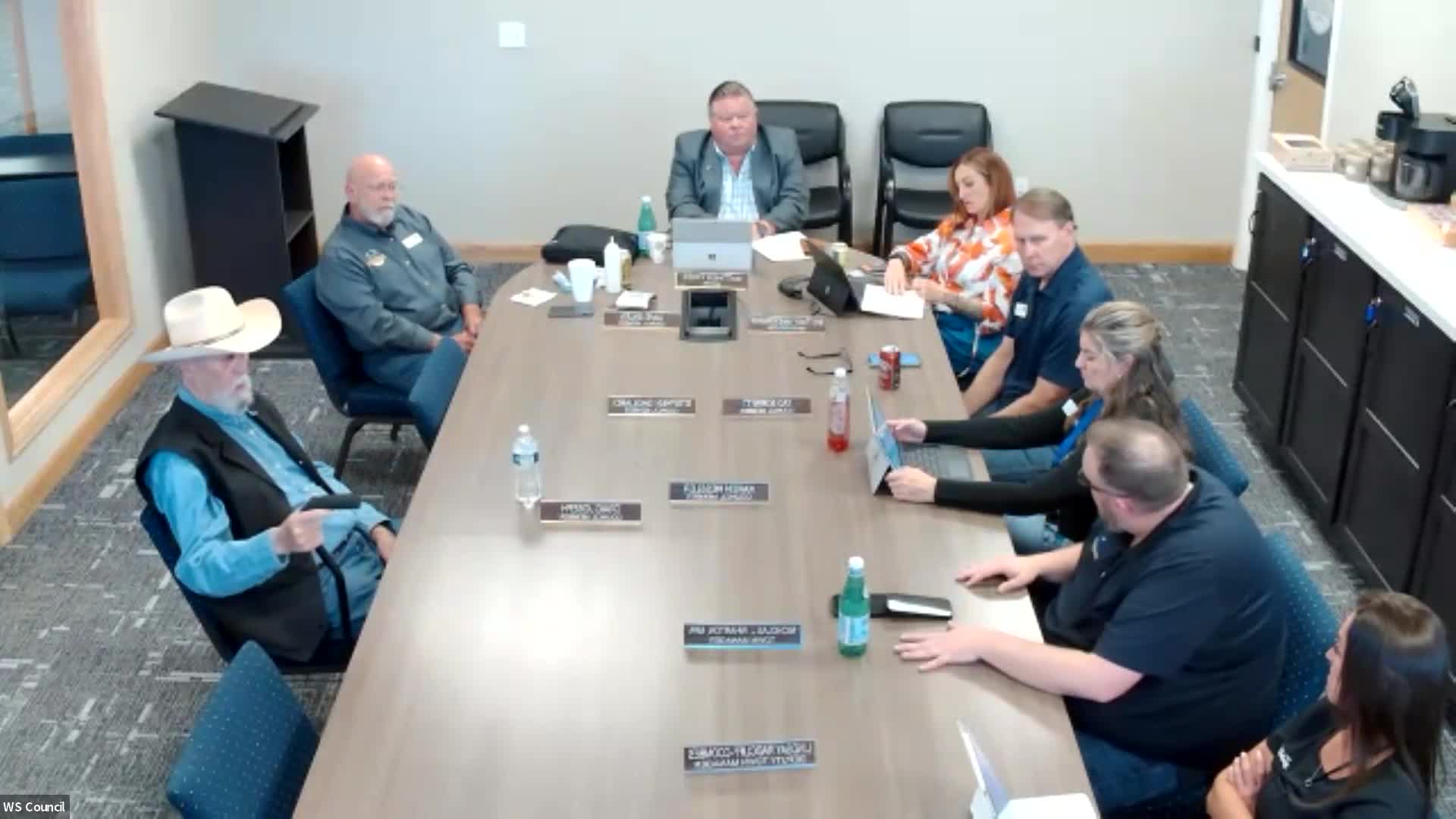
Severance council opts to pursue lodging tax on November ballot, delays road and parks measures
Summary
Council members directed staff to place a lodging (accommodations) tax question on the November ballot; they declined to move forward this month on a proposed transportation sales tax and deferred a parks/open-space tax for further study.
The Severance Town Council on Aug. 12 directed staff to prepare a lodging‑tax question for the November ballot and to return with final TABOR-compliant language at the council’s Aug. 26 meeting. Councilmembers declined to place a transportation sales-tax measure on the November ballot and deferred a parks/open-space sales‑tax proposal.
Council discussion reviewed three ballot prospects: (1) a transportation‑improvement sales-tax intended to replace a current monthly road fee; (2) a lodging tax on overnight accommodations (hotels, short‑term rentals); and (3) a parks and open‑space sales tax. After extended discussion, council members coalesced around lodging tax as the measure to move forward in the near term. Mayor Friess summarized the outcome: “We have 4 of us... that are interested in moving forward with lodging tax,” and staff noted that the final ordinance language — including the first-year revenue estimate required under Colorado’s Taxpayer Bill of Rights (TABOR) — must be set by the next council meeting in order to appear on the November ballot.
Council members gave multiple reasons for their choices. Several said the transportation measure was premature: the town introduced a temporary monthly road fee earlier this year and some members want more time to educate voters and to tie any permanent tax to the fee’s sunset. Others said voters rejected a similar transportation sales-tax question last November and the town lacks time to mount another comprehensive outreach campaign.
On the lodging tax, councilors said the town has little to lose by placing a levy on the books in advance of any hotel development; at a minimum it would capture revenue from existing short‑term rentals and would provide a known framework for future lodging projects. Legal counsel confirmed that TABOR requires an initial-year revenue estimate in the ballot text; staff said a conservative estimate is possible (including the option to record “$0” for the initial-year estimate if collections are expected to be negligible), but added that TABOR rules and de‑brucing/ongoing disposition rules will affect how revenues are handled. The lodging-tax proposal in staff materials included example permitted uses such as tourism promotion, public-safety and capital investments; council asked staff to refine permitted-uses language that better fits town priorities.
Councilmembers asked staff to prepare final ballot text and legal review for vote at the Aug. 26 meeting. The council did not adopt any ballot language on Aug. 12; the directive was a staff referral to prepare TABOR‑compliant language for council consideration.