
Committee hears competing visions: keep property tax, cap increases or move to consumption tax?
Get AI-powered insights, summaries, and transcripts
Subscribe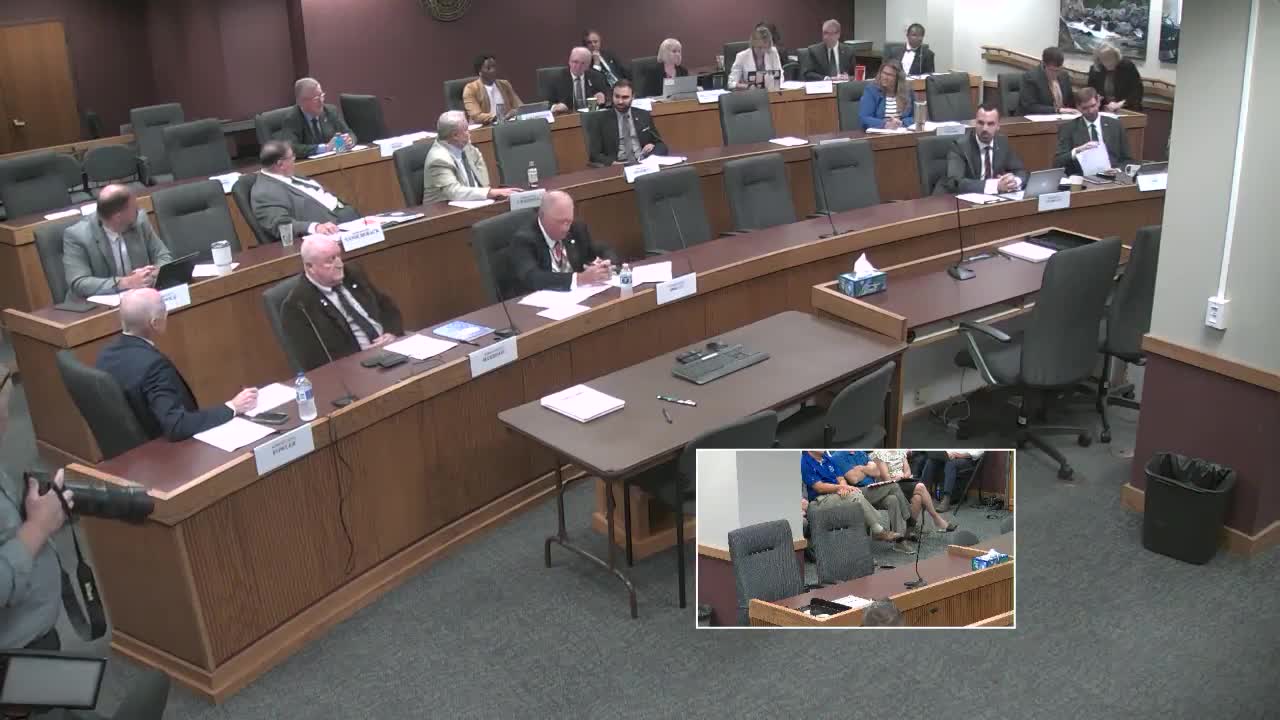
Summary
Committee members and witnesses debated whether Missouri should reform property tax through caps and senior relief, move toward a consumption-based model, or calibrate levy-setting and assessment processes. Rural and urban members said one-size solutions would be difficult to implement statewide.
JEFFERSON CITY — Lawmakers on the Special Interim Committee on Property Tax Reform heard sharply different policy proposals from committee members and public witnesses, ranging from tighter caps and senior relief to a wholesale shift to a consumption (sales) tax model.
Representative Darren Chappell urged the committee to consider a state-level shift away from taxing income and property toward a consumption basis, recounting his repeated sponsorship of the Missouri Fair Tax. “It’s time...to look very hard at transitioning away from an income tax and away from property taxation and go into a consumption tax basis,” he said in opening remarks.
Several mayors and county officials including Bolivar’s former mayor, Representative Chris Warwick, described local experiments and said consumption taxes expand the revenue base in some towns; Bolivar officials reported that switching to consumption tax supported municipal services with a lower property-tax burden. But representatives from northwest Missouri and many rural counties cautioned that remote counties with few retail outlets would not generate enough consumption tax to fund local services and warned that a statewide consumption shift would create winners and losers.
Committee Vice Chair Roger Reedy and others stressed that local levies are often voted by citizens and are the financing backbone for schools, fire districts and libraries. Multiple representatives said they want to preserve sensitive elements of the Hancock Amendment and asked staff to explore whether the levy rollbacks and other protections are being applied as intended.
The committee also heard implementation concerns for recent legislative relief: Representative Ben Keithley and county clerks said the senior-property-tax freeze and circuit-breaker expansions passed in the last sessions will require software and process changes. County clerk Sherry Parks told the panel that many counties need time and vendor updates to implement statutory changes and asked the legislature to involve county officials early: “When legislation is passed … involve county elected officials in the process to make sure the language is written in a way that we can implement it,” she said, naming a county tax software vendor, DevNet, that counties use.
Why it matters: The committee faces a choice between incremental fixes (assessment safeguards, caps, circuit breakers) and structural shifts (consumption tax or blended models). Members stressed they wanted to avoid unintended service cuts and to protect vulnerable residents, particularly seniors on fixed incomes.
Next steps: Committee members said they will map options regionally, gather fiscal impact analyses, and consider whether items can move as session bills or will need larger structural work. Several committee members asked staff to model revenue-neutral alternatives that would preserve current service levels while addressing taxpayer concerns.