Task force: Transportation gaps are blocking recovery services across Missouri
Summary
Providers told a legislative task force that lack of reliable transportation — from daily van routes to reimbursements for ride-hailing or bus vouchers — is forcing clients to drop out of addiction treatment and is straining already thin provider resources.
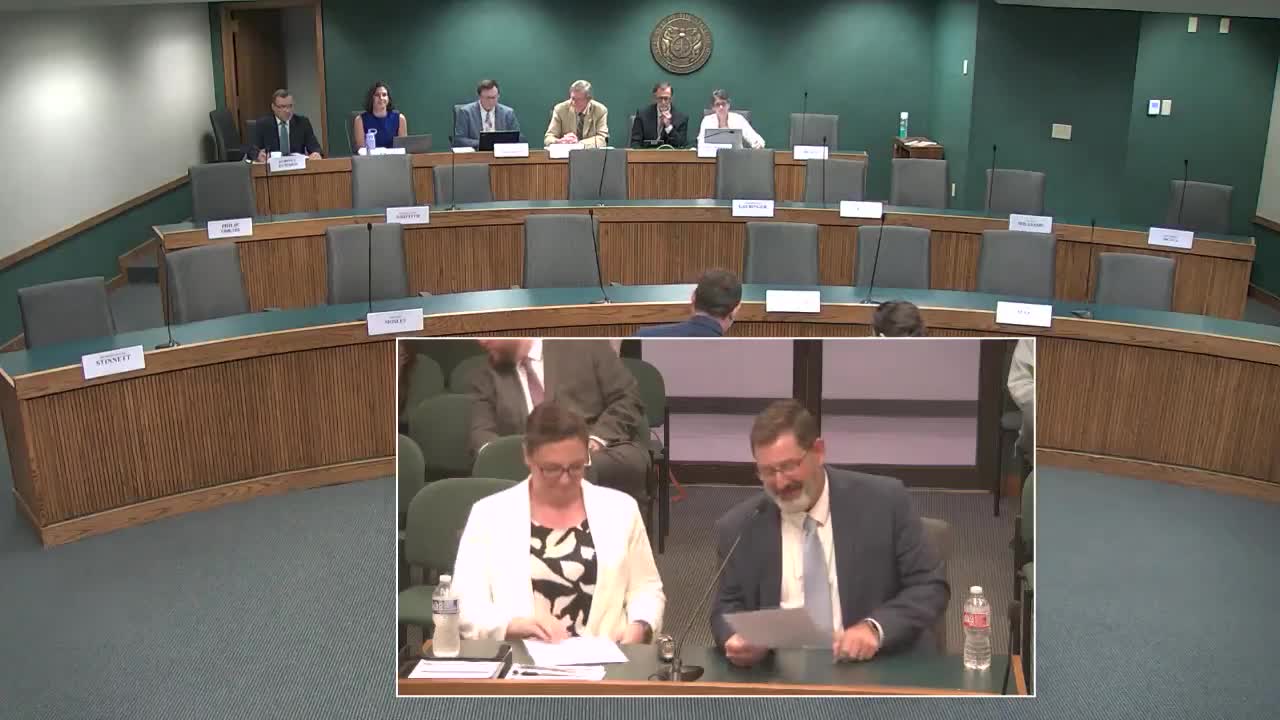
Bridal Steenberg, executive director of the Missouri Coalition Recovery Support Providers (MOCRISP), told the interim task force that transportation is essential to substance use recovery and that providers across the state are struggling to meet demand.
"Overwhelmingly, they told me 85 to 90% plus of people seeking recovery through their agencies, at least within the first 60 and 90 days will require some sort of transportation service," Steenberg said, citing conversations with member programs.
The point of the task force hearing was practical: how do providers get clients where they need to go for treatment, housing, work and parole appointments, and what can the state do to make those trips easier to arrange and fund.
Why it matters: Providers and county health centers said transportation failures often lead people to miss appointments or to stop returning for care during the earliest, most fragile weeks of treatment. Donnellan Schneider, chief network development and population health officer at Central Ozarks Medical Center, said about 59% of his center's treatment encounters in 2024 were for Medicaid enrollees; many other patients have no transport benefit through their payer.
Providers described a mix of stopgap solutions and structural barriers. Recovery Lighthouse in Warrensburg and Sedalia ran a 16-passenger van route three times daily using a volunteer driver until funding and operational costs forced the program to end; the organization now makes limited use of donated bicycles and bus vouchers. Several providers have used Department of Mental Health (DMH) grants to buy vans, but said operating costs — drivers, insurance, vehicle downtime — make agency-run fleets expensive to sustain.
Multiple witnesses asked for simpler reimbursement pathways. Steenberg and others urged the task force to consider allowing recovery providers to be reimbursed for ride-hailing services such as Uber and Lyft and for simplifying the paper trail required to obtain bus-ride reimbursement. Providers said current reimbursement workflows are time-consuming: entering dozens of $2.03 bus fares, for example, can consume a staffer’s day and lead some agencies to