Get Full Government Meeting Transcripts, Videos, & Alerts Forever!
Get email alerts on the Peer Crisis Programs topic
No spam. Unsubscribe anytime.
Peer-crisis proposal from Northern Hope Center draws safety, readiness concerns
Summary
Commissioners at the Aug. 13 Health and Social Services Commission meeting questioned the readiness, training and medical oversight for Northern Hope Center’s proposed peer-based crisis program; one commissioner declined to score the application.
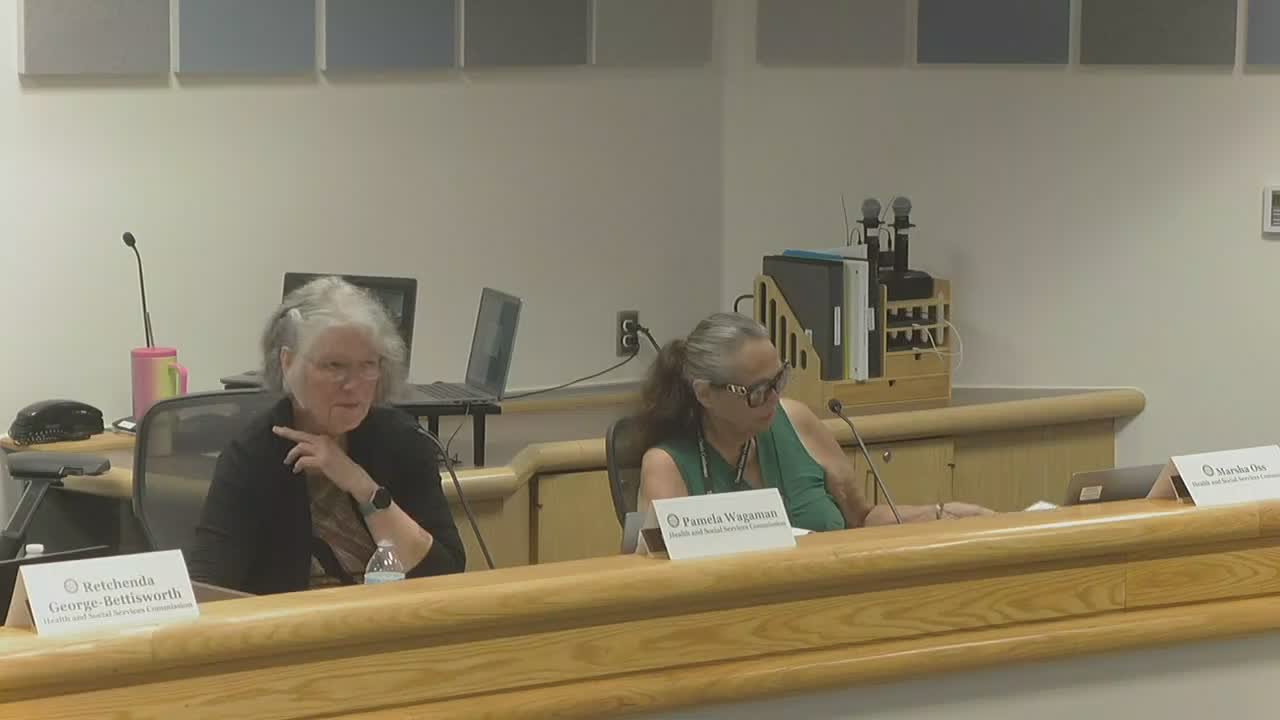
Northern Hope Center’s proposal to launch a peer-based crisis program prompted sharp questions about clinical oversight, staff training and launch readiness during the Health and Social Services Commission meeting on Aug. 13. The program director, Rochelle Jackson, identified herself as the program director of Northern Hope Center and described the drop-in center’s existing services: “We provide resources for homeless and mental health,” she said, and said the center offers meals, education and daytime alternatives for people who use substances. Commissioners pressed for details about space, training and medical backstops for the proposed program. Commissioner Brandy Ose, who identified herself during the meeting as a peer-support supervisor and longtime peer-support trainer, said the application failed to meet the commission’s expectations for a crisis stabilization program and declined to score the proposal: “I’m going to say that this program does not even meet the minimum standards for the bridal stabilization program … That being said, I have not scored anything. It is a 0. I will not score this.” Other commissioners sought clarity on whether the organization would move its drop-in services into a new space, how soon the expanded operations would begin, and who would provide clinical oversight. Rochelle Jackson said the drop-in services could run “immediately” in the existing center and that a larger stabilization space was “in the works,” but did not provide a firm opening date for the expanded facility. Commissioners repeatedly asked whether peer crisis staff would have specific medical or emergency training and which agencies—fire, community paramedic programs or clinical partners—would provide backup. The commission did not approve funding at the meeting. Commissioners submitted final scores; tallies recorded in the meeting transcript ranged across commissioners, and several members urged Northern Hope Center to provide additional detail on training, supervisory structure, and the timeline for the new space before final funding decisions are made. The issue remains under discussion and will return to the commission for follow-up; staff and commissioners noted they expect applicants and program leads to provide clearer implementation plans and evidence of clinical partnerships before awards are finalized.