Get Full Government Meeting Transcripts, Videos, & Alerts Forever!
Get email alerts on the Public Comment Dcfs Judiciary topic
No spam. Unsubscribe anytime.
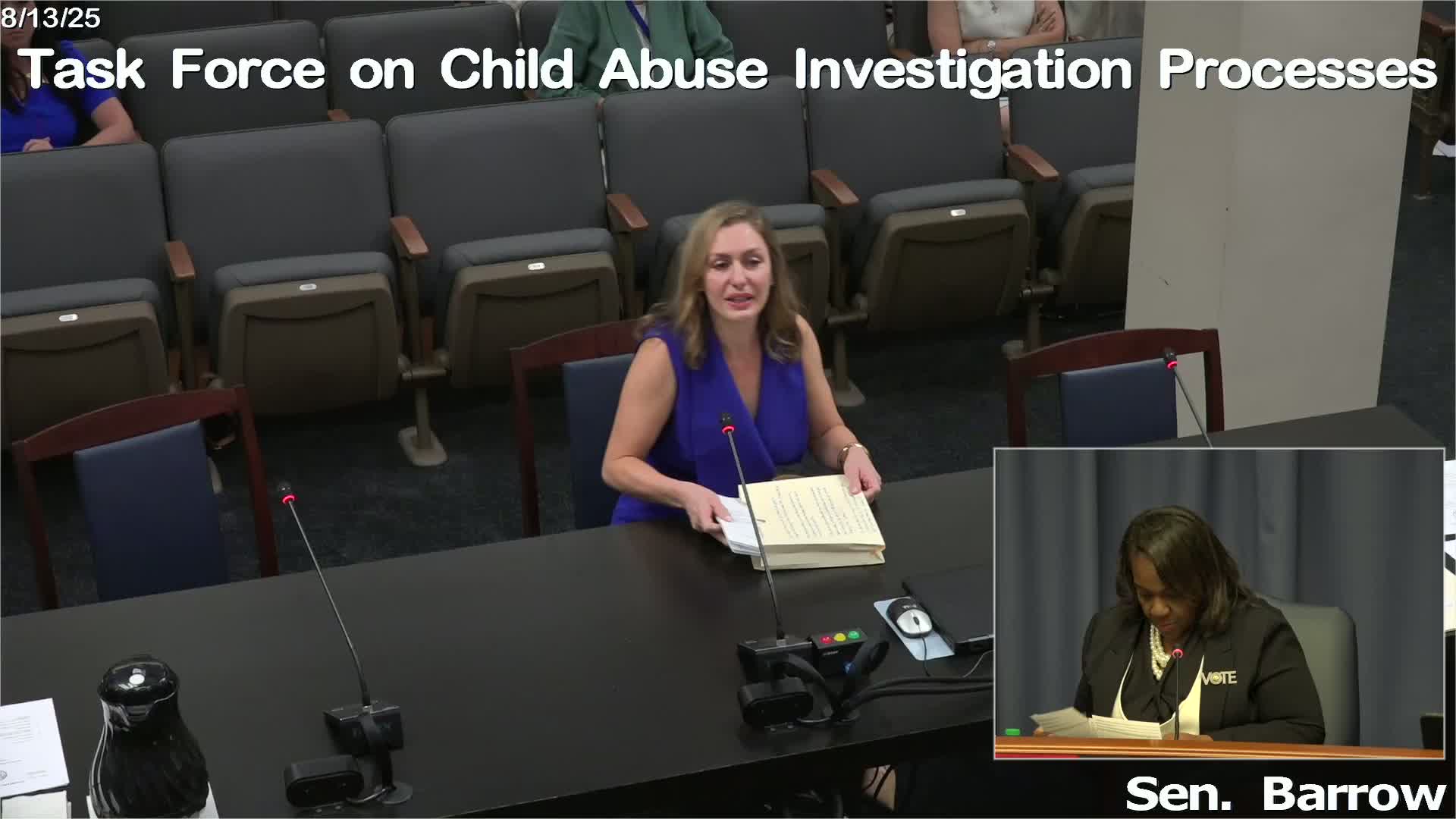
Mother—s testimony to task force spotlights alleged failures in DCFS response and ongoing judicial disputes
Summary
A mother told the task force her family lost custody after seeking a medical forensic exam for alleged abuse, described repeated reports to DCFS and court filings she says sought to silence reporting; she said a judge was recused and that she has filed judicial complaints. Task-force members pledged further review and requested agency follow-up.
Casey Robrie, who identified herself as a mother of two children, gave a public account of a multi-year family court and child-protection dispute and urged the task force to examine where agencies and courts failed. Robrie said she sought medical care and a forensic exam for her children after disclosures and that subsequent court proceedings resulted in loss of custody. She told the panel she and other professionals have continued to report concerns to DCFS and that, in her view, those reports were not adequately handled. "We should never be told to not report," Robrie told the task force.
Robrie said she filed judicial complaints and that the judge originally assigned to the family court case was recused; a second judge recused himself and the case was reassigned to another division. She said contempt proceedings and other filings remain active. The chair, Senator Barrow, acknowledged the seriousness of Robrie—s account and asked staff and agency counsel to identify what follow-up would be appropriate while noting many aspects of the case remain in active litigation. Legislative counsel Christine Peck reminded the panel that children—s privacy and pending litigation limit how much graphic detail the committee should publicize, and the chair encouraged Robrie and her counsel to meet with agency staff in a private setting to ensure the department has full documentation.
Why it matters: The testimony highlighted concerns about whether earlier statutory and administrative gaps contributed to mishandled reports and potential court-process failures in individual cases. Task-force members said the committee will pursue follow-up steps, including asking DCFS to review the case file and provide a redacted account of intake and investigative steps to the task force and determining whether the judicial-complaint timeline or process merits legislative attention.
The task force did not make legal findings at the meeting; members urged the mother to provide complete documentation to staff and asked DCFS and task-force counsel to determine what information the panel may review without jeopardizing ongoing proceedings.