Get Full Government Meeting Transcripts, Videos, & Alerts Forever!
Get email alerts on the Child Protection Policy topic
No spam. Unsubscribe anytime.
Task force outlines key provisions of Act 409, 'Charlie—s Law', and next steps for statewide implementation
Summary
Members of the task force reviewing Act 409, known as Charlie—s Law, heard a summary of statutory changes on reporting, background checks, licensing and notification requirements and were told work remains on implementation details and interagency coordination.
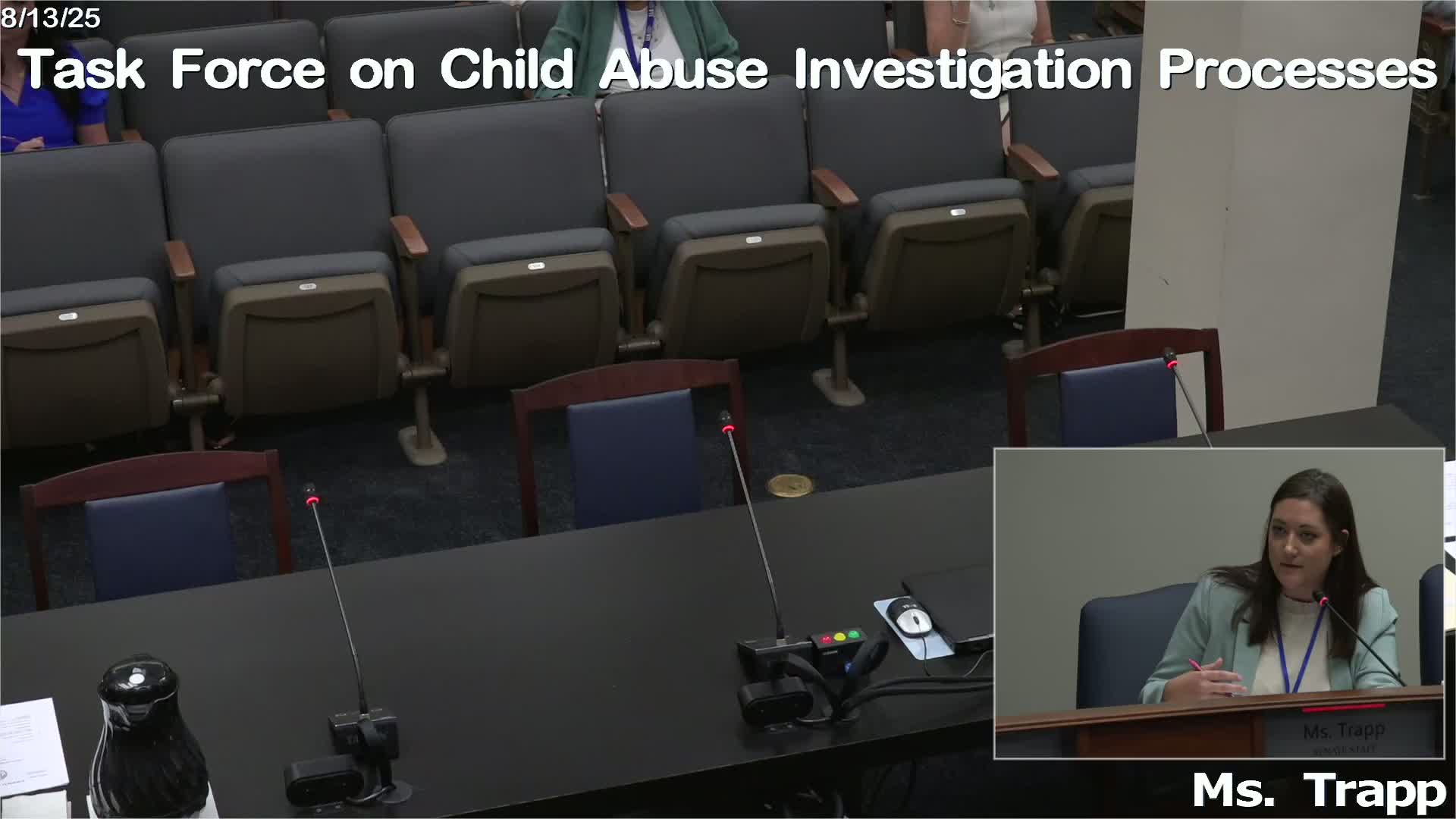
Senator Katrina Barrow, chair of the task force reviewing Act 409, said the group—s work is aimed at one clear goal: ensuring children are safe. "At the end of the day, there is one goal that I have, and that is ensuring that all our children are safe," she said at the start of the meeting. The task force discussed the major statutory changes in Act 409 ("Charlie—s Law") and early steps agencies are taking to implement them. Amanda Trapp, staff to the task force, summarized the bill's key provisions for the group, saying the legislation expands which school and child-care staff must have state central registry background checks and pulls some previously exempt nonpublic preschool programs into early learning center licensing.
The law replaces the prior "valid/invalid" case determination language with the terms "substantiated" and "unsubstantiated," aligning state terminology with most other states, the Department of Children and Family Services (DCFS) told the panel. The statute also clarifies investigative authority between DCFS and law enforcement for incidents that occur in schools or licensed settings and requires DCFS to notify the Louisiana Child Ombudsman within three business days when a child fatality is under investigation for alleged abuse or neglect. Task-force staff said the bill includes a provision allowing civil damages for medical and behavioral-health expenses tied to abuse that occurs in a school setting.
Panel members asked for follow-up materials and timelines. DCFS committed to publishing updated public-facing materials and said staff are adjusting training and workflows to reflect the new definitions and responsibilities. The Department of Education described steps to connect school HR systems to DCFS clearances through the EdLink portal and to publish guidance to nonpublic schools on licensing inspections. Task-force members scheduled follow-up meetings to review policy bulletins, licensing inspections and data dashboards.
Why it matters: Task-force members framed Act 409 as a broad package of changes to reporting, licensing and agency responsibilities intended to close gaps that allowed some reports to go uninvestigated under the prior statutory framework. Members repeatedly stressed that implementation details—how agencies coordinate, how schools and parents are notified, and how timely investigations and supports will be provided—will determine whether the law reduces missed investigations in practice. Senator Barrow said the task force will meet through the fall to develop proposals for any further statutory or administrative fixes before the next legislative session.
The task force accepted a brief overview from DCFS and the Department of Education and did not take any formal votes on new legislation at this meeting; it scheduled implementation-focused follow-ups in September, October and November.