
Resident says borough removed authority to cite barking dogs; administration points to state law change
Get AI-powered insights, summaries, and transcripts
Subscribe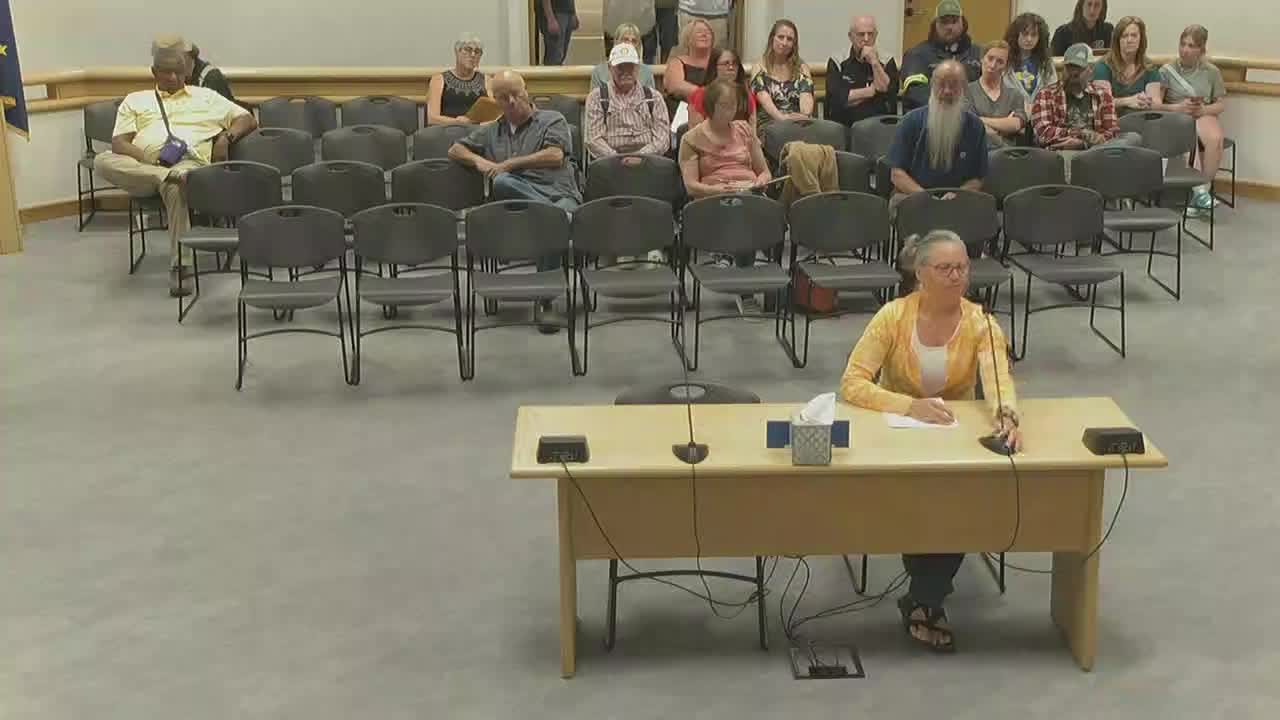
Summary
A North Pole-area resident told the Assembly she can no longer get enforcement against constant dog barking after a borough ordinance was removed in January; administration staff said the borough removed an unenforceable local ordinance after a 1986 state statute change and is advising residents on non‑legal remedies.
Mary Catherine Romberg of the Farmer's Loop area told the Fairbanks North Star Borough Assembly on July 24 that she used to get help from borough animal control to stop a neighbor's constant dog barking but was told this summer the borough “no longer has the power to cite the owners of barking dogs” after an ordinance change in January. Romberg said she provided letters, daily logs, videos and sound recordings to animal control and that action last year had improved the situation. This summer, she said, the same neighbor’s dogs are again “constantly barking” and she feels “maddening” stress and “no recourse” after the change. Why it matters: Residents seeking relief from recurring animal noise said the borough was their only effective option. The exchange shows a tension between local enforcement and limits set by state law. How the administration explained the change: An administration speaker traced the loss of local enforcement power to a state statutory change in 1986 and the borough’s removal of its older ordinance in January. "In 1986, the state amended the statutory Title 29, which deals with local government powers...our ordinance was effectively grandfathered in," the administration said. When that local ordinance was removed in January, the borough “effectively…removed our authority to do anything about it,” the staff member said, adding that the borough still advises residents on nonlegal steps such as negotiation, noise mitigation tools and commercial services. Administration staff described the legal threshold for a citation as high: officers must be able to show that a specific dog on a specific property is making the noise often enough to meet court standards. The staff member said fewer than a handful of citations had been attempted in the last seven years because meeting that evidentiary standard is difficult. Questions and follow-up: Assemblymember Guttenberg asked whether the ordinance change was intended to remove borough authority to address barking; staff confirmed that removing the ordinance had the effect of eliminating the borough’s enforcement power for noise complaints tied to animals. Assemblymembers and the resident discussed whether animal-control officers previously went to neighbors and warned them; Romberg said animal control did follow up in prior cases and that pairings of the complaint form and an on-site visit had worked. What was not decided: The assembly did not take formal action on the issue at the meeting. Administration staff said they are working with animal control to help residents by advising negotiation steps and mitigation options. Romberg asked the assembly to “rethink changes in the ordinance” so residents will have enforcement tools to stop persistent barking. Context and constraints: The administration repeatedly said that the borough’s older ordinance had been “grandfathered” until the Code was formally changed; once the local ordinance was removed, borough officials said they lacked legal authority under current state statutory interpretation to issue citations for animal noise. The administration noted that proving a citation in court requires precise documentary and audio evidence tying a named dog to repeated noise on a schedule.