Get Full Government Meeting Transcripts, Videos, & Alerts Forever!
Get email alerts on the Public Safety Sex Offender Residency topic
No spam. Unsubscribe anytime.
Council adopts ordinance barring select registered sex offenders from living near youth‑populated areas
Summary
On first reading the Loveland City Council approved ordinance 67‑83 to prohibit residency of certain registered offenders within 1,000 feet of schools, bus stops and other youth‑populated places; city attorney cited Colorado Supreme Court precedent upholding similar ordinances.
The Loveland City Council voted 8–0 to approve on first reading an ordinance creating a new chapter (9.1) that prohibits certain registered sex offenders and those designated as "sexually violent predators" from establishing residences within 1,000 feet of youth‑populated areas.
City Attorney Vince Jungless said the draft follows the form of an ordinance previously upheld by Colorado courts (the City of Englewood model) while trimming unwieldy language such as an officially designated walk‑to‑school route. The ordinance defines the covered cohort as persons required to register under state law, including those the registry or offender board has designated a sexually violent predator. The new rules list covered locations — schools, parks, designated school bus stops and recreational trails — and provide limited grandfathering for offenders already residing within the restricted buffer.
Under the ordinance a violation is a municipal misdemeanor under chapter 1.12 of the municipal code. Jungless said Colorado case law allows municipalities to adopt comprehensive residency limits and that several Colorado municipalities — including Englewood, Longmont, Greeley, Aurora and Evans — have enacted similar measures. He also said the court in the analogous Englewood litigation found no conflict with state law and permitted a broad municipal restriction.
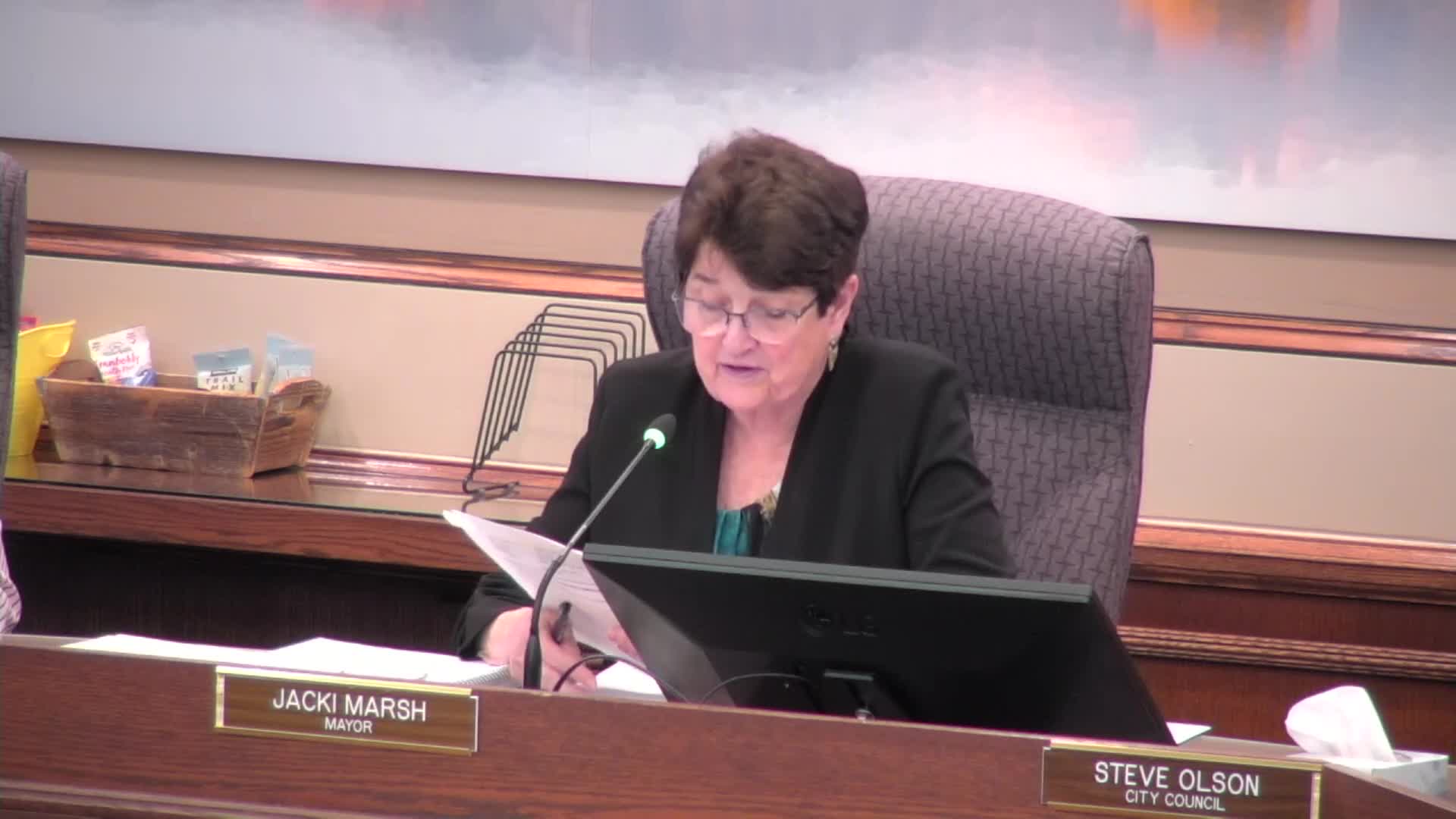
Mayor Jackie Marsh and Councilor Olson both voiced support in debate, saying the ordinance offers a further layer of protection for children. Several members of the public also spoke in favor during the item’s public comment period.
The ordinance passed first reading by an 8–0 roll call. As a first‑reading adoption, the item proceeds to the required second reading and final adoption process under municipal rules.