Get Full Government Meeting Transcripts, Videos, & Alerts Forever!
Get email alerts on the Transportation Tolling topic
No spam. Unsubscribe anytime.
E‑470 executive director briefs Broomfield council on tollway history, governance and planned widening
Summary
Joe Donahue, executive director of the E‑470 Public Highway Authority, told Broomfield City Council the tollway is self-funded, governed by local jurisdictions, and is planning lane widenings, interchange work and new travel plazas over the next five to ten years.
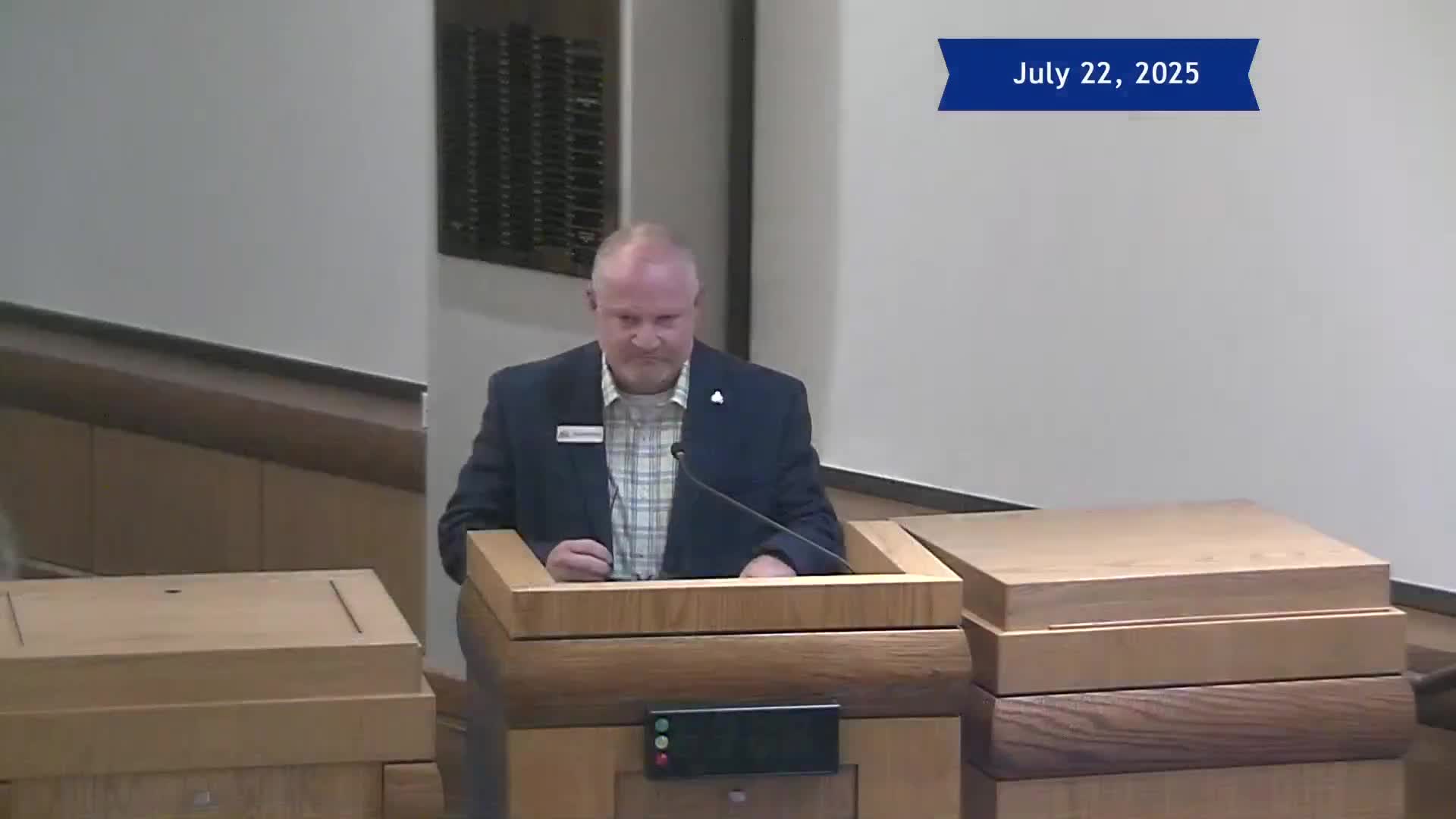
Joe Donahue, executive director of the E‑470 Public Highway Authority, presented an overview of the tollway’s history, governance, financing and upcoming projects during the Broomfield City and County Council meeting. Donahue said E‑470 is a 47‑mile, locally owned toll road formed under the Public Highway Authority Act in the mid‑1980s, and it operates without federal, state or local tax revenue, relying on tolls and bond financing to fund operations and capital work.
Donahue told council the facility processes about 155,000 vehicles per day (roughly 300,000 toll transactions) and that the authority has used toll revenue and surplus balances to expand the corridor and add interchanges. He said E‑470 completed a $300 million widening from I‑70 to 100th Avenue and plans to extend six lanes farther north and to add interchanges and travel plazas over the next five to six years. He noted the authority retains roughly $1.3 billion in outstanding debt from the original financing and anticipates roughly $3 billion of future interchange and widening work in its horizon plans.
Donahue explained the authority’s governance structure includes three voting counties (Adams, Arapahoe and Douglas) and five voting cities (Thornton, Brighton, Commerce City, Parker and Aurora) plus non‑voting seats for adjacent jurisdictions and regional agencies. He said E‑470 transitioned to all‑electronic tolling in 2009 and uses transponders and customer service tools to reduce billing errors.
Council members asked about specific access and congestion concerns at the I‑70 interchange and the relationship with the Northwest Parkway. Donahue said improving the I‑70 access is on the master plan and is expected to be done in phases over 10 to 15 years and that changes to interstate connections require coordination with the state and federal agencies. He described the Northwest Parkway as a separately financed, concession model that is now privatized and said there are policy and feasibility differences between the concession and E‑470’s locally run model.
Donahue summarized recent investments E‑470 has made with partner jurisdictions, including a roughly $80 million contribution to the Aurora Highlands (30th Avenue/Aurora Highlands Parkway) interchange and a $42 million maintenance facility; traffic signal investments in partnership with cities; 24 miles of multi‑use trail; and a plan with developer AppleGreen for four travel plazas and EV charging at former toll plaza locations. He also noted a robust solar program powering ramps and facilities and emphasized safety work — a traffic management center, 24/7 roadside assistance, cable rail, and deer fencing — as a major focus.
Public commenters who used E‑470 described the road as the fastest route to Denver International Airport and supported planned widening. Council members including Leslie and Shaff praised the authority’s operations and expressed interest in a facility tour. Donahue offered contact information and a one‑page fact sheet for council and residents.
Why it matters: The presentation explained how E‑470 funds construction and maintenance through toll revenue, clarified misconceptions about “double taxation,” and outlined projects that will affect regional travel patterns, interchanges and local development near the corridor. Council members flagged access points and regional coordination as follow‑up issues.