Get Full Government Meeting Transcripts, Videos, & Alerts Forever!
Get email alerts on the Digital Government topic
No spam. Unsubscribe anytime.
Greeley launches Innovation and High Performance department; website, 311 and utility billing upgrades highlighted
Summary
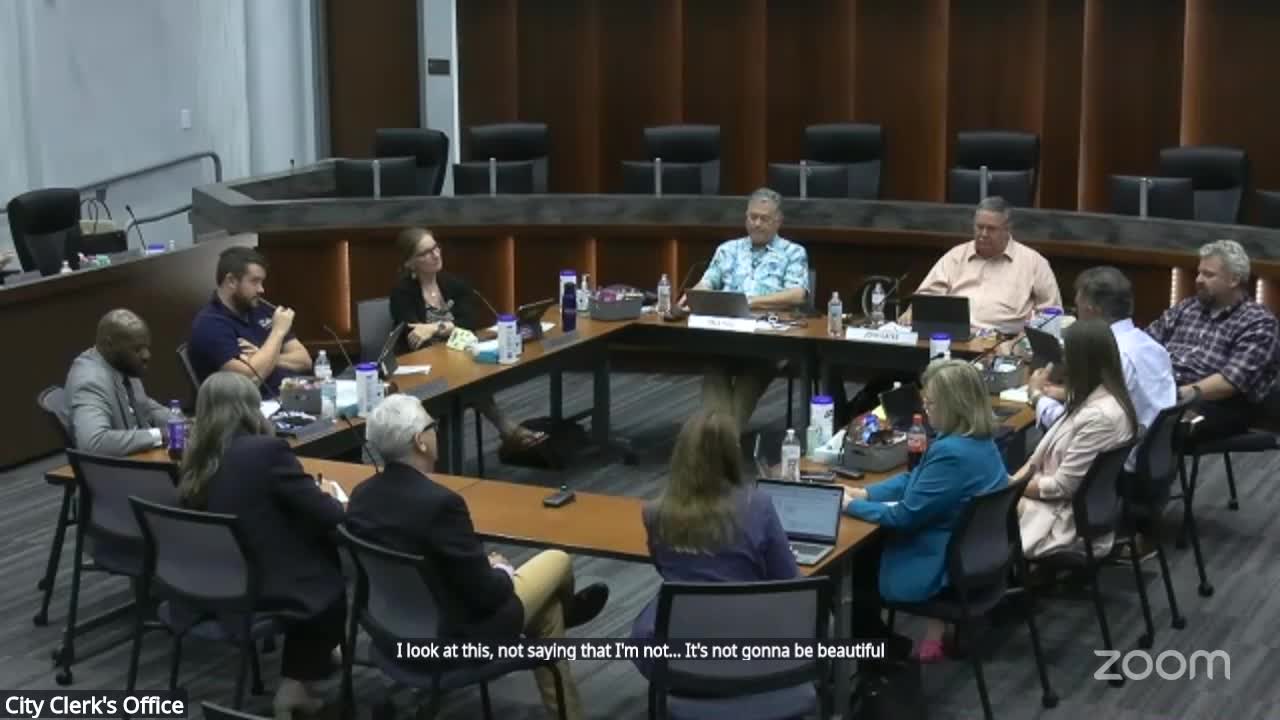
GREELEY, Colo. — City staff outlined the work plan for the new Department of Innovation and High Performance Wednesday, describing a portfolio of projects that includes a redesigned public website, a Greeley 311 customer-service portal, replacement of the water billing (CIS) system and pilot programs for artificial intelligence tools.
GREELEY, Colo. — City staff outlined the work plan for the new Department of Innovation and High Performance Wednesday, describing a portfolio of projects that includes a redesigned public website, a Greeley 311 customer-service portal, replacement of the water billing (CIS) system and pilot programs for artificial intelligence tools.
Kylie Jackson, director of innovation and high performance, said the new department will focus on three main areas: project management, customer experience and innovation. “We are a cross functional catalyst for innovation and improvement,” Jackson told the council, adding the office will help departments run complex transformational projects with standardized tools and change-management support.
Staff said the city will launch a redesigned website built around user “personas” in July 2025, and the site will include a soft launch of the 311 self‑service portal. The 311 system will allow residents to submit non-emergency service requests; staff said a full public 311 launch is planned for early 2026 and that the city is working with phone carriers to establish an abbreviated 311 dialing code. Jason French and Crystal Dilka were named as project managers working on the website and utility-billing implementations.
On the utility-billing replacement (CIS), Jackson said the system will modernize an older platform and that the rollout plan includes community outreach, Spanish translations and partnerships with local businesses to raise awareness. “This system probably could have been replaced 10 years ago,” Jackson said, framing the upgrade as a customer-service priority.
Councilors asked about staffing, timelines and practical impacts. Councilor Butler asked when the 311 rollout would be fully implemented; staff said the site launch is planned for July and a wider communications push for 311 will follow, with full operation expected in early 2026. Councilor Debuti asked about AI use and the city attorney cautioned that, while AI can be helpful, legal staff must control use to avoid errors such as fabricated citations; the attorney said the city has been testing Westlaw’s AI research tools in a controlled environment.
City staff described two enterprise AI efforts: a pilot with ZipCheck to pre‑screen residential plan submittals for code compliance, and limited staff testing of Microsoft’s Copilot product. Jackson said the city will publish AI guiding principles to allow experimentation while protecting sensitive data.
Staff emphasized software inventory and integration. A graphic shown to council listed hundreds of existing software systems across departments; Jackson said the department will prioritize integrating and fully leveraging current licenses before adding new tools. She said the team is small and will use term-limited project managers and interns to increase capacity for specific projects.
Next steps: Staff will proceed with the July website launch and the phased 311 rollout, continue CIS implementation through fall 2025, and develop AI guidance and pilot evaluations. The council asked staff to return with progress reports and timelines as projects approach major milestones.