Get Full Government Meeting Transcripts, Videos, & Alerts Forever!
Get email alerts on the Veterans Advocate Expansion topic
No spam. Unsubscribe anytime.
Lawmakers Hear Proposal to Expand Office of Veterans Advocate to Serve Active-Duty Troops
Summary
Legislators and veterans groups discussed bills (S.2466/H.33872) to expand the statutory mission of the Massachusetts Office of the Veterans Advocate to include active-duty service members and improve state coordination with federal transition programs.
Senators and representatives at the Joint Committee on Veterans and Federal Affairs heard testimony supporting bills to expand the mission of the Massachusetts Office of the Veterans Advocate to include currently serving military personnel, not only veterans.
Proponents said the change would allow a single state office to coordinate with federal agencies and with state executive offices to help service members and their families during transition, recruitment, and retention efforts.
"Massachusetts is home to approximately 255,000 veterans," said Bob Notch, the state Veterans Advocate. "We believe it is a natural extension of our mission to include... active serving members of the military of our commonwealth." Notch testified that adding active-duty service members to the office’s statutory purview would let the office "simplify coordination to a single office through which to channel policy" and better integrate state and federal supports under chapter 115B of the General Laws.
Senator Fattman urged action on the bill following a personal appeal: "Five members of that unit have taken their own lives since they returned," he said, describing the mental‑health toll he had seen among service members tied to deployments.
Witnesses described specific uses for the expansion. Notch said the Office could work with the Department of Defense transition assistance programs to pass state-specific information—job openings, licensure guidance, and public‑sector hiring opportunities—to service members before separation paperwork is finalized. "Addressing transition before the service member receives their separation papers can aid in reducing the needs of veterans during the deadly gap," Notch testified.
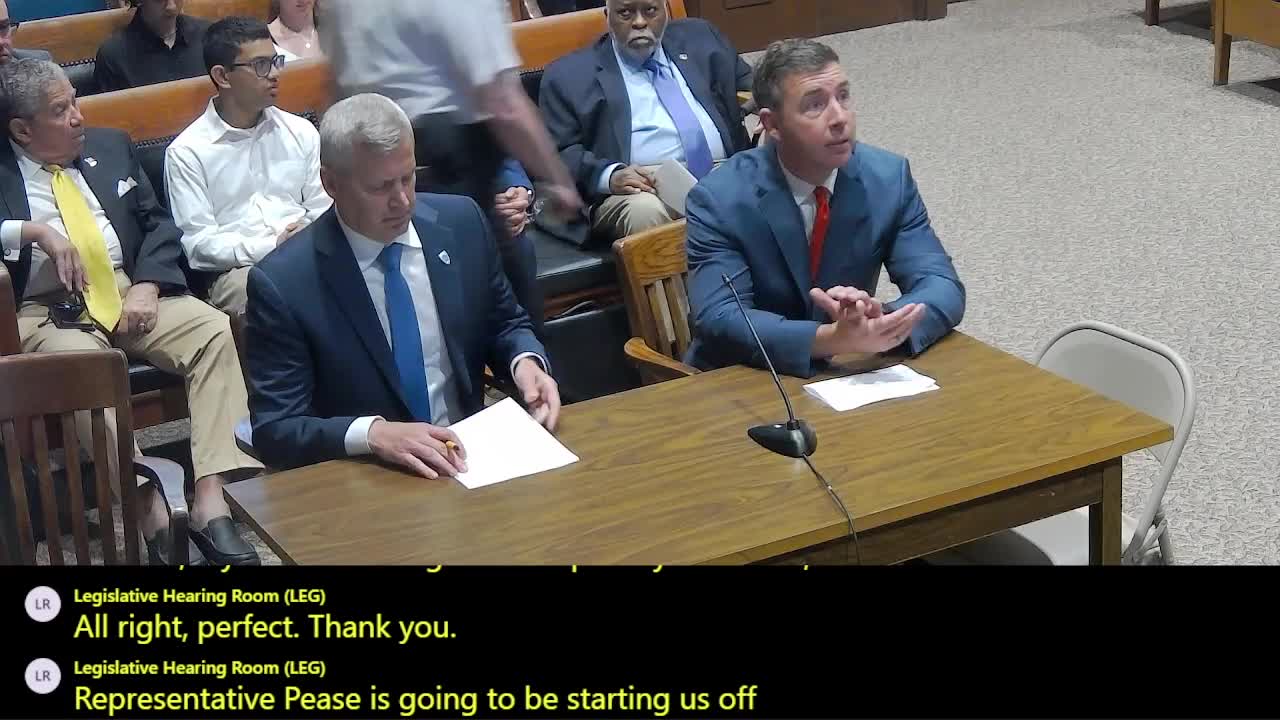
Representative Pease, an initial sponsor, said the change would make the Office the primary state contact for federal partners and provide continuity of services for Guard, Reserve and active component members who choose Massachusetts as their post‑service home.
Supporters acknowledged operational challenges: identifying service members early in the federal transition process and coordinating across Title 10/32 authorities for Guard and Reserve activations. Notch described federal transition paperwork that can identify service members up to six months in advance if the member authorizes sharing that information; he said the Office would seek to use whatever federal lists are available and to coordinate with employers and state hiring offices to connect transitioning personnel with positions in Massachusetts.
No committee vote was taken at the hearing. Committee members asked staff to review statutory language and to analyze operational and privacy implications of the proposed coordination with federal transition systems.
The hearing also drew several veterans organizations in support, and committee members said they would examine how the proposal would interact with existing municipal and non‑profit veteran service officers and with federal transition assistance programs.