Get Full Government Meeting Transcripts, Videos, & Alerts Forever!
Get email alerts on the Automated Enforcement topic
No spam. Unsubscribe anytime.
Lawmakers weigh municipal opt‑in automated enforcement for speed, red lights and school zones
Summary
Legislators and safety groups urged the Joint Committee on Transportation to authorize municipal opt‑ins for automated traffic enforcement — including school‑zone and speed cameras — while requiring transparency and equity safeguards.
Senators, representatives, city officials and safety advocates told the Joint Committee on Transportation they support authorizing municipalities to use automated traffic enforcement cameras for speed, red‑light and school‑zone violations, while stressing safeguards to limit misuse.
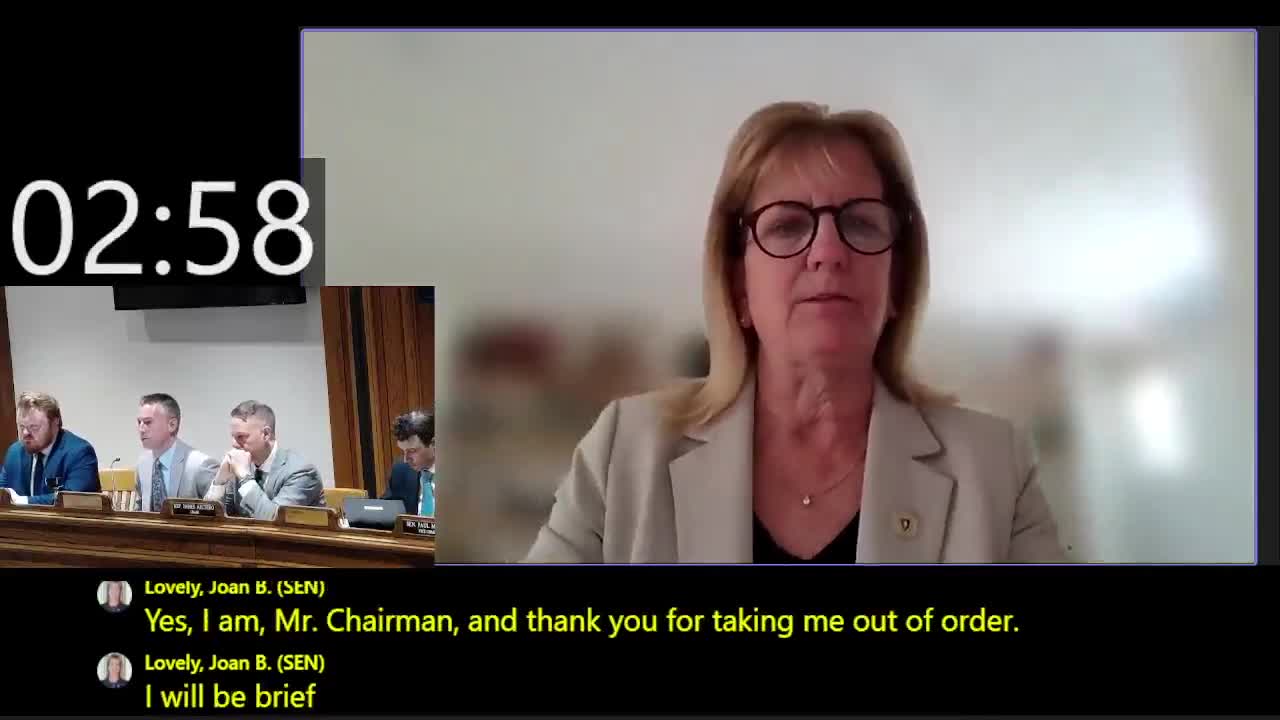
Senator Joan Lovely and Representative Manny Cruz urged approval of local pilot authority for school‑zone automated enforcement (H.3905). "The City of Salem is dedicated to maintaining the safety of all school children," Senator Lovely said, noting a Salem bus‑camera pilot recorded thousands of violations during a short test period. Representative Cruz said Salem — eight square miles with 10 school buildings — viewed cameras as a narrow, locally controlled safety tool.
Senator Will Brownsberger, a longtime advocate for automated enforcement, described two legal fixes his bills would enable: authorizing municipalities to issue civil citations to a vehicle for camera‑documented violations ("you can write a ticket to the car") and permitting officers to issue tickets to a vehicle without a traffic stop in specific circumstances to avoid dangerous pursuits. "With the automated enforcement bill, you get the concept of issuing a ticket to a car," he said, adding municipalities would opt in and local political processes would review location plans.
Safety advocates and coalitions gave statistical and equity arguments supporting cameras. Walk Massachusetts, Transportation for Massachusetts, Safe Roads Alliance, MassBike and local councilors cited reductions in speeding and crashes from other jurisdictions and recommended strict data protections, public reporting and social‑equity screening for camera placement. Emily Stein of Safe Roads Alliance testified: "These crashes ... are violent, sudden, and nearly all preventable." Several witnesses proposed phased, targeted programs — e.g., school zones and work zones — with public notice and warning periods.
Opposition centered on privacy and revenue concerns. Sponsors said bills include prohibitions against photographing drivers and passengers, require destruction of raw images after disposition, and designate evidence as nonpublic records; they also emphasized municipal opt‑in and reporting requirements to address equity or targeting worries. The Legislature did not vote; advocates urged a favorable committee report so municipalities that request cameras can move forward with detailed implementation plans.