Get Full Government Meeting Transcripts, Videos, & Alerts Forever!
Get email alerts on the Unmanned Aerial Systems topic
No spam. Unsubscribe anytime.
Lawmakers hear competing views on drone rules, security and industry impacts
Summary
The Joint Committee on Transportation heard conflicting testimony on several bills that would regulate unmanned aircraft systems in Massachusetts, with sponsors citing safety and privacy concerns and industry representatives warning that broad state restrictions would conflict with federal rules and harm businesses and public programs.
Members of the Joint Committee on Transportation heard hours of testimony on multiple unmanned aerial systems (UAS) bills on matters ranging from no‑fly zones near schools and critical facilities to prohibitions on weaponized drones and restrictions affecting commercial operators. Senator John Vilas, sponsor of S.2454, told the committee the bills aim to “ensure that as drone technology evolves, it does so with responsibility and safeguards.”
Why it matters: The proposals would shape how state and local authorities respond to privacy, public‑safety and national‑security risks tied to drones, while also affecting businesses, municipal operations, and volunteer or public‑safety uses of UAS services.
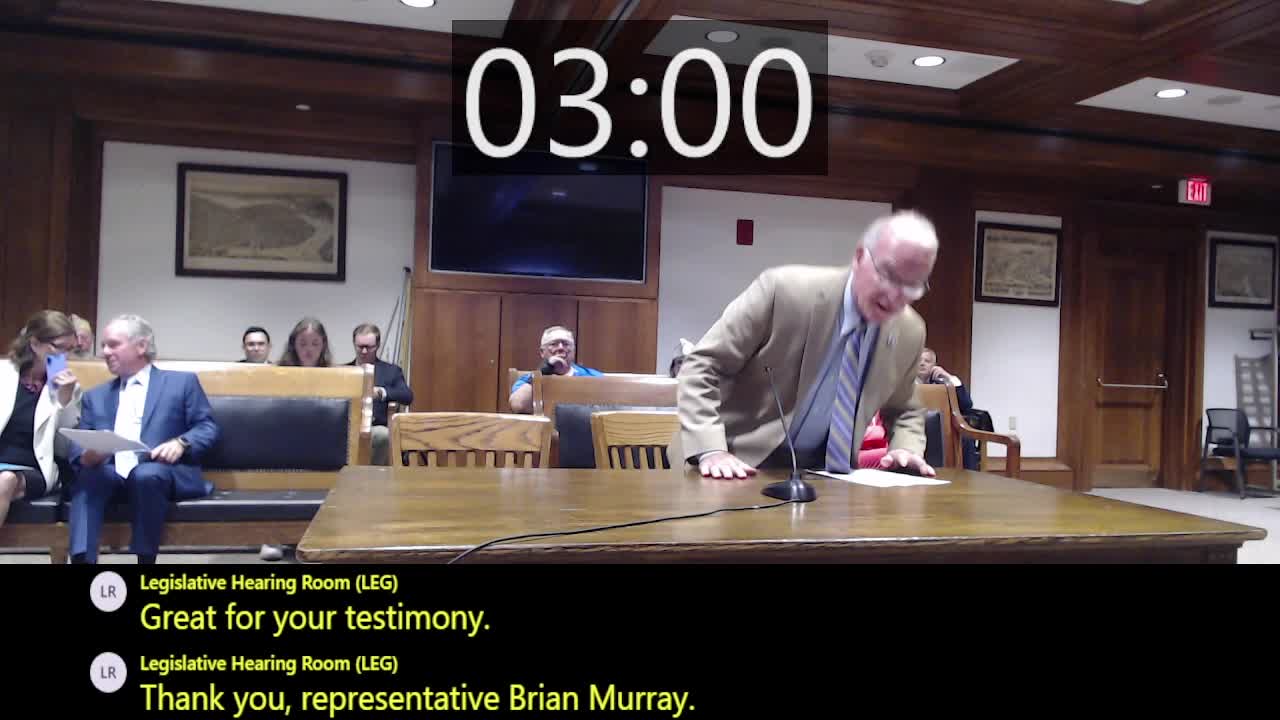
The committee heard proponents emphasize public‑safety and privacy gaps that remain under current Federal Aviation Administration (FAA) dominion. Senator John Vilas, identifying his Westfield district and its proximity to Barnes Air National Guard Base, said unregulated drone flights can “pose serious safety, privacy and security threats” and argued S.2454 “creates clear no‑fly zones surrounding critical facilities.” Representative Brian Murray, who introduced H.3749, described his bill as basic operational definitions and added there should be “some basic prohibitions” including on mounting weapons and on surveillance of private property "without consent." Those speakers said state rules are needed to give law enforcement and local officials clearer tools to respond.
Industry groups and commercial operators urged caution. Hayden Spitz, founder of Boston Drone Productions and a U.S. university instructor in UAS safety, testified that several draft bills would “ruin tons of jobs” and would block lawful uses — from real‑estate photography to solar‑panel inspections and education programs. Michael Ford, a commercial aerial photographer, and Eric Gronenberg, who runs a construction firm’s FAA Part 107 program, told the committee they use drones for inspections, public‑safety work and commercial services that would be curtailed if language bans operations near “public locations” or broadly prohibits beyond‑visual‑line‑of‑sight and nighttime work without allowing FAA waiver processes.
Commercial operators repeatedly pointed to federal preemption and existing FAA processes as the correct path for complex operational matters. Gronenberg warned that an absolute ban on beyond‑visual‑line‑of‑sight flights would cut off construction and emergency operations that currently proceed under FAA waivers. Hayden Spitz noted federal law already outlaws arming UAS and offered committee members FAA references explaining that weaponization is prohibited under federal statute.
Public‑safety presenters described separate problems: Michael Ford and others flagged police and corrections officials’ concerns about drones being used to drop contraband in jails or to interfere with firefighting aircraft. Representative Bruce Ayers and others pressed for targeted no‑fly protections for schools and school events.
Committee members heard requests to harmonize state bills with federal law and to form industry panels to craft enforceable, narrowly targeted rules. Michael Ford asked the committee to “table these 6 bills” and work with the FAA and an industry advisory group to try to align state measures with federal standards.
The hearing included repeated calls for specificity. Commercial pilots and construction inspectors asked the committee to exempt FAA‑authorized operations, to avoid overly broad phrases such as “areas where children congregate” or “critical infrastructure” without precise definitions, and to permit FAA waiver processes for advanced operations. Proponents urged clearly defined no‑fly zones around military bases, correctional facilities and airports, and stronger civil remedies for unlawful surveillance.
No vote was taken. The committee will consider the testimony and written submissions as it decides whether to recommend any of the bills for further action.