Get Full Government Meeting Transcripts, Videos, & Alerts Forever!
Get email alerts on the Freedom To Read topic
No spam. Unsubscribe anytime.
Mass. hearing spotlights proposed ‘Freedom to Read’ bills as libraries report rising challenges and threats
Summary
Lawmakers and hundreds of witnesses gave hours of testimony supporting a package of bills (including H3594/S2328) to formalize collection policies, protect librarians, and maintain access to contested books; opponents urged local control and expressed concern about age appropriateness. Committee did not vote on the bills at this hearing.
Representatives and dozens of authors, librarians and advocacy groups urged the Joint Committee on Tourism, Arts and Cultural Development on Wednesday to advance an “act regarding free expression” (House Bill 3594 and Senate Bill 2328) that they said would protect access to library and school materials and shield librarians from retaliation.
The bills would require districts and public libraries to adopt clear collection-development and reconsideration policies, keep materials accessible during review processes, require annual reporting on challenges, and offer protections for staff acting in good faith. Supporters said the measures aim to stop politically driven removals and the harassment of librarians.
Why it matters: witnesses said the state has seen a sharp rise in coordinated censorship attempts that disproportionately target books by and about LGBTQ+ people and people of color, and that those campaigns have expanded beyond a few states into Massachusetts. Supporters argued that uniform state standards would give school and library officials a transparent, consistent process to handle complaints and would protect student access to diverse materials.
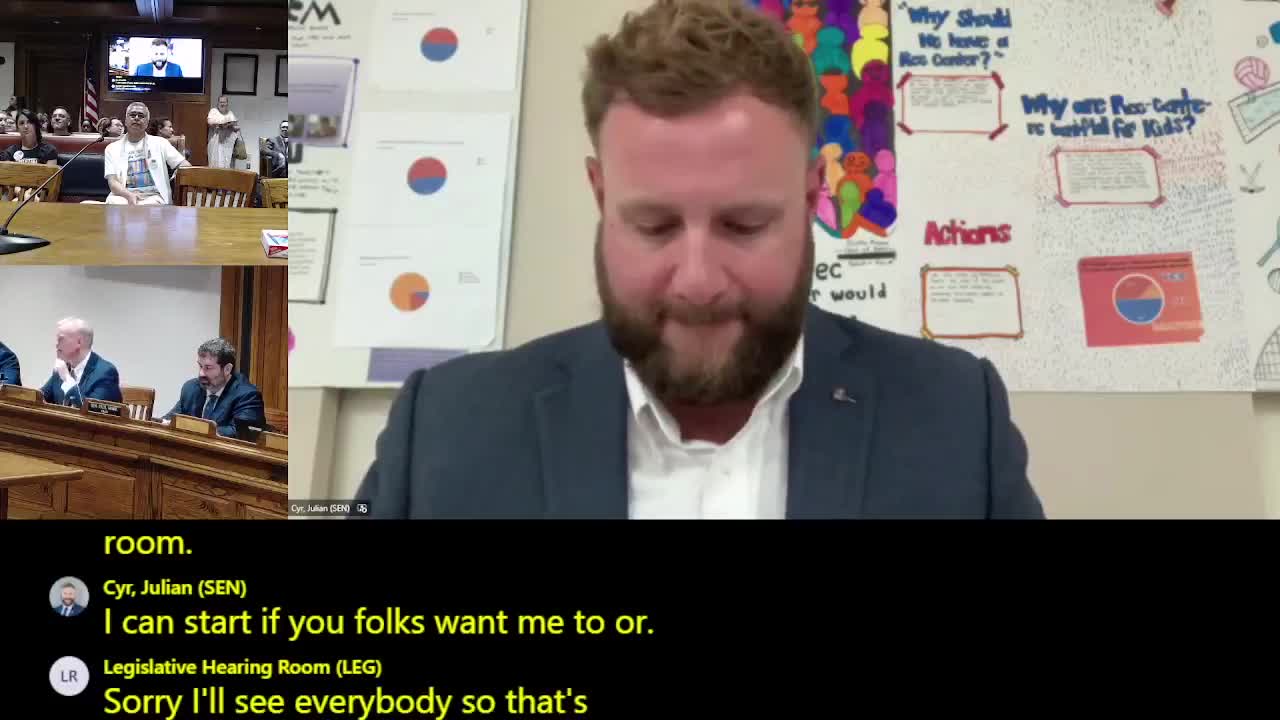
Senator Julian Cyr (D), one of the sponsors, told the committee the legislation “prevents book bans. It requires school and public libraries to maintain transparent, educationally grounded policies for selecting materials,” and “protects librarians and educators” from disciplinary action for choosing materials in good faith. "This bill does not prohibit individual parents from making decisions about what their children can read," Cyr said in his opening testimony, adding the bill aligns Massachusetts with American Library Association best practices.
Publishers, authors and library leaders described specific harms they say the bills would address. Author Melinda Lo said her novel Last Night at the Telegraph Club—describing a 17‑year‑old Chinese American girl coming to terms with her sexuality—has been challenged widely; she told the committee, “You must consider the book as a whole.” Dan Novak, vice president and associate general counsel at Penguin Random House, urged Massachusetts to follow other states that have enacted protections, saying: "Let the best books and the best ideas win."
Librarians gave repeated, often personal testimony about harassment, threats and operational impacts. Kathy Lussier, executive director of the North of Boston Library Exchange and co‑chair of the Massachusetts Library Association legislative committee, said digital collections have expanded equitable access but that libraries face “5 to 6 times” higher per‑title costs for many e‑books and restrictive licensing; she said the broad censorship trend has compounded those challenges.
Several school librarians and library association leaders described incidents they said demonstrate the need for legal protections. Reba Tierney, president of the Massachusetts School Library Association, recounted a challenge that left students in tears and said, "When students encounter books in a school library staffed by a professional librarian ... their very existence is validated." Maria McCauley, director of libraries in Cambridge and president‑elect of the American Library Association, urged the committee to vote in favor of the bills and specifically to protect library employees from retaliation.
Opponents, including some religious leaders and parent‑advocacy groups, urged the committee to preserve local control and parental primacy in age‑appropriate decisions. Rabbi Henry Morse testified in opposition and said the bills would allow what he described as “sexualized materials” to be accessible to children; advocacy leader Jess Richardson of the Massachusetts Family Institute said the bills would create new legal remedies that could punish school committees that act to limit materials. Their witnesses argued selection and review should remain local and that schools must be able to protect younger students from material they consider inappropriate.
Committee process and next steps: the hearing drew more than 60 registered speakers; committee members repeatedly encouraged witnesses to limit remarks to three minutes so the panel could hear many testimonies. The committee did not take a final vote on the free‑expression bills at the hearing; it heard both the bill sponsors and dozens of stakeholders and said it would consider written testimony and deliberations before acting.
Ending: supporters asked the committee to adopt the bills to protect readers and library workers and to create consistent state rules; opponents asked that local school committees retain discretion to set age‑appropriate standards and that parental concerns be prioritized. Lawmakers said they will review the written record and follow up in committee before scheduling any formal votes.